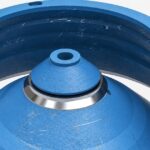
An incomplete request can delay a quote or leave the wrong position, material or set scope open to interpretation. Use the table below as a reusable crusher part number RFQ: one line per part, with the quantities and supporting evidence needed to review it.
The complete part number is the preferred starting point. If it is missing, provide the machine model and series, position, photos and measurements for a model-match review. Neither a number nor a photo alone guarantees fit; the final specification must be checked against the actual assembly.
Copy-friendly master RFQ fields
| Field | Required? | What to send |
|---|---|---|
| Part name | Yes | Mantle, bowl liner, jaw die, cheek plate, blow bar, VSI tip or other part |
| Part number | Preferred | Complete reference and suffix from the part marking or parts documentation, if available |
| Model / series | Yes if no part number | Machine model and series for model match; include configuration if known |
| Hand / position | When applicable | LH/RH, upper/lower or chamber position; explain viewing direction |
| Alloy preference | Useful | Mn13, Mn18, Mn22, high-chrome, martensitic or “recommend”; these are indicative starting options, subject to duty and part design |
| Duty notes | Useful | Rock type, feed size, tramp risk and hours or tons on the previous set if known |
| Photos | Strongly preferred | Marking, seating face, wear face and any cracked areas |
| Quantity and set scope | Yes | Pieces per reference, full set or partial, and associated parts needed |
| Destination | Needed for freight | Destination port and Incoterm if known |
| Need-by / sample | Optional | Required date and whether a first article or sample is requested |
Send drawing revisions, inspection requirements and any relevant mating-part references as well. Label unknown fields rather than guessing. A model designation can be found on a machine nameplate; a part reference should be checked against the part or documentation rather than assumed to be on that nameplate.
Fictional example lines
The following references and quantities are illustrative placeholders only, not actual catalog offers or GUBT SKUs. Mn18 is an indicative starting preference, not a prescribed grade.
| Line | Part | Part number (fictional example) | Model match note | Quantity |
|---|---|---|---|---|
| 1 | Cone mantle | MN-2400-A |
Medium chamber; Mn18 preferred | 2 |
| 2 | Jaw cheek | CP-1180-LH |
Pair later; send RH part number if different | 1 |
| 3 | HSI blow bar | BB-HSI-042 |
Recycling feed; review brittle high-chrome choice if tramp is present | 1 set |
| 4 | VSI tip kit | VT-16-SET |
Tips and holders; sand plant | 1 kit |
For the first line, the cone mantle and bowl liner RFQ guide helps define the mating chamber. For jaw die alloy context, see jaw manganese grades; for the third line, see the HSI blow bar material matrix. For the VSI kit, use the VSI parts guide to identify positions. State the actual quantity per set; “one set” alone can be ambiguous.
If you only have photos
| Send | Why |
|---|---|
| Clear photos of stamps and casting marks | A complete reference may be recoverable |
| Outline and bolt-pattern measurements | Provides a starting point for fitment review; state units |
| Machine nameplate showing model | Supports the model-match path |
| Photos of mating parts | Shows the assembly and interfaces |
| Whether a sample or first article is possible | Allows a practical verification route to be discussed |
A worn part can be distorted or missing original material. Photograph it beside a scale, identify unworn reference surfaces and provide a drawing or sample where possible. For critical features, agree dimensional tolerances before manufacture.
What happens after you send the request
| Step | What to review |
|---|---|
| 1. Identify | Confirm the reference or establish the model-match evidence and unresolved fit questions |
| 2. Review duty | Discuss material, wear pattern and operating conditions |
| 3. Quote | Review scope, price, delivery terms and quoted lead time; see MOQ and lead-time factors |
| 4. Agree inspection | Decide whether a first article, dimensions or inspection documentation is required; specify hardness testing if relevant |
| 5. Production and shipment | Confirm the order and agreed production and shipment documents |
The steps and timing depend on the actual request. A quote is not a fitment approval until the outstanding technical details have been resolved.
Related guides
FAQ
Is a part number required?
It is preferred. If unavailable, send the model and configuration plus position, photos and measurements so the match can be assessed.
Can one photo be enough?
A single image rarely shows the full geometry and mounting. Provide several views and measurements or a drawing; a sample may be needed.
What should a dealer add for a restock?
List each reference, quantity, position and desired packing or marking requirements. State whether the request is for an existing specification or a new match.
Can I request a sample before a larger order?
Ask for a sample or first article and agree its scope, inspection and commercial terms in the quote. Feasibility depends on the part and tooling.
Can I request a price without a destination?
You can request a part quotation, but freight and delivered terms need a destination and agreed Incoterm. Identify what is excluded when comparing quotes.
How should I handle confidential drawings?
Mark any restrictions and discuss handling with the recipient before sharing sensitive drawings. Agree the applicable confidentiality terms directly; do not assume them from this article.
Send the completed fields to info@gubtcasting.com or the contact form. GUBT can review the part number or model-match evidence and clarify the quotation scope.