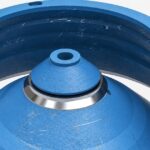
Jaw crusher cheek plates protect the sides of the crushing chamber. If a plate wears through or the wrong thickness or position is installed, the frame can become exposed. A useful replacement request therefore includes the wear pattern as well as the part number.
This guide focuses on side plates. For fixed and movable jaw die material selection, see jaw plate manganese grades by rock.
Read the wear pattern before ordering
These are possible causes, not a diagnosis. Isolate the machine and compare both sides with the site wear limits and maintenance instructions.
| Pattern you see | Likely cause | Action before ordering |
|---|---|---|
| Even thinning across the face | Normal abrasive duty | Measure remaining thickness against the plant limit |
| Top-heavy wear | Feed preference or chute bias | Inspect and correct feed distribution; discuss material or thickness only after clearance is checked |
| Bottom-heavy wear | Setting or discharge packing | Check the setting and packing; photograph both cheeks |
| Grooves or channels | Localized rock path | Inspect jaw dies and feed distribution, not just the worn cheek |
| Edge or bolt-boss cracking | Shock, tramp or poor seating | Photograph the cracks, check seating and bolt torque practice, and report the alloy if known |
| Frame paint or metal rub marks | Late replacement, incorrect thickness or another fit issue | Stop, protect and inspect the frame; establish the correct part number and thickness |
Record where the wear occurs and when it appeared. A new cheek may protect the surface, but it will not by itself correct a biased feed path or a seating problem.
Identify the part and its position
| Field | Why it matters | Example format |
|---|---|---|
| Part number | Primary match reference | CP-#### — fictional placeholder |
| Hand | Left and right may not be interchangeable | LH, RH or pair; state the viewing convention |
| Thickness / pattern | Wear stock and cavity clearance affect fit | Nominal new thickness and remaining thickness, if known |
| Machine model / series | Supports model match when the part number is missing | Model and series designation |
| Mating jaw dies | Adjacent wear parts and clearances need review | Fixed and movable die part numbers if known |
Do not assume that “left” is obvious: state the viewing direction and mark an installed photo. Upper and lower positions can also differ. Confirm geometry and mounting against a current drawing or sample, including the revision; a reference alone does not prove fit. The dimensional tolerances guide explains how to specify the fit features.
Pack the cheek plate RFQ
| Include | Notes |
|---|---|
| Part number, LH/RH and quantity | Send each reference and position when known |
| Installed and removed wear-face photos | Show the pattern and label the position |
| Remaining thickness map at 3–5 points | Optional; identify measurement locations and units |
| Rock type and tramp notes | Helps review material direction and failure causes |
| Port, Incoterm and need-by date | Supports quotation and planning |
If thickness is being changed, send the original nominal dimension, mating clearances and drawing. A thicker plate is not automatically interchangeable; the fit and chamber clearance need approval before production.
Check the parts on receipt
| Gate | Check |
|---|---|
| Identity | Part number, hand, position and markings match the purchase order |
| Dimensions | Critical bolt pattern and outline match the agreed drawing or sample |
| Visual | Seating faces have no shipping damage; report visible defects |
| Hardness, if specified | Check the agreed method, location and acceptance range; see hardness testing |
Discuss any discrepancy before installation. Browse the jaw liner category for the range, and review casting MOQ and lead time when planning an order.
Related guides
FAQ
Can I run without one cheek plate?
Do not assume the exposed side is safe to operate. Stop and follow the machine and site maintenance instructions; inspect the frame before restarting.
Can left and right cheeks be swapped?
Not necessarily. Confirm the part number, mounting features and hand against the drawing and the installed viewing direction.
Is a part number alone enough?
It is the preferred starting reference, but position, model, quantity and supporting photos help check the match. Include the complete suffix.
Can I increase thickness without changing the model?
Only after the proposed geometry, seating and operating clearance have been checked and approved for that installation.
Should I replace a pair or one plate?
Measure both sides and follow the maintenance plan. A single replacement may be appropriate, but the opposite side and the reason for uneven wear still need inspection.
How long does a replacement order take?
Lead time depends on the reference, tooling, quantity, material and inspection scope. Request a quote with your required date rather than relying on a general estimate.
For a cheek plate quotation, email info@gubtcasting.com or use the contact form. Include the part number or model match, position, thickness and photos so GUBT can review the request.