
Cone Crusher Liners
Overview
Browse replacement mantles and bowl liners for cone crushers. The mantle is the moving crushing surface; the bowl liner, also called a concave, forms the stationary surface opposite it. Order against the complete reference and installed chamber configuration.
Find a part
No matching part listed. Clear the filters or send your part reference for review. info@gubtcasting.com
Bowl liner 04800-300-67 for Terex MVP380
- Part number
- 04800-300-67
- Listed model
- Terex MVP380
Bowl liner 04800-300-73 for Terex MVP380
- Part number
- 04800-300-73
- Listed model
- Terex MVP380
Bowl liner 04800-300-73TT for Terex MVP380
- Part number
- 04800-300-73TT
- Listed model
- Terex MVP380
Bowl liner 04800-301-67 for Terex MVP380
- Part number
- 04800-301-67
- Listed model
- Terex MVP380
Bowl liner 04800-301-73 for Terex MVP380
- Part number
- 04800-301-73
- Listed model
- Terex MVP380
Bowl liner 05400-300-15E for Terex C1554/MAXTRAK1400/MVP450
- Part number
- 05400-300-15E
- Listed model
- Terex C1554/MAXTRAK1400/MVP450
Bowl liner 05400-300-18E for Terex C1554/MAXTRAK1400/MVP450
- Part number
- 05400-300-18E
- Listed model
- Terex C1554/MAXTRAK1400/MVP450
Bowl liner 05400-301-15E for Terex C1554/MAXTRAK1400/MVP450
- Part number
- 05400-301-15E
- Listed model
- Terex C1554/MAXTRAK1400/MVP450
Bowl liner 05400-301-18E for Terex C1554/MAXTRAK1400/MVP450
- Part number
- 05400-301-18E
- Listed model
- Terex C1554/MAXTRAK1400/MVP450
Bowl liner 06000-300-03 for Terex MVP550
- Part number
- 06000-300-03
- Listed model
- Terex MVP550
Bowl liner 1048297590 for Symons 3FT SH HD
- Part number
- 1048297590
- Listed model
- Symons 3FT SH HD
Bowl liner 1048297591 for Symons 3FT SH HD
- Part number
- 1048297591
- Listed model
- Symons 3FT SH HD
Bowl liner 1048300291 for Symons 4FT STD
- Part number
- 1048300291
- Listed model
- Symons 4FT STD
Bowl liner 1048304341 for Symons 4 1/4FT STD
- Part number
- 1048304341
- Listed model
- Symons 4 1/4FT STD
Bowl liner 7055208001 for Metso HP100
- Part number
- 7055208001
- Listed model
- Metso HP100
Bowl liner 7055208002 for Metso HP100
- Part number
- 7055208002
- Listed model
- Metso HP100
Bowl liner 7055208003 for Metso HP100
- Part number
- 7055208003
- Listed model
- Metso HP100
Bowl liner CR0600030003 for Terex MVP550
- Part number
- CR0600030003
- Listed model
- Terex MVP550
Bowl liner CW023-003 for Terex MAXTRAK1150/C1545
- Part number
- CW023-003
- Listed model
- Terex MAXTRAK1150/C1545
Bowl liner MM0374516 for Metso HP300
- Part number
- MM0374516
- Listed model
- Metso HP300
Bowl liner MM0376591 for Metso HP200
- Part number
- MM0376591
- Listed model
- Metso HP200
Bowl liner MM0384062 for Metso HP200
- Part number
- MM0384062
- Listed model
- Metso HP200
Bowl liner MM0392806 for Metso HP300
- Part number
- MM0392806
- Listed model
- Metso HP300
Bowl liner MM0403529 for Metso HP100
- Part number
- MM0403529
- Listed model
- Metso HP100
Bowl liner MM0411718 for Metso HP100
- Part number
- MM0411718
- Listed model
- Metso HP100
Bowl liner MM0411746 for Metso HP100
- Part number
- MM0411746
- Listed model
- Metso HP100
Bowl liner MM0411789 for Metso HP100
- Part number
- MM0411789
- Listed model
- Metso HP100
Bowl liner MM0420677 for Metso HP100
- Part number
- MM0420677
- Listed model
- Metso HP100
Bowl liner MM0443070 for Metso HP100
- Part number
- MM0443070
- Listed model
- Metso HP100
Bowl liner MM0444496 for Metso HP100
- Part number
- MM0444496
- Listed model
- Metso HP100
Bowl liner N11953900 for Metso HP100
- Part number
- N11953900
- Listed model
- Metso HP100
Bowl liner N55208005 for Metso HP100
- Part number
- N55208005
- Listed model
- Metso HP100
Concave 400.0650-01 for Sandvik CH440
- Part number
- 400.0650-01
- Listed model
- Sandvik CH440
Lower concave 400.1295-01 for Sandvik CS440
- Part number
- 400.1295-01
- Listed model
- Sandvik CS440
Mantle 04800-300-24 for Terex MVP380
- Part number
- 04800-300-24
- Listed model
- Terex MVP380
Mantle 04800-300-24-01 for Terex MVP380
- Part number
- 04800-300-24-01
- Listed model
- Terex MVP380
Mantle 04800-300-24-01E for Terex MVP380
- Part number
- 04800-300-24-01E
- Listed model
- Terex MVP380
Mantle 04800-300-24-01TT for Terex MVP380
- Part number
- 04800-300-24-01TT
- Listed model
- Terex MVP380
Mantle 04800-301-24 for Terex MVP380
- Part number
- 04800-301-24
- Listed model
- Terex MVP380
Mantle 04800-301-24-01 for Terex MVP380
- Part number
- 04800-301-24-01
- Listed model
- Terex MVP380
Mantle 05400-300-20-01 for Terex C1554/MAXTRAK1400/MVP450
- Part number
- 05400-300-20-01
- Listed model
- Terex C1554/MAXTRAK1400/MVP450
Mantle 05400-300-20-01E for Terex C1554/MAXTRAK1400/MVP450
- Part number
- 05400-300-20-01E
- Listed model
- Terex C1554/MAXTRAK1400/MVP450
Mantle 05400-300-20E for Terex C1554/MAXTRAK1400/MVP450
- Part number
- 05400-300-20E
- Listed model
- Terex C1554/MAXTRAK1400/MVP450
Mantle 05400-300-21E for Terex C1554/MAXTRAK1400/MVP450
- Part number
- 05400-300-21E
- Listed model
- Terex C1554/MAXTRAK1400/MVP450
Mantle 05400-301-20-01 for Terex C1554/MAXTRAK1400/MVP450
- Part number
- 05400-301-20-01
- Listed model
- Terex C1554/MAXTRAK1400/MVP450
Mantle 05400-301-20E for Terex C1554/MAXTRAK1400/MVP450
- Part number
- 05400-301-20E
- Listed model
- Terex C1554/MAXTRAK1400/MVP450
Mantle 05400-301-21E for Terex C1554/MAXTRAK1400/MVP450
- Part number
- 05400-301-21E
- Listed model
- Terex C1554/MAXTRAK1400/MVP450
Mantle 054003002001E for Terex C1554/MAXTRAK1400/MVP450
- Part number
- 054003002001E
- Listed model
- Terex C1554/MAXTRAK1400/MVP450
Mantle 06000-300-01 for Terex MVP550
- Part number
- 06000-300-01
- Listed model
- Terex MVP550
Mantle 06000-300-02 for Terex MVP550
- Part number
- 06000-300-02
- Listed model
- Terex MVP550
Mantle 1050130813 for Metso HP200
- Part number
- 1050130813
- Listed model
- Metso HP200
Mantle 1050130815 for Metso HP200
- Part number
- 1050130815
- Listed model
- Metso HP200
Mantle 1050134201 for Symons 4FT STD
- Part number
- 1050134201
- Listed model
- Symons 4FT STD
Mantle 1050136001 for Symons 4 1/4FT STD
- Part number
- 1050136001
- Listed model
- Symons 4 1/4FT STD
Mantle 400.1600-01 for Sandvik CH660
- Part number
- 400.1600-01
- Listed model
- Sandvik CH660
Mantle 442.7230-01 for Sandvik CH440
- Part number
- 442.7230-01
- Listed model
- Sandvik CH440
Mantle 442.7989-01 for Sandvik CH430
- Part number
- 442.7989-01
- Listed model
- Sandvik CH430
Mantle 442.8821-01 for Sandvik CH660
- Part number
- 442.8821-01
- Listed model
- Sandvik CH660
Mantle 7055308121 for Metso HP100
- Part number
- 7055308121
- Listed model
- Metso HP100
Mantle 7055308122 for Metso HP100
- Part number
- 7055308122
- Listed model
- Metso HP100
Mantle 7055308131 for Metso HP100
- Part number
- 7055308131
- Listed model
- Metso HP100
Mantle 814328537800 for Metso GP100
- Part number
- 814328537800
- Listed model
- Metso GP100
Mantle CR0600030001 for Terex MVP550
- Part number
- CR0600030001
- Listed model
- Terex MVP550
Mantle CW023-006 for Terex MAXTRAK1150/C1545
- Part number
- CW023-006
- Listed model
- Terex MAXTRAK1150/C1545
Mantle MM0374455 for Metso HP300
- Part number
- MM0374455
- Listed model
- Metso HP300
Mantle MM0374634 for Metso HP100
- Part number
- MM0374634
- Listed model
- Metso HP100
Mantle MM0374636 for Metso HP100
- Part number
- MM0374636
- Listed model
- Metso HP100
Mantle MM0411798 for Metso HP100
- Part number
- MM0411798
- Listed model
- Metso HP100
Mantle MM0411799 for Metso HP100
- Part number
- MM0411799
- Listed model
- Metso HP100
Mantle MM0420676 for Metso HP100
- Part number
- MM0420676
- Listed model
- Metso HP100
Mantle MM0442446 for Metso HP100
- Part number
- MM0442446
- Listed model
- Metso HP100
Mantle N55309511 for Metso HP5, HP6
- Part number
- N55309511
- Listed model
- Metso HP5, HP6
Material and specification
Confirm the required material grade with the liner reference and operating conditions. Feed material, feed grading and the required product size help describe the application. A manganese percentage alone does not establish service life or a suitable chamber profile.
Parts in this category
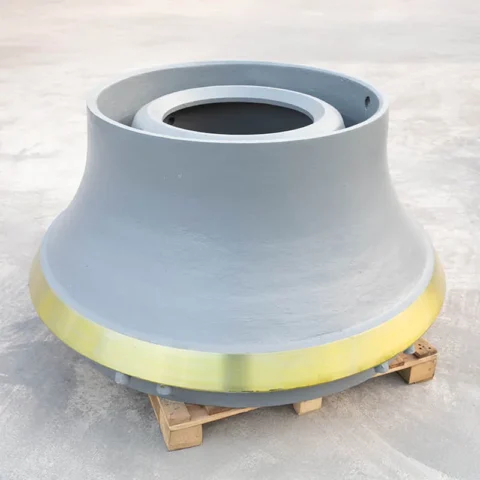
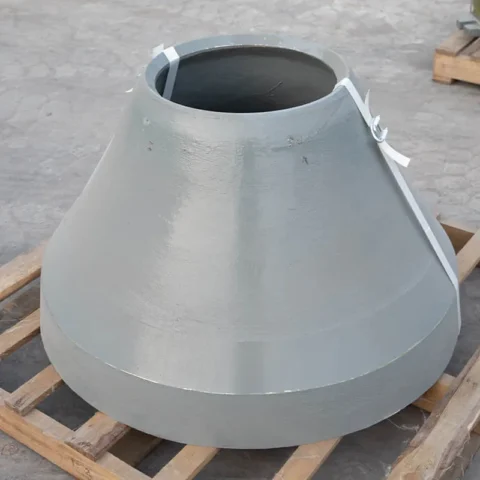
- Mantles: identify the moving liner and its chamber profile.
- Bowl liners or concaves: identify the stationary liner and its matching mantle.
A mantle and a concave are separate components. For a liner set, provide both references or ask for the pairing to be checked. State whether retaining or support parts are also required; a liner reference does not define a complete installation kit.
Identify the correct part
Use the product listings to check the stated model and public reference number. Include every suffix and leading zero. A similar number or the same machine model does not establish interchangeability.
For a repair order or replenishment list, send one line per reference with the required quantity. Identify any parts that need to be quoted together. The quotation confirms the supply scope and delivery terms.
Examples from the product catalogue
- Mantle 814328537800 for Metso GP100
- Bowl liner CW023-003 for Terex MAXTRAK1150/C1545
- Mantle CW023-006 for Terex MAXTRAK1150/C1545
GUBT is an independent aftermarket supplier. Brand names and model designations identify the intended application; they do not imply approval by or affiliation with the original manufacturer.
Terms used on product pages
- Chamber profile: the geometry of the mantle and concave installed as a pair.
- Complete reference: the part number including any suffix identifying a variant.
Frequently Asked Questions
- What should I send for a quotation?
Send the complete reference number, crusher model, quantity and delivery destination. If identification is uncertain, add a clear photo of the marking or installed part.
- Can I ask about several references in one enquiry?
Yes. Keep each reference and its quantity on a separate line. Include the machine model and describe any required assemblies or associated parts.
- How do I confirm availability and delivery?
Ask for confirmation against the exact reference and quantity. The quotation sets out the agreed supply scope and delivery terms.