A CH430 liner enquiry needs separate details for the mantle and the concave: the full reference number, the liner type and the quantity of each. Add the machine version and the parts you expect with the liners. Those details let a supplier check the requested combination and prepare a quotation with a clear supply scope.
A description such as “B mantle and EC concave for CH430” gives a supplier somewhere to start. To quote aftermarket CH430 cone crusher liners, the supplier will also need the complete part numbers, material specification and any associated components you require. The checklist below has space for each detail.
Identify the mantle and concave separately
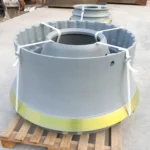
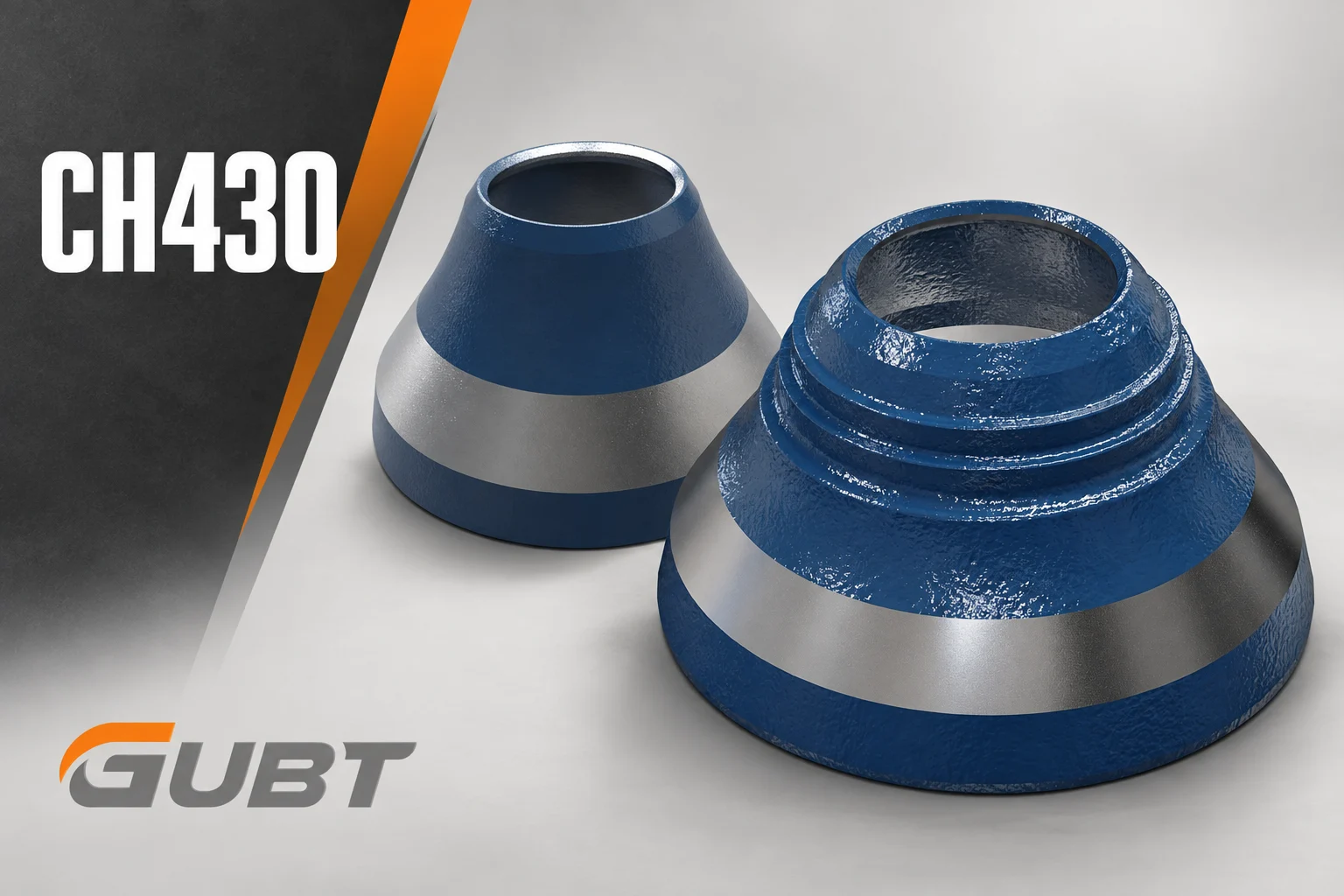
The mantle is the inner liner; the concave is the outer liner. Both form part of the crushing chamber. A buyer may call the outer liner a bowl liner. Include the description from your machine’s parts list alongside the reference number so the supplier can identify the component even if you use different terms.
CH430 machines have several liner configurations. A or B identifies a mantle type, while EC identifies an Extra Coarse concave. The mantle type and concave designation belong in separate fields on the enquiry. They do not specify the steel grade, and the availability of both types for a model does not establish that every possible combination is suitable.
| Item | What to put in the enquiry |
|---|---|
| Mantle | Full reference number, type shown in the relevant parts list, required quantity and current material specification if known. |
| Concave or outer liner | Full reference number, chamber designation, quantity and current material specification if known. |
| Existing combination | Identify which mantle and concave are currently installed together. State whether you want to retain that configuration. |
| Related parts | List any rings, fastening components or other items you want quoted separately. Ask the supplier to identify exclusions. |
If the feed has changed or you need a different finished product, explain this when requesting a different chamber. Have the proposed combination checked against the application before approving the order. The chamber designation alone cannot tell you how the change will perform on your machine.
Check the machine version and full reference numbers
H3800 is a former name for the CH430. That can help when searching older records, but it does not prove that every part listed under either name is interchangeable across machine versions. Send the equipment identification to the supplier and use the parts list applicable to that machine.
Copy reference numbers exactly, including suffixes, punctuation and leading zeros. When the number on an old quotation differs from the number in the parts list, send both and explain where each came from. Ask the supplier to resolve the difference in writing. Avoid shortening a number to its familiar middle digits.
When the part number is missing or unreadable
Photograph the complete removed liner and any legible casting marks. Include the relevant parts-list entry if you have it. The supplier may still need more identification details or dimensions to confirm the replacement. For each requested measurement, record the unit and show where you measured it.
Use photographs of parts already removed during an authorised maintenance shutdown. Follow the site’s isolation and access procedures for any inspection. This article is a purchasing guide, not an installation or lifting procedure.
For an unfamiliar replacement number, request a written cross-reference that identifies the original number, the offered number and the machine configuration covered. Keep that confirmation with the purchase order. A visual resemblance or a similar number alone should not be treated as confirmation.
Describe the application and the wear you are seeing
The feed arrangement, chamber combination, eccentric throw and alloy all affect liner life. Uneven feeding can also produce uneven wear. A short description of the application gives the supplier context for a material or profile discussion.
Record the rock or other material being crushed, available feed-size information and the intended finished product. Include the operating closed side setting (CSS) and eccentric throw if these are known from the machine’s records. Mark an unknown value as unknown. Do not substitute a maximum from a brochure for the setting actually used at your site.
For a repeat order, say whether the current liners perform satisfactorily and identify the configuration you want to retain. If you are trying to solve a problem, describe what you see: uneven wear, a worn area near the discharge, cracking, or a change in product size. These observations help the supplier decide what to check; a photograph on its own cannot establish the cause.
Make wear-life records useful
State whether your liner-life record measures calendar days, operating hours or tonnes processed. Include the installation and removal records where available, the reason for removal and any changes to feed or operating settings during the run. That context helps the supplier compare the records.
Photographs of the worn pair are more informative when each image identifies the component and its orientation. Keep the original images for technical review. Remove customer labels and unrelated paperwork from copies intended for wider sharing.
Specify the material you are asking for
Put the agreed material specification on the quotation and order. If you want to evaluate a different grade, explain the current wear problem and ask what evidence supports the proposed change. A material name by itself does not establish a service-life result for your application.
Before manufacture, agree which material and inspection documents the supplier will provide. Confirm dimensional compatibility separately from any proposed grade change or performance estimate.
Agree what the liner quotation includes
A quotation for one mantle and one concave can still leave the maintenance team short of other items. Specify whether you need loose liners only or also want associated components reviewed and quoted. The required list depends on the actual assembly and maintenance scope.
| Quotation line | Confirmation to request |
|---|---|
| Mantle and concave | Separate references and quantities, with the proposed combination identified. |
| Associated components | Itemised references and quantities for anything supplied with the liners. Confirm whether a burn ring or other ring is a separate line where the assembly uses one. |
| Installation consumables | Confirm requirements against the machine documentation and state what is included or supplied separately. |
| Material and inspection documents | Name the documents agreed for this order and when they will be provided. |
| Packing and delivery | Confirm packing details, destination, delivery terms and the quoted dispatch schedule. |
CH430 parts documentation includes assemblies described with and without the mantle. If you are ordering a mainshaft assembly, have the supplier list its included components. Check that list for any wear parts you expect to receive.
You can browse GUBT’s cone crusher liners and cone crusher spare parts as separate categories. Product listings are a starting point for identification; use the enquiry to confirm the references and scope required for your machine.
Compare quotations on the same basis
Read the line items before comparing totals. Confirm that each quotation covers the same mantle and concave references, quantities and material specification. Then compare the associated parts, documents, packing and delivery terms. An omitted ring or a different quantity changes what the price covers.
Keep alternatives on separate quotation lines. If a supplier proposes another material or liner configuration, ask for the change and any further checks to be listed. You can then compare it with the original request and record which version you accept.
Before issuing the purchase order, resolve every line marked “to be confirmed” that affects fit or supply scope. Save the accepted quotation revision with the order and ask for any later substitutions to be confirmed before dispatch.
Copy this CH430 liner enquiry checklist
Fill in the details you have and leave the remaining fields marked “unknown”. The supplier can then ask for the missing information without mistaking an estimate for a confirmed specification.
Equipment model and version:
Machine identification supplied privately:
Mantle reference and type:
Mantle quantity:
Concave reference and chamber designation:
Concave quantity:
Current material specification, if known:
Retain the current configuration or request a change:
Reason for the requested change:
Material being crushed and feed-size information:
Operating CSS and eccentric throw, if known:
Required finished product:
Current wear observations and operating records:
Additional components to quote:
Required inspection documents:
Delivery country and location:
Required delivery date:
Photos or parts-list details available:
Share equipment identification and technical files directly with the supplier. Remove unrelated customer details, prices and internal order references from documents used for identification.
Questions when ordering CH430 liners
Does “B mantle with EC concave” identify a complete order?
It identifies two configuration descriptions. The order still needs full reference numbers, quantities, the agreed material specification and confirmation of any associated components. The combination must be checked against the machine and its application.
Can I order using an H3800 reference?
Include the H3800 reference and the equipment identification in the enquiry. The historical name helps locate records; the supplier still needs to confirm that the replacement fits the relevant machine version.
Does a liner pair include the burn ring and other installation parts?
Only if the quotation lists them. Ask for included and excluded components to be itemised. Confirm installation-material requirements with the documentation for the actual machine.
Can I request a quote before finding every detail?
Yes. Start with the model, the reference numbers you have and the required quantities. Identify the missing fields so the supplier can explain what remains necessary to confirm the parts and finalise the quotation.
Mantle 442.7989-01 for Sandvik CH430
Send your CH430 liner enquiry to GUBT
Use the checklist to contact Chengdu GUBT Industry Co., Ltd. about aftermarket CH430 liners. Include the two liner references and state which associated parts you want quoted. If a number is missing, describe the part and indicate which identification photos or machine records you can provide.
Sandvik, CH430 and H3800 names are used to identify the equipment discussed. GUBT is an independent aftermarket parts supplier.