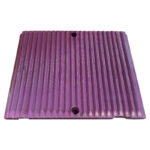
A jaw-plate enquiry can identify the replacement part accurately and still leave an application question unanswered: what should a proposed profile change address? Give the supplier a short record of the feed and the wear you have observed, alongside the existing part specification. Keep the request for a repeat supply separate from a request to review a different profile.
This worksheet helps purchasing teams collect that information from their maintenance and production colleagues. It is a suggested enquiry format prepared by GUBT. The fields are not an equipment manufacturer’s operating specification or an approval to change a jaw plate.
Start with the installed jaw plate
Record the crusher manufacturer, model and relevant version, the fixed or moving jaw position, the complete part reference and the installed profile designation if known. Preserve suffixes and leading zeros. State the quantity for each identified component and list any other required plates or fixing parts separately.
If the reference or profile is uncertain, write “please confirm” and explain which information is available. The part identification checklist covers the supporting record. Resolve that question before treating a proposed profile as a replacement for the installed component.
Describe the feed as it is observed
Metso’s jaw-profile application guidance identifies feed material, size and arrangement, fines, moisture and slabby material as relevant considerations when discussing a jaw profile. Those factors provide useful context for an enquiry; a profile recommendation still needs review for the particular machine and application.
Ask the site team to describe the material actually reaching the crusher. For example, give its known material description, the observed size range and whether the feed changes between duties. State the basis of the description: a recent site observation, a production record or an available test. Include units for recorded sizes and leave unmeasured information marked “not measured”.
Describe fines, wet or sticky conditions and flat or slab-shaped pieces where they have been observed. If their amount is unknown, use a plain description instead of inventing a percentage. Add when the observation was made and whether it represents normal duty or an occasional condition.
Keep wear observations separate from the requested change
Identify the part and area shown in each wear photograph. A useful note might describe uneven wear or damaged teeth, with the observation date and the available service history. Keep fixed and moving jaw records separate. Share only photographs your company is authorized to provide, after removing customer, order and location labels that are unnecessary for the enquiry.
Use existing maintenance records or observations made under the site’s procedures. This worksheet does not require anyone to enter the crusher or inspect operating equipment. The exact equipment instructions govern inspection access, wear limits and replacement work.
Record operating hours or processed tonnage only when a reliable record is available, and identify the unit and period. A photograph and a removal date alone leave the operating exposure unknown. If an old and a new plate are being compared, list the known differences in duty and specification beside the records; leave the cause of a difference open for technical review.
Copy this application-context worksheet
Use one record for each part position being reviewed. The prompts below are purchasing suggestions. Complete them privately with the responsible site team and retain the original supporting records.
| Enquiry field | Information to provide |
|---|---|
| Identified part | Crusher model/version, fixed or moving position, full public reference and current profile designation; mark uncertainties. |
| Requested supply | Quantity and defined unit for each component; any additional items listed separately. |
| Feed description | Known material and normal duty; state whether duties or materials change. |
| Feed size | Observed or recorded range with units, the record date and how the information was obtained; otherwise “not measured”. |
| Fines and moisture | Observed fine material and wet or sticky conditions; distinguish routine from occasional conditions. |
| Material shape | Any observed flat or slab-shaped pieces; describe what was seen without assigning an unverified material property. |
| Feed arrangement | A short description or an authorized existing photograph; identify what the site team knows and what remains unclear. |
| Wear record | Part position, affected area, dated photographs and available hours or tonnage with units and period. |
| Question for review | Repeat the current specification, investigate a stated concern, or review a proposed change; identify the decision still needed. |
There is no need to fill every field with an estimate. A visible “unknown” lets the supplier ask a focused question and helps the buyer see what remains unresolved.
Ask for a written response tied to the part
For a repeat order, identify the specification previously accepted and disclose any known change in the machine or duty. For a proposed profile or material change, ask the supplier to state the proposed difference, the information it used and the further checks needed before acceptance. Keep the current requirement and proposed alternative as separate entries while the review is open.
Carry the agreed reference, profile, material requirement, quantity and included components into the quotation. Agree any required inspection documents for that supply using the quality-document checklist. A profile description or material grade alone does not establish fit or a promised service life.
For general component selection, see jaw plates and cheek plates. When sending a GUBT parts enquiry, put the complete references and quantities in the parts list and add the application observations and open questions in the message. GUBT is an independent aftermarket parts supplier. Identification, proposed specification and supply scope require confirmation for the individual quotation.