
VSI Crusher Spares
Overview
The Vertical Shaft Impact (VSI) Crusher utilizes high-speed centrifugal force to accelerate material particles, enabling efficient crushing through either particle-on-particle impact (ROR mode) or impact against durable wear-resistant liners (ROS mode). This distinctive mechanism significantly enhances crushing efficiency and produces high-quality output. With its compact design and low energy consumption, the VSI crusher is especially well-suited for manufactured sand production and aggregate shaping. It delivers consistently graded, angular, and cubical-shaped particles, meeting the stringent specifications required for high-performance concrete, road construction, and modern aggregate applications. Additionally, it excels in handling abrasive materials, offering extended wear life and reduced operating costs.
Find VSI spares by part position, not just by part name
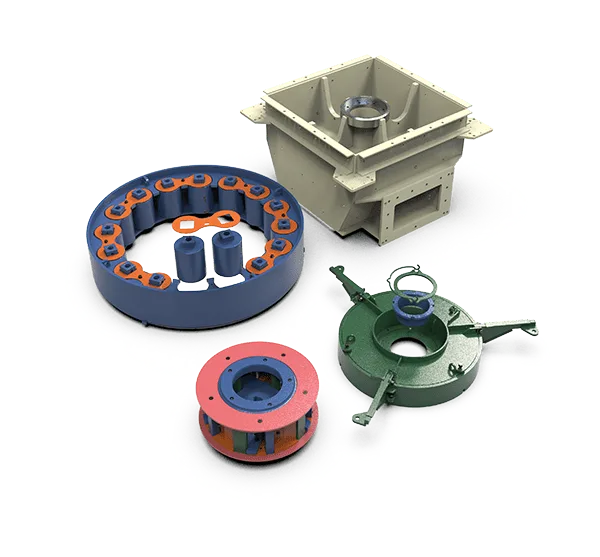
A VSI crusher wears in several places at once. When you search for VSI crusher spares, list each position separately: rotor tips and back-up tips at the exit ports, upper and lower wear plates inside the rotor, the distributor plate that first receives the feed, the feed tube and feed eye ring that guide material in, trail plates, and — on rock-on-anvil machines — the anvils and chamber liners. A single line such as “VSI wear parts, one set” forces the supplier to guess which of these you mean. One line per position, with quantity per set, makes the quotation comparable.
Materials, process and service life
Different positions need different material behaviour. Tips see the highest abrasion as material leaves the rotor, plates see a mix of abrasion and impact, and the feed area sees direct impact from incoming stone. In general terms, manganese and alloy steels are chosen where toughness matters, hardened steels where abrasion dominates, and carbide tips where abrasive wear would consume a plain steel tip too quickly. Heat treatment, casting soundness and machining of the fixing faces decide whether a part seats correctly and wears evenly; a material name alone does not prove either.
Service life is driven by feed abrasiveness, feed size, rotor speed, how evenly material is distributed between ports, and whether worn matching parts were changed together. For that reason this page does not promise a fixed life in hours. Instead, record what you run — rock type, approximate feed size, rotor configuration and the life you got from the last set — and ask the supplier to review the material proposal against that history.
Tolerances and checks before you order
Ask which dimensions will be checked before dispatch and how they will be recorded: overall size, fixing holes or slots, mating faces and weight where balance matters. On arrival, compare markings and key dimensions with the order before the maintenance window, so a mismatch is found while there is still time to act. Keep the reference, supplier and agreed material with the maintenance record; the next order then repeats an accepted specification instead of starting again.
Delivery and order quantity — general notes
Lead time and minimum quantity are confirmed per part. Repeat parts with an agreed specification are normally simpler to schedule than a first-time or modified part that needs pattern, casting or extra machining work. State your required delivery destination and date in the enquiry, and ask what is included — inspection records, packing and dispatch arrangement — so offers can be compared on the same basis.
GUBT supplies independent aftermarket replacement parts. Any reference numbers or equipment names shared for identification are used only to check compatibility. They do not imply affiliation with, or endorsement by, the original equipment manufacturer.
Find a part
No matching part listed. Clear the filters or send your part reference for review. info@gubtcasting.com
GUBT Basic Rotor Assembly replacement for MM0407474
- Part number
- MM0407474
- Listed model
- Barmac 840 MK2
GUBT Main Frame Assembly replacement for N91250013
- Part number
- N91250013
- Listed model
- Metso VI200
Rotor assembly 760STD-MKI for Barmac 760STD MkI
- Part number
- 760STD-MKI
- Listed model
- Barmac 760STD MkI
Rotor assembly 840STD-MKII for Barmac 840STD MkII
- Part number
- 840STD-MKII
- Listed model
- Barmac 840STD MkII
Rotor assembly 840STD-MKIII for Barmac 840STD MkIII
- Part number
- 840STD-MKIII
- Listed model
- Barmac 840STD MkIII
VSI Crusher Parts Categories
| Category | Products |
|---|---|
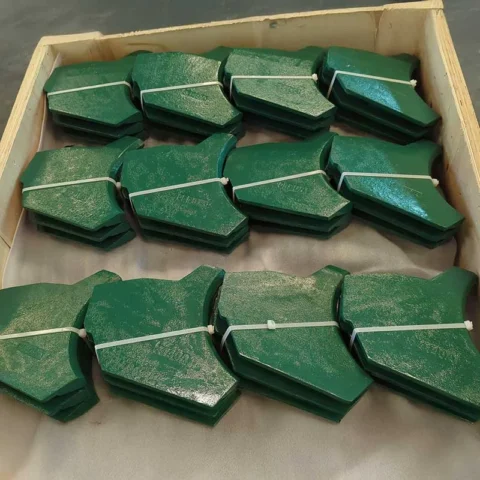
| Rotor & Wear Parts | Rotor tips, Upper and lower wear plates, Distributor plate, Trail plate, Feed eye ring, Rotor body, Back-up tips, Complete rotor assemblies (3–6 ports) |
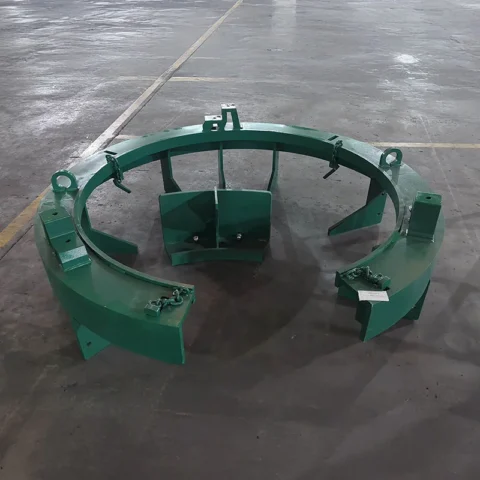
| Chamber & Liner Parts | Chamber liners (cavity rings), Anvil rings (ROS), Rock boxes (ROR), Wear skirts, Chamber shields, Cascade port shields, Gusset wear castings |
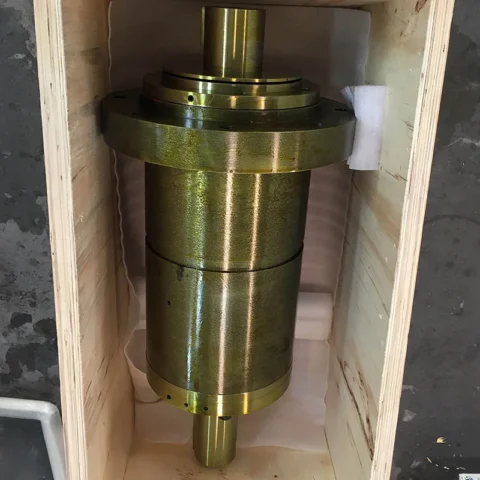
| Shaft Assembly & Drive Parts | Shaft line assemblies / bearing cartridges, Bearings, Seals, Drive belts and pulleys, Taper locks |
| Feeding & Discharge Parts | Feed tubes, Feed control plates / gates, Spreader plates, Discharge chutes, Feed hoppers |
| Safety, Hydraulic & Control Parts | VSI Operation Control System (VOCS) transmitters & sensors, Safety interlock components (locks, keys, switches, solenoids), Hydraulic cylinders, pumps, hoses, seals, Automatic lubrication system components, Electric motors |
| Structural & Auxiliary Parts | Support frames / crusher bases, Roof assemblies, Inspection doors and hatches, Grease hoses, Water-spray system parts, Roof lifter parts |
ROR & ROS
Rock-on-Rock (ROR)
- Principle: Particles accelerated by the rotor impact a self-formed rock layer (rock box), crushing each other through grinding and compression.
- Features: Minimal metal wear; ideal for high-abrasion feeds (>15% silica/Al₂O₃). Produces premium cubical aggregates with lower maintenance costs.
Rock-on-Anvil (ROS)
- Principle: High-speed particles strike fixed metal anvils, fracturing upon impact.
- Features: High reduction ratio (up to 16:1); suited for soft to medium-hard, low-abrasion materials (≤15%). Reversible anvils extend service life and optimize cost per ton.
Crusher Models Supported
| Brand | Models |
|---|---|
| Atairac | VSI700 |
| Bailike | 7000 |
| Barmac | B5100, B6100, B6150, B7100, B7150, B9100, B9600 |
| Canica | VSI1400, VSI2000 |
| Cemco | MR7, Multirok 9 |
| Chyi Meang | V810 |
| ISC | 103, 77, 90 |
| Kemco | 1000S |
| KPI-JCI | 2500, 4500 |
| Liming | VSI9532 |
| Magotteaux | 2400 |
| Metso | VI1665, VI200, VI2080, VI300, VI400 |
| Minyu | MIV800 |
| Nakayama | SR100C |
| Ore Sizer | OM100 |
| Pioneer | 4500 |
| Remco | 250, 300, 400, 500, 500S, 800 |
| Sandvik | CV100, CV105, CV115, CV117, CV129, CV200, CV215, CV217, CV218, CV228, CV229, 73EP, 73LP, 85HP |
| Shaorui | SV10D R500 |
| Trio | TV85, TV95 |
Technical Glossary
- Rotor: The central, high-speed component that projects material outward.
- Rock Box: A layer of material built up within the chamber in ROR configurations to serve as a wear surface.
- Anvil: A fixed, hardened metal surface used in ROS configurations for impact crushing.
- VOCS (VSI Operation Control System): A system of sensors and transmitters for online monitoring and control of crusher performance.
- Wear Plate / Liner: Replaceable components that protect the chamber and rotor from abrasion and impact.
Frequently Asked Questions
- What is a Vertical Shaft Impact (VSI) Crusher?
A VSI Crusher is equipment used to crush and/or screen rock, ore, recycled materials, or any other crushable substances. It is typically used in the final stages of a multi-stage crushing circuit. VSI crushers can handle a wide range of feed sizes and produce various product gradations, including high-quality sand.
- What are the typical hazards when operating a VSI Crusher?
Common hazards include: bite, nip, and pinch points; poor housekeeping; working at heights or in confined spaces; lifting heavy loads; crane risks; sharp edges; high-pressure hydraulics; electrical dangers; unintended start-up; toxic exposure; rotating parts; hot surfaces; conveyor entanglement; dust; noise; and unsafe work methods.
- How can safety be ensured during VSI Crusher operation and maintenance?
Ensure staff are trained using the manual, follow safety regulations, never disable guards or alarms, keep the area clean and well-lit, wear PPE, perform lockout/tagout, use proper rigging methods, and proactively manage known hazards.
- What types of safety devices are built into a VSI Crusher?
Devices include: E-Stop buttons/pull-cords, interlock systems on doors, alarm lights and sounds, and access walkways with handrails.
- What safety considerations are necessary during maintenance and repair?
Lockout/tagout all energy sources, confirm all parts have stopped, depressurize hydraulics, apply fire safety if welding, use permits for chamber access, and perform preventive maintenance regularly.
- What are the effects of dust and noise on operators?
Dust may cause chronic lung damage—use sprays and respirators. Noise levels often exceed 100 dB—hearing protection is mandatory above 85 dB.
- How can portable VSI Crushers be transported safely?
Chock wheels, check tires and brakes, follow axle load limits, use blocking materials, drive within speed limits, test all lights, and verify route clearance and bridge ratings.
- What is the relationship between product gradation and drive power?
Gradation depends on drive power and feed size. Higher power supports larger feed and more throughput (TPH). For example, 500 HP with 1” feed producing ½” product typically yields ~240–250 TPH.
- How do I identify the right VSI crusher spare part?
Start with the part position rather than a photo alone: rotor tip, back-up tip, upper or lower wear plate, distributor plate, feed tube, feed eye ring, trail plate or anvil. Add the equipment and rotor version, the complete reference if known, quantity, and clear photos of the fitted part and its markings. That lets the supplier check shape, fixing method and mating parts before quoting.
- Should VSI rotor tips and wear plates be replaced in sets?
Parts that share the rotor should normally be reviewed as a balanced set. Mixing a new tip or plate with heavily worn matching positions can leave the rotor uneven. Ask the supplier to quote the set quantity for your rotor configuration and confirm which positions are included, then follow the equipment manual for fitting and balance checks.
- What is the difference between rock-on-rock and rock-on-anvil setups?
In a rock-on-rock setup, material is thrown against a built-up bed of stone, so metal wear is concentrated mainly inside the rotor. In a rock-on-anvil setup, material strikes fixed anvils, so the anvils become a main wear position. Tell the supplier which arrangement you run, because it changes which parts to stock and inspect most often.
- Which material should I choose for VSI wear parts?
Match the material to abrasion and impact in your feed. Hardened steels suit many wear plates, while carbide-tipped tips are commonly chosen where abrasion is severe. A harder option is not automatically better if impact or tramp material can chip it. Share feed type, feed size and rotor speed so the proposed material can be reviewed for the position, not just the part name.
- What affects lead time and minimum order quantity?
Lead time depends on whether the part is a repeat item, needs pattern or machining work, and what inspection and packing are agreed. There is no single minimum for every VSI part: a single set may be practical for a repeat reference, while a new or modified part can need a different minimum. Confirm both points in writing for the actual enquiry.