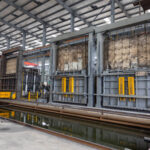
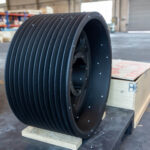
A cone liner leaves the mold with a skin of sand, scale, flash and gate stubs. Finishing turns it into a part that seats, locks, survives storage and can be inspected. It is where two quotes diverge: one includes backing-face machining and masking, the other does not.
Finish Is a Specification, Not a Default
Two castings can meet the same dimensions and arrive in different conditions. One is blasted and primed; the other as-cast with sand in the corners. Surface condition affects coating adhesion, fit and defect visibility.
On a wear part, finish rarely sets the wear rate; alloy and wear profile do. Finishing protects the part before service and makes mounting surfaces fit. Decide which surface needs what, then put it on the drawing.
The Four Finish Zones on a Wear Part
Do not apply one finish note to the whole casting. Split it into zones.
| Zone | Typical finish | State on the drawing |
|---|---|---|
| Wear face | As-cast or blast cleaned; no sand or scale | Visual acceptance; repair policy |
| Mounting face | Machined or spot-faced, coating-free | Flatness, roughness, area |
| Locking features | Machined; masked before coating | Tolerance, masking, gauge |
| Outer surfaces | Blast cleaned and primed | Coating system, dry-film thickness |
A cone crusher liner may need a machined backing face and primer outside; a jaw plate clean seating areas; an HSI blow bar machined locking faces and masked threads; a VSI wear part a clean mounting face.
How to Describe a Casting Surface
Roughness in Plain Terms
Surface roughness is usually written as Ra, the arithmetic average roughness, in micrometres. Lower is smoother. A sand-cast surface commonly sits in the low tens of micrometres; a machined face can reach single digits. State the area, direction and instrument.
Visual Acceptance and Comparators
For most wear faces, a visual comparator or written note is enough: “as-cast, blast cleaned, no visible sand or scale.” For sealing faces, use a numeric Ra plus a method. If appearance does not matter, say so.
Mechanical Finishing
Shot Blasting
Blasting removes sand, scale and loose material and gives a matte surface. It prepares the surface for painting and inspection. Results depend on shot size, pressure, time and coverage. A near-white blast, often written Sa 2½, is common before coating; a light blast may be enough before machining. It also exposes defects, so state the repair policy first.
Grinding, Fettling and Polishing

Grinding removes gates, risers, flash and spatter. On a jaw plate, cleaning edges and seating areas is normal; on a blow bar, ends and locking faces may need grinding for fit. Polishing is rarely justified on a face that rock will abrade. It adds labor and can round edges the drawing expects sharp.
Machining as a Finish
Machining is often the costliest finishing operation and often under-specified. Spot faces, tapped holes and sealing faces need an allowance and a final condition.
Which Features Are Machined
Common machined features are the cone liner backing face, jaw plate bolt holes and seats, the blow bar locking notch and the VSI rotor mounting face. State which surfaces are machined, their tolerance and roughness, and whether machining comes before or after heat treatment.
Sequence Around Heat Treatment
Manganese liners are often machined after heat treatment because the part can move. High-chrome parts may need a different order. If a face is machined after coating, protect the coating. Heat treatment can leave scale, so allow a final clean-up. For alloy selection, see the crusher wear parts materials guide.
Protective Coatings
Primer and paint protect non-wearing surfaces in storage and transport and can carry identification. They belong there, not on a wear face. Paint on a backing face can change the fit.
Primer, Paint and Zinc-Rich Systems
A primer or topcoat is usually enough for indoor storage. A zinc-rich system gives sacrificial protection in a thinner film where fits cannot tolerate galvanizing. Hot-dip galvanizing adds a thick layer that can affect fits and threads and is rarely right on a wear casting.
Agree the dry-film thickness and measurement points. A common protective band is roughly 60–120 µm, system-dependent.
Masking Before Coating
Mask threads, bores, machined fits and locking notches. Masking is cheap before coating and expensive after. If a coated thread is required, agree the gauge and allowance.
Matching Finish to Service
| Part family | Finish that earns its cost | Usually not worth it |
|---|---|---|
| Cone and jaw liners | Clean blast, machined backing face, primer outside | Cosmetic polish on wear face |
| HSI blow bars | Blast, machined locking faces, masked threads | Heavy paint on impact faces |
| VSI wear parts | Clean blast, machined mounting face, coated exterior | Decorative coating on wear surfaces |
For abrasive parts, sound surfaces and correct dimensions matter more than polish.
Specifying Finish on a Drawing
Write a short finishing note that covers:
- A zone map or marked photo of wear, mounting, locking and outer surfaces.
- The condition and roughness per zone, with the measurement area and method.
- Coating system, dry-film thickness, measurement points and colour.
- Surfaces to mask: threads, bores, fits and locking notches.
- Sequence: blast, machine, heat treat, coat, inspect, pack.
- Inspection method and first-article requirement.
A marked photograph often beats a long description.
Inspection and Acceptance
Check before packing; a defect found at destination costs more to fix.
- Surface cleanliness: compare with the agreed reference; record area and result.
- Roughness: profilometer or comparator at agreed points.
- Coating thickness: gauge at agreed points; record the minimum.
- Adhesion: agreed method; record the result.
- Fits and threads: gauge or trial-fit; confirm no coating, burrs or blast damage.
A salt-spray test may be specified, but agree its duration and interpretation. “Pass” without a method is not acceptance.
Cost and Lead Time
Blasting and painting are quick; polishing, masking and multiple coats take longer, and machining usually dominates cost and schedule.
Ask for finishing as a separate line item by operation, with coating, masking and inspection included. A single “finish” line hides whether backing-face machining is included.
Common Defects
- Sand or scale under a coating.
- Runs, sags or thin spots on edges, or a blasted surface left too long before painting.
- Threads or bores coated when they should be masked.
- Coating on a backing face or locking notch that changes the fit.
- Blast damage or grinding marks on a machined face.
FAQ
Do all crusher wear castings need shot blasting?
No. A fully machined part may not need cosmetic blasting. A part that will be painted, stored or shipped as-cast usually does. State the purpose.
What surface roughness should I specify for a liner backing face?
Only as smooth as the fit requires. A backing face that seats against a bowl or backing material may need a machined finish and a flatness requirement; a wear face usually does not. State the area and method.
Can I paint a manganese liner?
You can paint non-wearing surfaces, but paint will not extend wear life. It can aid storage and identification. Keep it off machined fits, bolt holes and locking features.
Should threads be coated?
Usually not. Coating thickness changes the fit and can damage the thread. Mask threads, bores and fits before coating. If a coated thread is required, agree the gauge and allowance.
How do I compare finishing quotes for crusher wear parts?
Ask for a line-item breakdown by operation, coating thickness, masking scope and inspection method. Confirm whether backing-face machining and first-article inspection are included. Compare the same scope.
Request a Quote for Your Casting Project
Send your drawing, finishing requirements and delivery target through our contact page, and we will review the sequence and cost. The quality documents checklist and the packing and dispatch checklist show what will be recorded and how the finish will be protected.