What Are HSI Crusher Parts? (Quick Overview for Buyers)
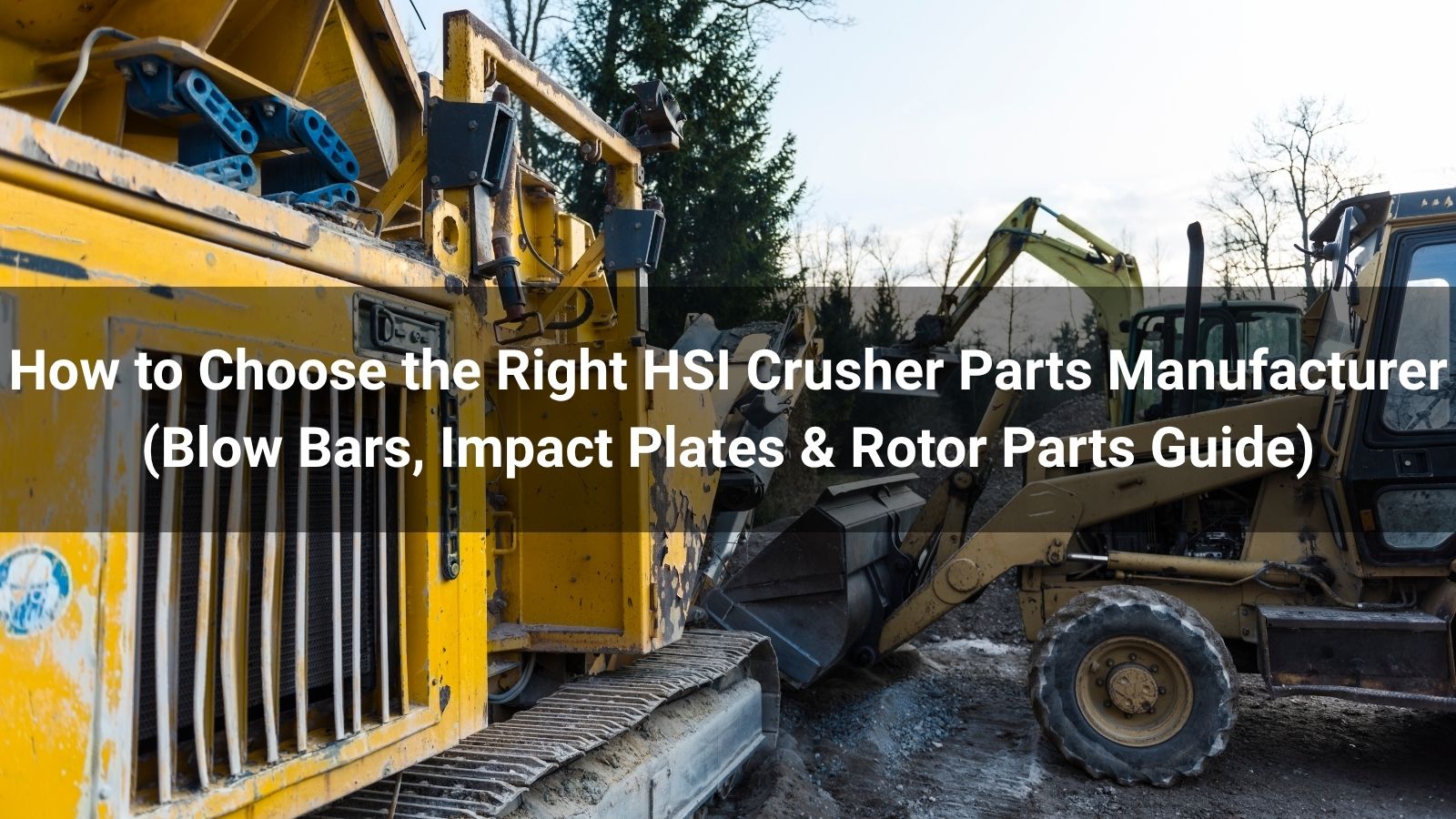
If you’ve been in the aggregate or mining business for any length of time, you already know that a Horizontal Shaft Impactor (HSI) is basically a high-speed rotor spinning inside a crushing chamber — rock flies in, gets hammered against the blow bars, bounces off the impact plates, and comes out the bottom in the size you want. Simple in concept, brutal in execution.
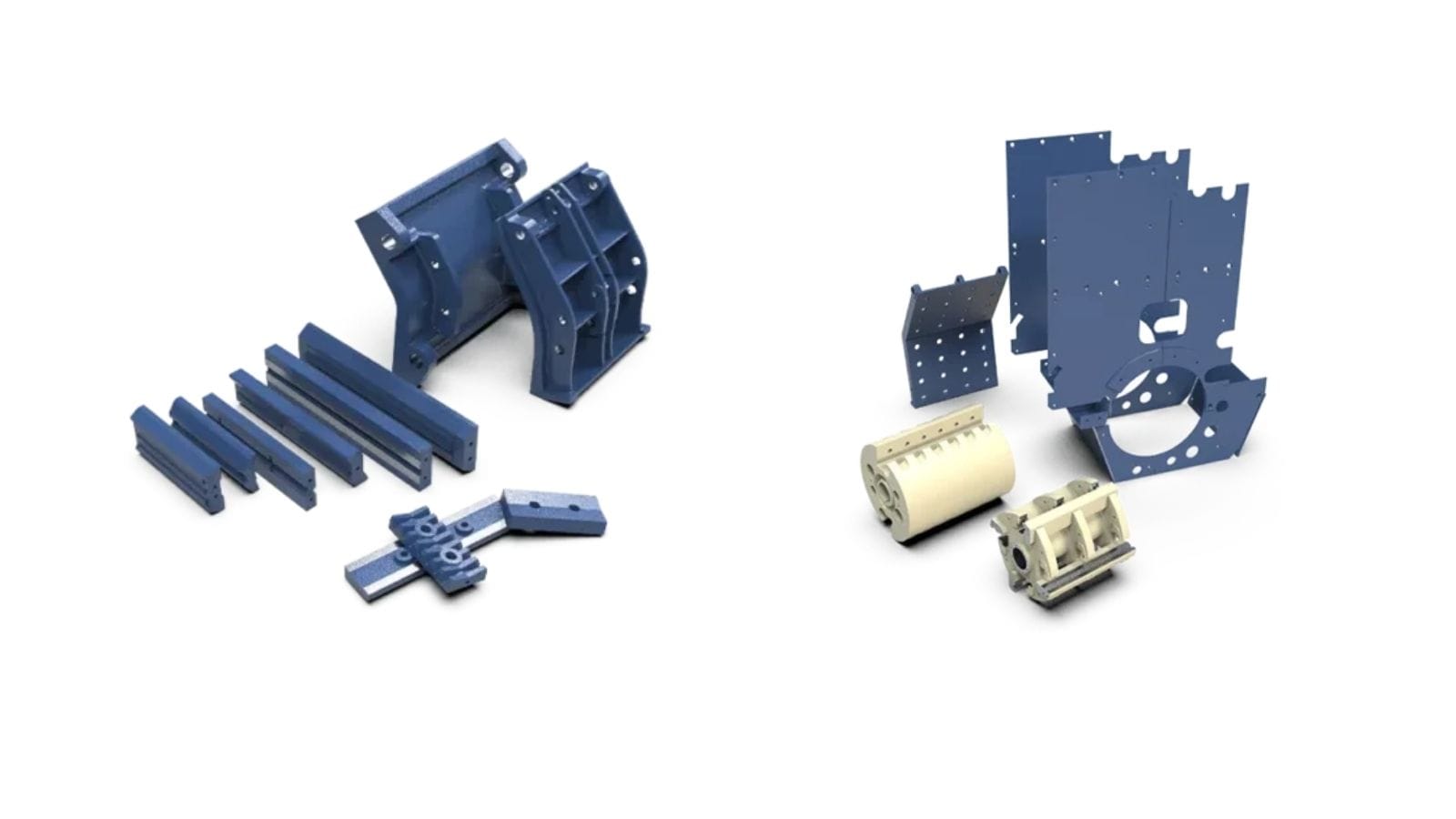
That said, a lot of customers actually mix up blow bars and impact plates when they first start sourcing parts — which is completely understandable. Here’s the quick breakdown:
- Blow Bars — These are the heavy chromium or martensitic alloy bars bolted to the rotor. They take the direct, repeated impact of incoming rock. They wear fast and need the highest impact toughness.
- Impact Plates / Breaker Plates — These are the fixed anvil-style liners positioned around the crushing chamber. Rock ricochets off them after being struck by the blow bars. They see both abrasion and impact, but at a slightly different stress profile.
- Rotor Assembly — The spinning core that holds the blow bars. Rotor geometry, balance, and tip speed all affect crushing efficiency and parts wear life.
- Liners — Side and back liners that protect the crusher frame from wear. Less dramatic than blow bars, but letting them go too long means repairing structural steel — which costs a lot more than a liner.
Bottom line: if you’re buying HSI crusher parts, you’re buying wear parts that are in a constant fight against rock. Getting the wrong ones — wrong material, wrong geometry, wrong heat treatment — doesn’t just cost you parts money. It costs you production.
Why Choosing the Right HSI Parts Manufacturer Matters
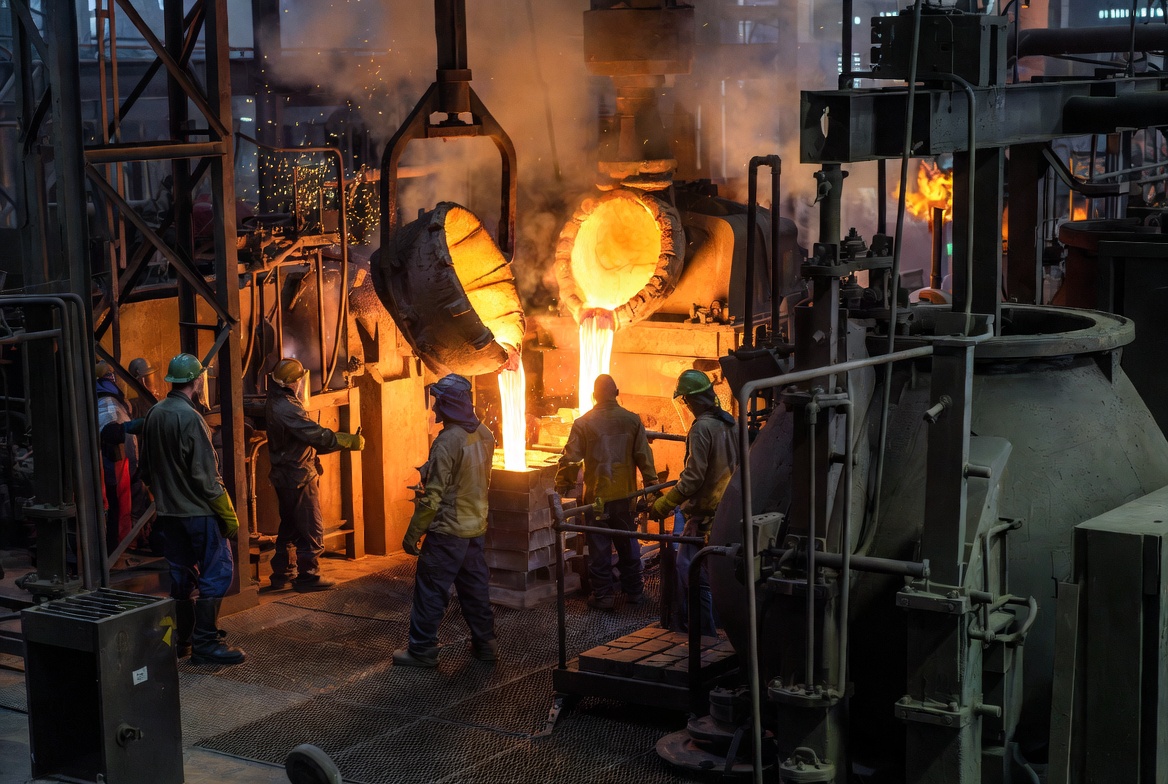
The most extreme case I’ve come across: a quarry switched to a cheaper blow bar supplier to save about 15% on parts cost. Three weeks later they were looking at two unplanned shutdowns, a cracked rotor hub, and a replacement timeline that pushed them six weeks behind a major contract. The “savings” ended up costing roughly eight times the original parts bill.
That’s an extreme case, but the pattern is common. Low-quality crusher wear parts create a cascade of problems:
- Dramatically shorter wear life — meaning more frequent change-outs and more planned downtime
- Higher risk of catastrophic fracture — especially with blow bars that have incorrect chromium content or improper heat treatment
- Uneven wear profiles that throw the rotor out of balance — which accelerates bearing wear and can damage the shaft
- Maintenance cost creep — technicians spending more time changing parts, lubricating, inspecting, rather than running tons
And here’s what a lot of people don’t realize: not all high-chrome materials are the same. A “28% chrome” blow bar from one foundry can outperform a “32% chrome” bar from another foundry by 40% in service life — because the carbide distribution, microstructure, and heat treatment cycle make all the difference. The label on the spec sheet tells you very little without knowing the process behind it.
A lot of people focus purely on price, and that’s understandable — parts budgets are real. But the actual number that matters is cost per ton crushed. A blow bar that lasts twice as long at 30% higher upfront price is almost always the better economic decision, even before you factor in labor and downtime.
7 Key Factors to Evaluate an HSI Crusher Parts Manufacturer
1. Material Quality — High Chrome, Martensitic, Ceramic Inserts
This is where the real differences between manufacturers show up. The main material categories for HSI wear parts are:
- High Chrome Iron (typically 15–28% Cr) — Best for highly abrasive applications like granite, basalt, and river gravel. Excellent abrasion resistance, but more brittle.
- Martensitic Steel — Better impact toughness, preferred for softer but more impact-heavy materials like limestone, coal, or recycled concrete.
- Ceramic Insert Composites — Used in extremely abrasive conditions; very long wear life but higher upfront cost and more brittle behavior.
Don’t get fooled by the “high chrome” label alone. What matters is the carbon-to-chromium ratio (which determines how much chromium carbide actually forms), the heat treatment protocol, and the cooling rate during solidification. A well-made 20% chrome blow bar will outlast a poorly processed 28% chrome bar every time.
The right material also depends on your application: limestone quarrying calls for a different metallurgical profile than granite crushing or recycled demolition material. A manufacturer worth working with should ask you about your material before recommending anything.
2. Manufacturing Process & Heat Treatment
Two bars made from the same alloy can have completely different service lives — and the reason is almost always in the manufacturing process. Casting quality, heat treatment temperature curves, and cooling protocols determine the final microstructure of the wear part.
Same material, different heat treatment: wear life difference of up to 2x is not unusual. This is documented across foundry studies and confirmed by field data from quarry operators who have tested multiple suppliers side by side.
Key manufacturing quality indicators to look for:
- Controlled pouring temperatures and sand mold quality
- Documented heat treatment cycles (austenitizing temperature, hold time, quench method)
- Post-treatment hardness verification (Rockwell or Brinell testing per batch)
- Dimensional inspection before shipment — especially on blow bars where weight balance affects rotor stability
3. OEM vs Aftermarket Capability
OEM (Original Equipment Manufacturer) parts are made by the crusher manufacturer — Metso, Sandvik, Terex, Kleemann, etc. Aftermarket parts are made by independent foundries and fabricators to fit the same crushers.
|
Criteria |
OEM Parts |
Aftermarket Parts |
|
Price |
High (brand premium) |
Lower (20–50% typically) |
|
Availability |
Limited / long lead times |
Flexible, often faster |
|
Customization |
Not available |
High — alloy, geometry, inserts |
|
Documentation |
Full OEM spec |
Varies by supplier quality |
|
Field Performance |
Consistent (if spec’d right) |
Varies — supplier-dependent |
Honestly, the majority of mining and quarry operations run aftermarket parts — not because OEM parts are bad, but because the lead times, minimum order quantities, and pricing structure of OEM supply chains don’t work for most operations. A crusher that’s down waiting three weeks for OEM parts is a business problem, not a quality solution.
The key is finding an aftermarket supplier that can document their metallurgy and back it up with field performance data. That’s where the quality gap actually sits — not in the OEM vs. aftermarket decision itself.
4. Customization Ability — Rotor, Liners, Blow Bars
Standard catalog parts fit standard operating conditions. But operating conditions are rarely standard.
A quarry crushing wet clay-bearing limestone at 120 tph has very different wear requirements than a recycling plant processing mixed demolition rubble at 80 tph. The blow bar alloy, the liner geometry, and even the rotor tip configuration that works well in one site can be completely wrong for another.
A manufacturer with genuine customization capability should be able to address:
- Alloy selection based on your specific rock type, hardness, and abrasivity index
- Weight-matched blow bar sets (critical for rotor balance)
- Modified liner profiles for specific product gradation targets
- Custom rotor assemblies for non-standard crusher configurations or older models with discontinued OEM support
5. Wear Life & Cost Performance
A lot of people think cheap = saving money. When you calculate actual cost per ton crushed, the picture usually looks very different.
|
Factor |
Cheap Parts |
Premium Parts |
|
Lifespan |
Short (baseline) |
1.5x–2.5x longer |
|
Downtime frequency |
High |
Low |
|
Labor cost per change |
Same |
Same (but less frequent) |
|
Cost per ton crushed |
High (hidden cost) |
Lower (full picture) |
|
Risk of catastrophic failure |
Higher |
Lower |
|
Total annual parts spend |
Often higher |
Often lower |
The calculation is straightforward: take the total parts cost over a period, divide by the tons produced. Include labor, downtime, and any collateral damage from premature failures. In almost every analysis that accounts for these real-world factors, premium parts from a quality manufacturer win on total cost of ownership.
6. Lead Time & Supply Stability
A crusher that’s sitting idle waiting for blow bars is costing you money every hour — in most operations, the cost of a single unplanned shutdown day far exceeds the price of a full set of replacement wear parts.
When evaluating a supplier’s supply stability, look at:
- Finished goods inventory for fast-moving SKUs (common crusher models should ship within 1–3 days)
- Casting capacity and scheduling flexibility for custom or high-volume orders
- Geographic location relative to your operation — shipping time matters, especially for emergency orders
- Track record of on-time delivery and responsiveness when problems arise
Emergency lead times are where supplier relationships get tested. A supplier who delivers reliably in normal conditions but goes quiet during a production crisis isn’t a partner — they’re just a vendor.
7. Technical Support & After-Sales
Here’s a reliable filter: when you contact a crusher parts supplier, pay attention to what they ask you first.
A supplier with genuine technical competence will ask you: What material are you crushing? What’s your current blow bar wear pattern? What’s your rotor speed and feed size? How many tons per shift? They’ll want to understand your application before recommending anything.
A supplier who just asks for the part number and sends a quote in 90 seconds probably isn’t going to help you optimize your operation — they’re going to sell you whatever they have in stock.
After-sales technical support that’s actually valuable includes:
- Wear pattern analysis — if your blow bars are wearing unevenly, there’s usually a process reason
- Installation guidance — especially important for rotor-mounted components where incorrect installation affects balance
- Performance benchmarking — comparing your parts life against typical benchmarks for your material type
- Proactive communication when a production issue is identified
Common Mistakes When Choosing HSI Crusher Parts Suppliers
After working in this space for a while, you see the same mistakes come up repeatedly. Here’s a quick breakdown of the most costly ones:
Only Looking at Price
The classic trap. A client once bought a full pallet of blow bars at a 35% discount versus their usual supplier. Six weeks later they were calling for an emergency shipment of replacements — and paying expedited freight on top of it. When they ran the numbers, including two days of partial downtime, they’d spent more than if they’d bought the premium bars to begin with.
Ignoring Material Specifications
Accepting a “high chrome blow bar” at face value without asking for a material composition report or hardness certificate is a risk. Ask for the Cr%, C%, heat treatment protocol, and Rockwell hardness. Any reputable manufacturer can provide this. If they can’t or won’t, that tells you what you need to know.
Skipping Trial Orders
Buying a full production quantity from a new supplier before running a trial is a gamble that doesn’t need to be taken. A legitimate manufacturer will support small trial orders. Run the parts, measure your wear life and fracture rate, then make the call on scaling up.
Not Checking Application References
Talk is cheap. Ask the supplier for references from operations running the same material type as yours. A blow bar that works great in limestone doesn’t necessarily perform the same way in high-silica granite. Material-specific field references are the most reliable performance indicator you can get.
That said — a supplier who’s honest about where their product performs well and where it doesn’t is often more trustworthy than one who claims to be perfect for every application.
OEM vs Aftermarket HSI Crusher Parts — Which Is Better?
The honest answer is: it depends on your situation. But here’s a more nuanced breakdown:
|
Criteria |
OEM Parts |
Aftermarket Parts |
|
Price point |
Higher (30–80% premium common) |
Lower |
|
Availability |
Sometimes limited, longer lead times |
Generally faster, more flexible |
|
Customization options |
Very limited |
High — alloy, geometry, inserts |
|
Warranty support |
Manufacturer-backed |
Varies — supplier-dependent |
|
Best suited for |
New machines under warranty |
Established fleets, cost control |
|
Risk level |
Lower (consistent) |
Variable (supplier-dependent) |
For a brand-new crusher under OEM warranty, running OEM parts makes sense — you don’t want to create warranty complications. For an established fleet with experienced maintenance staff and a good aftermarket supplier relationship, aftermarket parts almost always make more economic sense.
The key variable isn’t OEM vs aftermarket — it’s the quality and reliability of the specific aftermarket supplier you’re working with. A verified aftermarket manufacturer with documented metallurgy and field references is a significantly better choice than OEM parts with an eight-week lead time when your crusher is down.
How to Verify a Reliable HSI Crusher Parts Manufacturer
Use this checklist when evaluating a new supplier. If a manufacturer can’t clear most of these, move on.
- Material documentation — Can they provide a composition report with Cr%, C%, and other alloy elements per batch?
- Hardness certification — Is there a hardness test result (Rockwell or Brinell) for each production batch?
- Application references — Can they provide contacts from operations running similar material types?
- Trial order support — Will they support a small trial quantity before you commit to full production volumes?
- Technical inquiry quality — Do they ask about your application, or do they just send a quote?
- Lead time transparency — Can they give you reliable lead times and hold to them?
- Post-sale communication — Do they follow up after delivery to check on performance?
Quick rule of thumb: if a manufacturer can’t provide a material composition report, that’s effectively an automatic disqualification. There’s no legitimate reason to withhold it, and plenty of reasons to not provide it.
Recommended HSI Crusher Parts Applications (Mining, Quarry, Recycling)
Mining Operations
High-abrasivity ores (copper, gold, iron) demand maximum wear resistance. High-chrome blow bars with verified carbide microstructure are the primary choice. Downtime cost is typically very high, so parts life takes priority over unit cost. Custom alloy development for specific ore chemistries is not uncommon in large-scale operations.
Aggregate Quarrying
The most common HSI application. Material ranges from soft limestone (where impact toughness matters more than abrasion resistance) to hard granite and basalt (where high-chrome dominates). A good aftermarket supplier should be able to recommend the right alloy grade for your specific rock type, not just offer a generic “standard” blow bar.
Recycling & Demolition
Mixed material streams — concrete, asphalt, rebar-contaminated rubble — create unpredictable loading conditions. This is where alloy selection is most nuanced, because you need impact toughness to handle steel contamination while maintaining enough hardness for concrete abrasion. Martensitic steel blow bars are often preferred here, and cost control is typically a priority given the lower margin of the recycling business.
Final Thoughts: Choosing a Long-Term HSI Parts Partner
The suppliers that create the most value for quarry and mining operations aren’t the ones with the lowest price list — they’re the ones who understand your operation well enough to help you optimize it over time.
Our standard recommendation: start with a small trial order. Run the parts through a full wear cycle, measure the results against your current baseline, and make the scale-up decision based on real field data rather than spec sheets or sales presentations. A supplier worth working with long-term will actively support this process — not try to push you into a full-volume commitment before you’ve had a chance to verify performance.
Manufacturers who focus on long-term performance outcomes — like the specialized wear casting suppliers who build their reputation on repeat business rather than one-time transactions — tend to be more invested in solving your actual problem. That’s the type of supplier relationship worth building.
If you’re evaluating options, look for foundries like gubtcasting that focus on high-performance wear castings and are willing to discuss your application in detail before making a recommendation. The conversation before the sale tells you a lot about what the relationship after the sale will look like.
FAQ: HSI Crusher Parts Manufacturer & Selection
How do I choose a reliable HSI crusher parts manufacturer?
Honestly, don’t start with price. A reliable HSI Crusher Parts Manufacturer will first understand your application—material type, feed size, and rotor speed—before quoting. It’s best to work with suppliers that offer both OEM HSI Parts and Aftermarket HSI Parts, as they usually have stronger engineering capabilities. Also, always ask for material reports and real case references.
What are the most important HSI crusher wear parts?
The key components include HSI Blow Bar Parts, HSI Impact Plate, HSI Breaker Plate, and HSI Rotor Parts. Blow bars are the main wear parts and take the most impact, while impact plates and breaker plates control material flow and secondary crushing. Choosing the right Crusher Wear Parts is critical for performance.
OEM HSI parts vs aftermarket HSI parts — which is better?
It depends on your needs. OEM parts offer precise fit but are often more expensive. Aftermarket HSI Parts provide better flexibility and cost efficiency. In reality, many operations choose a trusted HSI Replacement Parts Manufacturer for long-term savings—if quality is consistent.
How long do HSI blow bar parts typically last?
Lifespan varies based on material, application, and operating conditions. High-quality HSI Blow Bar Parts made from high chrome or martensitic steel can last significantly longer. The key is not just part price, but overall cost per ton.
Can I get custom HSI crusher parts for my machine?
Yes, and in many cases, you should. A professional Custom HSI Liners Manufacturer or HSI Rotor Assembly Manufacturer can optimize design based on your specific material and workload. Customization often reduces downtime and extends wear life.
What should I check before buying crusher spare parts?
Before purchasing, verify material reports, application cases, lead time, and technical support. A trustworthy HSI Parts Supplier should provide testing data and clear specifications. If not, it’s a red flag.
Are HSI crusher parts suitable for mining and quarry applications?
Absolutely. High-performance Crusher Wear Parts are widely used in mining, quarry, and recycling industries. Choosing the right Mining Crusher Parts Supplier or Quarry Crusher Parts Manufacturer ensures better durability and efficiency.
Related Reading:
How to Choose HSI Crusher Parts for Maximum Performance
Made in China: 5 Key Advantages of Sourcing Direct from crusher Wear Parts Factories
HSI Crusher Parts: The Ultimate Guide to Blow Bars, Rotors, and Impact Plates
Quality Standards & Certifications:
ISO 9001:2015 Certified Quality Management System