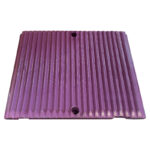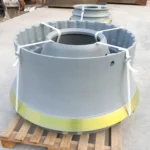
HSI blow bars sit on the rotor; breaker-plate liners and side liners are different pieces. A purchase request that calls all three ‘impact liners’ can lead to an incomplete or incorrect delivery. Start with the machine and rotor version, then name each worn position. Material choice comes after the feed and the likelihood of foreign metal are understood.
Separate the chamber positions
The primary challenge in HSI maintenance involves distinguishing between blow bars, breaker plates, and side liners. Each component serves a distinct role in the reduction process, and misidentification leads to improper fitment. Blow bars are the primary impact tools, while breaker plates and side liners protect the chamber housing from excessive wear. Maintenance teams should verify the specific rotor version and the locking or fastening arrangement before sourcing replacements. Relying solely on visual similarities is insufficient, as dimensions and mounting configurations vary significantly between different machine models and production series.
Choose material for the feed
Selecting materials for blow bars requires balancing impact resistance against abrasive wear. No single material serves all crushing environments. High-impact applications with a high risk of tramp metal require different metallurgical properties than those used in highly abrasive, clean-feed scenarios. Buyers should evaluate their specific feed material characteristics before selecting a alloy. Because material performance is not universally ranked, maintenance managers should request technical data sheets that outline the specific hardness and toughness profiles of the offered alloys to determine suitability for their particular crushing application and feed composition.
Record the rotor arrangement
A reference code serves only as an identifier for a specific part design and does not provide proof of interchangeability between different manufacturers or machine generations. When reviewing documentation, treat these codes as starting points for verification rather than definitive confirmation of fit. Request detailed dimensional drawings and material specifications for every part number provided. Cross-reference these drawings against the original equipment manual to confirm that the fastening arrangement and physical dimensions align with the current rotor configuration. Never assume that a shared reference code implies identical metallurgical properties or mechanical tolerances.
Check what arrives
Upon delivery, inspect all wear parts for dimensional accuracy and surface integrity before installation. Compare the received components against the original purchase specifications and the equipment manual requirements. Check the fastening points and locking mechanisms to confirm they match the rotor design exactly. If the parts do not align perfectly with the mounting hardware, halt the installation process immediately. Qualified personnel should perform a physical fitment check on a single bar or liner to ensure proper seating within the chamber before proceeding with a full replacement of the wear set.
Describe the HSI in the RFQ
Record the model, rotor version, blow-bar dimensions or full public reference, locking arrangement and quantities. List breaker-plate and side liners separately. Describe the feed and any foreign-metal exposure, then ask the supplier to state its proposed material and the evidence available for the order. Rotor balancing, lifting, installation and wear limits remain work for qualified personnel following the exact equipment manual.