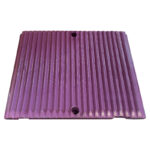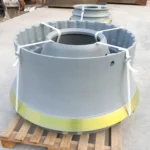
A jaw crusher parts quotation is only comparable when it covers the same parts and delivery terms. A price for one jaw plate cannot be compared directly with a price for a complete liner set. Before asking for a lower price, check the full part references, installed positions, quantities and supply scope.
This guide covers replacement jaw plates, cheek plates and the information needed to obtain a usable quotation. It does not provide a universal price list: the exact component, specification, order quantity and agreed delivery terms need to be identified first.
Identify what the quotation includes
| Part | What to identify | What needs separate confirmation |
|---|---|---|
| Fixed jaw plate | Complete reference, stationary position and tooth profile | Whether the plate is one piece or part of a split arrangement; whether retaining parts are included |
| Swing jaw plate | Complete reference and moving-jaw position | Whether the quoted item includes the opposite jaw or is a single plate |
| Cheek plate | Upper or lower position and any specified side | Whether the price is per piece or for an identified set |
| Wedge or retaining component | Its own reference and mating jaw arrangement | Quantity required and the components included in the quotation |
A machine model is useful context, but it does not identify every installed liner configuration. Include the full reference, including suffixes and leading zeros. If a reference is unreadable, send clear photographs and the available machine identification; ask the supplier to resolve the uncertainty before confirming the order.
Why two jaw-plate prices may differ
Different parts or supply scope
Check that both quotations refer to the same fixed or moving plate, profile and arrangement. A split plate is not the same purchasing unit as a complete jaw. Cheek plates, wedges and bolts should appear as separate lines unless the quotation explicitly includes them.
Material and inspection requirements
State the required material grade against the identified part. If you are discussing a change, describe the feed material, feed size and operating conditions. A manganese percentage alone does not establish suitability or service life. Ask which material, heat-treatment and dimensional records are available for the quoted order; agree the inspection scope before purchase.
Quantity, packing and delivery terms
Compare the same quantity and the same delivery basis. Confirm the named delivery location, packing requirements and which freight or handling charges are included. Check the quotation validity and the delivery commitment for the actual order. A website listing does not confirm stock or a dispatch date.
Prepare a parts list the supplier can quote
Use one line for each public reference. Keep similar-looking numbers on separate lines until they have been checked. Do not shorten a reference or replace it with an internal stock code that the supplier cannot identify.
- Complete part reference and equipment model.
- Part name and installed position: fixed, swing, upper, lower or another confirmed location.
- Quantity and whether you need individual pieces or a specified set.
- Required material or profile, where already established.
- Delivery destination and any required packing or inspection documents.
- Photographs or drawings you are entitled to share when identification is uncertain.
For example, an enquiry for a cheek plate should state its reference, upper or lower position, model and quantity. If both upper and lower pieces are needed, list both references. Do not assume that either a product photograph or a set description includes every adjacent component.
Compare quotations before confirming the order
- Do the references, suffixes and quantities match your request?
- Is the price per piece, per pair or per explicitly listed set?
- Are the plate position and profile clearly identified?
- Are any excluded retaining or mating parts listed?
- Are the material and agreed inspection records stated?
- Are packing, delivery terms, destination, validity and lead time clear?
Resolve differences in writing. Keeping the accepted quotation and the identification details with the order also makes repeat purchases easier. When the installed configuration changes, recheck the references instead of reusing an earlier description without review.
Price and wear cost are different questions
The lowest purchase price does not, by itself, establish the lowest operating cost. Compare recorded operating hours or processed tonnage only under sufficiently comparable conditions. Feed characteristics, settings, installation and operating practice can affect wear. Avoid choosing a part on an unsupported service-life percentage.
For a repeat order, record the part reference, material specification, operating conditions and observed wear pattern. These records give the supplier a more useful basis for discussing a replacement than a general request for a harder or longer-lasting plate.
Find parts and request a quotation
Browse jaw plates and cheek plates, or use the C3054 parts catalogue to review the listed references. Use the existing parts-list enquiry for an order containing several components.
Send your parts list to GUBT. Include each reference, model, quantity and destination. Chengdu GUBT Industry Co., Ltd. supplies independent aftermarket parts; original manufacturer names identify the intended application and do not imply affiliation or approval. Compatibility and supply scope remain subject to confirmation for the specific enquiry.