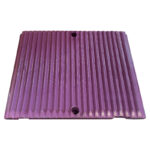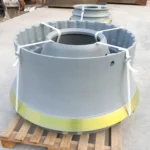
“Cone liners for HP300” looks specific on an enquiry, yet it can still leave the supplier guessing. Which cavity is installed? Is the request for the moving mantle, the stationary bowl liner, or both? Has the machine been modified since the parts book was issued? Those answers matter before anyone selects an alloy or quotes a price.
Identify the part by its position
The mantle moves with the crusher head. The bowl liner, also called a concave on some machines, is the stationary wear surface opposite it. Together they form the crushing chamber. A feed plate and protective liners have different jobs and should appear as separate lines on a purchase request. A photograph of a worn part can help identify its position, though a photograph alone cannot establish its dimensions.
Ask the maintenance team to record the machine model and serial number, the current cavity or chamber designation, and any known machine or liner revision. Where a part carries a public reference number, copy the whole number, including its suffix. Keep the number on the enquiry even if the buyer also supplies measurements; it helps the supplier find a candidate without treating the code as proof of interchangeability.
Match the chamber to the duty
Liner profile affects how feed moves through the chamber. Feed size and properties, the closed-side setting and the pattern left on the old liners all help explain why a profile worked or wore unevenly. If the site is considering a different profile, share those operating details with the supplier and check the proposed change against the equipment manual. An alloy name such as Mn18Cr2 does not settle the geometry question, and it does not predict a fixed service life.
Wear records are more useful than a single “hours lasted” figure. Note where the mantle and bowl liner wore most, whether both pieces were changed together, and whether feed or setting changed during the run. These observations give the supplier a basis for discussing the requested profile and material. They do not turn one site’s result into a promise for another machine.
Request evidence for the actual part
Before ordering, ask the supplier to state the drawing or measured geometry used for the proposed part, the material specified for this order, and the scope of any dimensional or material inspection record it can provide. A report from another casting is useful as an example of the document format; it does not certify the part being quoted. If the supplier proposes a substitute reference, require an explanation of the dimensions and configuration checked, rather than accepting a visual resemblance.
Put the scope on each RFQ line
List mantle and bowl liner separately, with quantity, model, cavity, complete public reference number if available, requested material and required delivery destination. State whether feed plates, backing-related items or fasteners are required; do not assume they are included with a liner. Send clear photographs of the part and its markings when identification is uncertain. On receipt, compare the supplied markings and agreed dimensions with the order before the parts enter the maintenance job. Installation and wear limits must follow the manual for the exact machine and the site’s qualified procedures.