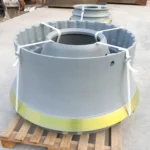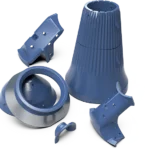
An Indian buyer comparing crusher-part quotations needs a shared technical description before prices or freight terms mean much. Record the machine and the part position, then make every bidder respond to the same material, scope and inspection questions. Local import requirements vary by transaction and should be checked with the buyer’s broker rather than inferred from an online supplier list.
Fix the part identity
Accurate identification begins with the machine model and the specific reference code for the component. A reference code serves as an identifier that requires confirmation against the physical dimensions and existing assembly drawings, rather than acting as proof of interchangeability. Buyers should cross-reference these codes with the original equipment documentation to confirm the geometry matches the current crusher configuration. Relying solely on a part number without verifying the physical specifications often leads to installation delays. Request detailed dimensional drawings from the supplier to confirm the component matches the required tolerances before finalizing any purchase order.
Read what the quote includes
Distinguishing between a general part description and a technical specification is essential for receiving accurate offers. A quotation should explicitly state the material composition, such as specific manganese steel grades or alloy percentages, rather than using generic industry terms. If a supplier provides a quote based only on a part number, request a formal technical data sheet that outlines the chemical composition and heat treatment processes. This documentation allows maintenance teams to compare offers based on material properties rather than price alone. Clarify whether the quoted scope includes all necessary hardware or if additional fasteners are required for installation.
Ask for relevant evidence
Before finalizing a contract, define the specific evidence required to verify the quality of the parts upon arrival. Request copies of material test reports and dimensional inspection records that correspond to the specific batch being manufactured. These documents should be provided before shipment to allow for a preliminary review. If the component requires specific surface finishes or hardness levels, ask the supplier to provide photographic evidence or third-party test results that confirm these parameters. Establishing these requirements in the initial inquiry ensures that both parties understand the criteria for acceptance before the goods leave the facility.
Agree destination and documents
Compare offers by evaluating the freight terms and the physical condition of the packing materials. Specify the required packing method, such as reinforced wooden crates or moisture-resistant wrapping, to prevent damage during transit. When reviewing shipment terms, identify who holds responsibility for the goods at each stage of the journey. Request a detailed breakdown of the freight costs and the estimated transit time to the port of entry. Confirm that the supplier provides a complete packing list and a commercial invoice that matches the agreed-upon technical specifications to avoid discrepancies during the unloading process at the destination.
An RFQ for an India-bound order
State the machine version, part position, complete public reference or approved measurements, requested material and quantity. Ask suppliers to specify included hardware, inspection records, packing, destination and Incoterm. Coordinate import documents and responsibility with the buyer’s broker before dispatch. This page is a comparison checklist; it does not identify or rank the ten best suppliers in India.