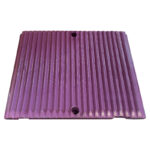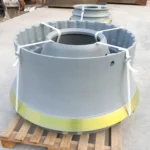
A custom crusher casting starts with information the buyer is allowed to share. A worn sample may show the location and general shape, but it will not always show the original dimensions after wear. Before asking a supplier to reverse-engineer it, establish the drawing revision, the critical interfaces and who has the right to provide the technical material.
Identify the lawful reference
The primary challenge in sourcing custom crusher parts involves accurately mapping the component to the specific machine version. A reference code serves as an identifier for communication but does not function as proof of interchangeability. Buyers should provide the machine model, the exact part position, and either public reference data or measured geometry from a known sample. When using a physical sample for reverse engineering, clarify which rights the organization holds to share technical data with third parties. Avoid relying on assumptions about part compatibility based solely on visual similarity or shared identification codes.
Capture the critical interfaces
A quotation for custom parts differs significantly from a standard supply contract. The quote should explicitly state the technical specifications, the scope of supply, and the agreed-upon acceptance evidence. It must also define the freight terms, destination, and delivery commitment for the actual order. While a supplier may provide a sample inspection report, this document only validates the specific sample tested and does not guarantee the consistency of future production runs. Buyers should request a clear breakdown of how the supplier intends to verify dimensions against the provided drawings or physical samples during the manufacturing phase.
Agree the trial and inspection scope
To evaluate the quality of custom parts, request specific evidence before finalizing an order. Ask for the methodology used to translate measured geometry into production drawings and inquire about the revision control process. If the supplier performs prototype inspection, request the raw data from those measurements rather than a summary report. Determine if the supplier can provide material certification that matches the requirements defined in the initial request. Buyers should ask for documentation detailing how the supplier manages deviations from the original design and what steps are taken to ensure the final product meets the specified material standards.
Control later revisions
Upon receiving the manufactured parts, perform a systematic comparison against the original technical requirements. Use the agreed-upon acceptance evidence to verify that the delivered components match the dimensions and material specifications outlined in the purchase order. Do not assume that the parts are ready for installation without a thorough inspection of the critical contact surfaces. If the parts differ from the provided drawings or samples, document the discrepancies immediately. Maintain a record of these findings to inform future procurement decisions and to track the consistency of the supplier output over multiple production cycles.
Describe the custom-part enquiry
State the machine and part position, what authorized drawing or sample is available, and which dimensions the buyer has verified. Mark interfaces and material requirements that matter for acceptance. Ask for a proposed inspection and prototype review process before any repeat order. Keep drawing revisions and approved changes together so a later quote refers to the same geometry. No reverse-engineered part should be described as OEM-approved or automatically interchangeable.