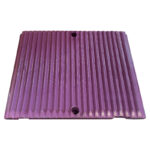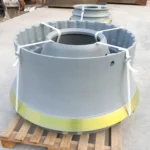
Hard rock can wear liners quickly, but ‘hard rock’ alone is too broad to select a grade. Feed abrasiveness, impact, chamber or tooth profile and the history of the current part all influence the choice. The useful comparison is between documented runs under similar duty, with changes to feed or settings recorded, rather than a promised lifespan multiplier.
Describe the rock and duty
Cone crushers rely on the interaction between a moving mantle and a stationary bowl liner to reduce material. Selecting the correct profile depends on the feed size, the physical properties of the rock, and the current closed-side setting. Because these variables dictate the crushing action, the chamber profile must match the existing equipment configuration exactly. A reference number serves only as an identifier for the part geometry and does not confirm that a specific component will fit or perform in a particular application. Consult the OEM manual to verify the specific liner requirements for your crusher model.
Check profile before changing alloy
A common error involves treating a reference code as a guarantee of interchangeability. These codes identify the part design but do not account for the metallurgical requirements or the specific tolerances needed for hard-rock applications. When requesting a quote, provide the full machine serial number and the specific chamber configuration currently in use. Do not assume that a manganese designation implies a universal alloy suitable for all impact or abrasion levels. Request detailed technical drawings or material composition data sheets to confirm that the proposed components align with the mechanical demands of your specific crushing circuit.
Keep a usable wear record
To evaluate potential parts, request documentation that goes beyond basic part numbers. Ask for the specific manganese steel chemistry and the heat treatment process used for the components. Request information regarding the dimensional tolerances of the mantle and bowl liner to verify they match the OEM specifications. If the supplier suggests a specific alloy, ask for the rationale based on your documented feed properties and impact levels. Requesting the original design specifications for ancillary wear pieces, such as feed plates, ensures that all parts within the crusher assembly are compatible with the primary wear components.
Compare like-for-like offers
Upon receiving a shipment, perform a physical inspection before installation. Compare the delivered parts against the technical drawings provided during the quotation phase. Check the dimensions of the mantle and bowl liner against the wear limits defined in your OEM manual. Inspect the surface finish and casting quality for any visible defects that might indicate improper manufacturing. Verify that all ancillary wear pieces, including feed plates, match the specific model requirements. If the dimensions deviate from the approved drawings or the OEM manual, document the discrepancies immediately before attempting to install the components in the crusher.
Send the site data with the RFQ
For each machine, state the model and version, part position, public reference or checked dimensions, current material and quantity. Add feed description, observed wear pattern and any change to operating conditions. Ask the supplier to state the proposed geometry, material and evidence for the actual order. If an alternative is suggested, compare it with the site’s manual and maintenance history. No alloy or reference number alone establishes a wear-life or cost-per-ton result.