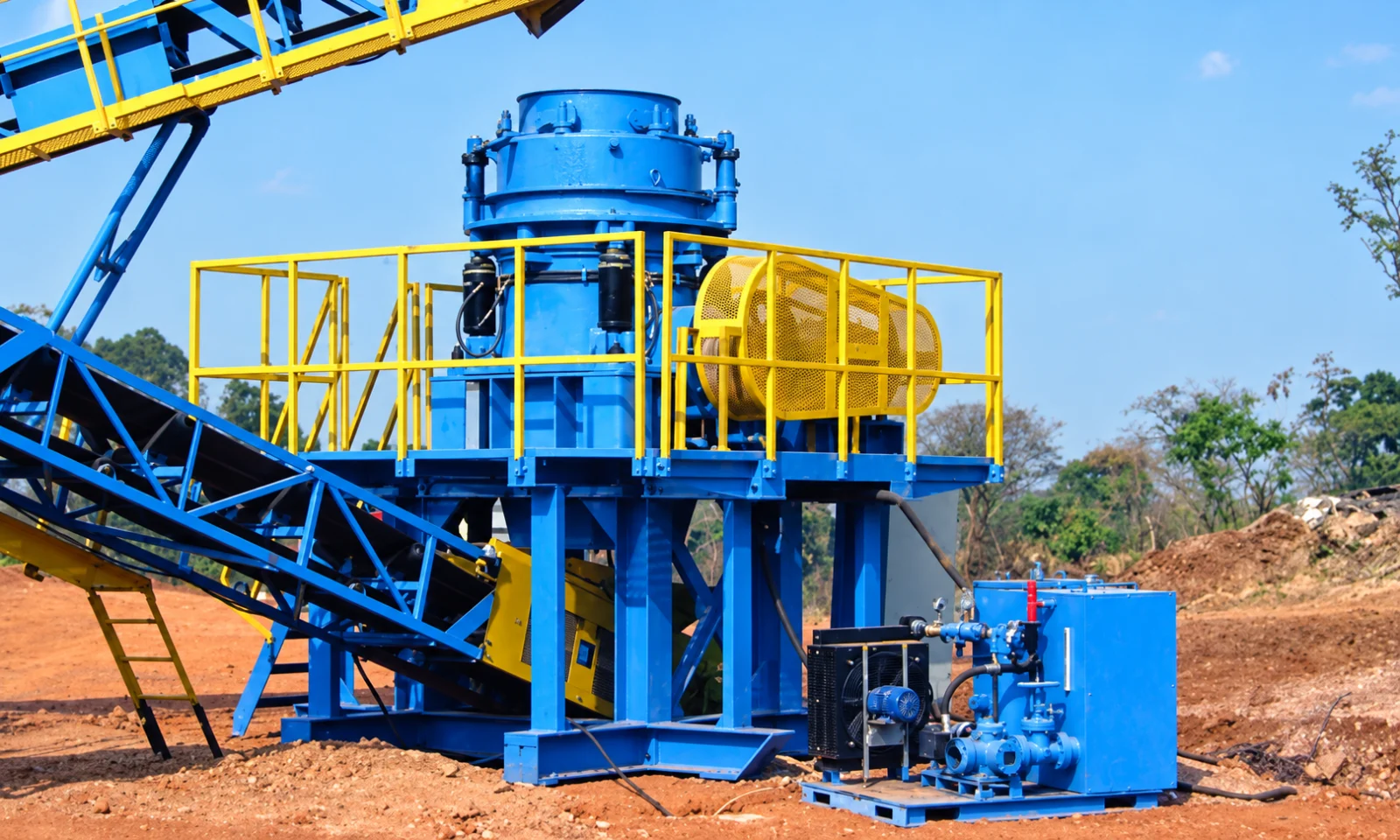
A quotation for a cone crusher assembly can leave an expensive question unanswered: what, exactly, will arrive? A main component, a collection of loose parts and a pre-assembled unit can all appear under a similar description. The difference matters when a maintenance team is preparing for a shutdown.
Before comparing prices, agree the machine identification, included parts and delivery condition. Where fit needs checking, agree the measurement method as well. This guide helps purchasing teams and repair workshops turn a short request into a quotation that can be checked against the actual job.
Start with the machine and the complete reference
Put the crusher model and the complete public part reference on separate lines. Keep every suffix, leading zero and separator in the original reference. If a drawing or parts list uses a different description, include that wording alongside it instead of silently replacing one name with another.
A document number identifies a document; it does not necessarily identify a machine or an assembly. Record the relevant document revision and the position being requested. Where the supplier needs the machine serial number to confirm a variant, share it privately with the quotation request.
If the machine has been modified, say so. A previous order, an old photograph or a familiar model name is useful background, but an unresolved difference should remain an open question. Ask the supplier to confirm the proposed reference in writing before treating it as a replacement.
Define what “complete assembly” includes
Use an itemised scope rather than relying on the word complete. The list should show the main component, any associated parts, quantities and exclusions. Give consumables their own line when they are relevant to the agreed work.
A parts illustration helps locate components. It does not, by itself, establish the contents of a supplier’s quotation. Treat the drawing, the requested list and the offered list as separate records until the differences have been resolved.
| Check | What the quotation should state |
|---|---|
| Main component | Its description, complete reference and quantity. |
| Associated parts | Each included item and quantity, with exclusions listed explicitly. |
| Wear parts | Whether liners or other wear items are included, excluded or offered separately. |
| Fasteners and seals | Which are included, which need separate ordering and which require confirmation. |
| Consumables | Whether specified consumables are supplied, used during agreed pre-assembly or excluded. |
| Existing parts | Any customer-supplied or reused components, and who will assess their condition. |
| Delivery condition | Loose parts, a defined pre-assembled unit or another explicitly agreed condition. |
| Remaining work | The installation, checks and other tasks left to the receiving workshop or site team. |
These are quotation questions, not a universal bill of materials. The applicable parts and procedures depend on the assembly. Do not add a seal, adhesive, liner or fastener simply because it appears in another machine’s repair list.
Ask what has actually been pre-assembled
A supplier may offer a unit with specific components already fitted. Ask which operations are included, how that work will be recorded and which interfaces still need checking at the site. “Packed together” should be recorded separately from “assembled together”.
Consider this hypothetical quotation difference: one offer lists a main component and a loose kit; another lists the same main component with some associated parts fitted. The purchasing team needs the included-parts list and the agreed assembly work to compare those offers. A single line reading “assembly supplied” leaves too much uncertain.
Pre-assembly also does not establish that the whole machine is ready to start. Installation, handling and the required checks remain separate work unless expressly included. Major crusher component replacement can require specialist personnel, procedures and tools. Confirm who is responsible for that work before arranging delivery.
When dimensions disagree, compare the measurement records
If two people report different dimensions, first establish whether they measured the same feature. Ask for an annotated photograph or a permitted drawing extract that marks the location and reference point. The image should identify the feature, not serve as a substitute for a measurement.
For cylindrical mating features, one diameter reading may not describe the whole seating surface. A competent inspector should select suitable measurement locations and directions for the feature and record the individual readings. The part and measuring instrument should be at a comparable temperature; this matters particularly with large components.
Request the unit, instrument and method together with the result. Compare the readings against the applicable drawing and tolerance. If a fit involves an existing mating component, its condition and measurements may also need review. There is no universal clearance value that can safely be applied to every crusher assembly.
A useful clarification request is: “Please mark the measured feature, provide the readings and measurement method, and identify the requirement used for acceptance.” This gives the technical team something it can assess. A statement such as “it looks different” or “the diameter seems wrong” needs more evidence.
Keep installation on hold where a material discrepancy remains unresolved. Obtain an approved disposition before modifying a part or attempting to force an uncertain fit. This purchasing guide does not specify machining, heating, tightening or installation procedures.
Agree the handover evidence before dispatch
List the evidence required with the order and ask the supplier to confirm what can be provided. Depending on the agreed scope, this might include an itemised packing list, identification photographs, selected dimensional results or a record of the work included in pre-assembly.
Each requested record should answer a purchasing question. An overall photograph can help check the delivery condition; it cannot prove an inaccessible interface was measured. A material report serves a different purpose from a dimensional record. Avoid asking for “all certificates” without defining the information you need.
For a fuller document review, use the crusher parts quality-document checklist. Retain customer drawings, machine identification and order-specific records in private correspondence.
Copy this assembly quotation request
Complete the fields you know and mark the rest “to confirm”. A missing detail is easier to resolve when it is visible.
Subject: Cone crusher assembly quotation request
Crusher model:
Complete public part reference:
Requested component or assembly:
Quantity:
Relevant drawing or parts-list revision:
Machine identification available privately: yes / noRequired included parts:
Explicit exclusions:
Consumables required, if applicable:
Existing components proposed for reuse:
Requested delivery condition: loose / defined pre-assembly / to confirmPlease confirm the exact offered scope, any proposed reference changes, pre-assembly work included and work remaining at site. Identify any unresolved fit questions and the information needed to review them.
Required inspection or handover records:
Delivery destination:
Requested delivery date:
For several parts, use one line per complete reference and quantity. Keep alternatives on separate lines until they have been confirmed. On the GUBT contact page, you can paste a list into the optional Parts list field and explain the assembly requirement in your message.
Compare quotations on the same scope
Put the offers side by side and mark every difference in included parts, delivery condition, evidence and remaining work. Ask for clarification before deciding that a lower figure represents the same supply.
For example, if one offer excludes a required wear part, record that exclusion as an unresolved purchasing line. If another includes pre-assembly but leaves its extent undefined, ask for the operations and supplied items to be listed. Keep the final clarification with the order so the receiving team sees the same agreement as the buyer.
Start with the listed HP300 spare parts or GP100 liners and spare parts if those are the models you are sourcing. These product directories help identify individual items; they are not confirmation that any combination forms a complete assembly.
Questions buyers ask
Does a head assembly automatically include the mantle?
Do not assume that it does. Ask for the quoted assembly’s included-parts list and a separate confirmation of the mantle reference and quantity if it is required. The assembly name alone does not settle the supply scope.
Can a photograph confirm that two parts are interchangeable?
A photograph can help identify markings and visible features. It does not establish dimensional fit or confirm that two references are interchangeable. Ask for the supporting identification and technical review.
Should consumables be included in the assembly price?
That depends on the agreed supply and work. Ask whether relevant specified consumables are provided separately, consumed during agreed pre-assembly or excluded. Do not infer a quantity or specification from a generic description.
What if the reference number is missing?
Provide the model, component description and clear identification photographs. Explain what is missing and ask which additional information is needed. Keep the line pending rather than selecting a similar-looking reference as a substitute.
Have an assembly or multi-part requirement? Send the known references, quantities and requested supply condition to Chengdu GUBT Industry Co., Ltd. The quoted scope, compatibility review and document availability need confirmation for the particular request.
GUBT is an independent supplier. Equipment brand and model names identify the applications discussed; they do not imply manufacturer affiliation or approval.