Mn18Cr2 is a material designation; a bowl liner still has to match the stationary side of a particular cone-crusher chamber. The paired mantle, liner profile and machine revision matter when an existing casting is being replaced. A buyer can avoid much back-and-forth by recording those details before asking for a substitute or a different alloy.
Locate the stationary liner
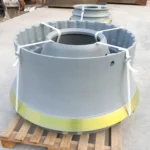
The stationary bowl liner is defined by its specific chamber profile, which must match the mantle to maintain the required crushing action. A reference code serves only as an identifier for the part geometry and does not guarantee interchangeability or fitment. When selecting a liner, consider the feed properties and the closed-side setting of the machine. Because ancillary wear pieces like feed plates vary by model, verify that the selected concave is compatible with the existing mantle and the specific crusher configuration. Consult the OEM manual to confirm that the selected component aligns with the machine design.
Check geometry separately from grade
The Mn18Cr2 designation refers to the chemical composition of the manganese steel but provides no information regarding the physical fit or the expected wear life of the component. Material chemistry is only one factor in the longevity of the liner. The actual performance depends on the interaction between the feed material and the chamber profile. Do not treat the manganese grade as a proxy for wear resistance or dimensional accuracy. Focus instead on the specific casting requirements and the mechanical tolerances necessary to maintain the gap between the mantle and the bowl liner during the crushing process.
Use the wear record
When evaluating potential liners, request specific material and dimensional records for the batch being supplied. Ask for documentation that confirms the casting process and the dimensional tolerances of the concave. If the supplier cannot provide these records, request the specific heat treatment procedures used for the Mn18Cr2 steel. Avoid relying on generic performance ratios or marketing claims regarding wear life. Instead, obtain the exact specifications for the liner profile to ensure it matches the chamber configuration required for your feed size and the current operating parameters of the cone crusher.
Ask what evidence applies
Upon receiving the bowl liner, perform a physical inspection to confirm that the dimensions align with the OEM manual specifications. Check the seating surfaces and the curvature of the concave to ensure it will seat correctly against the bowl. Compare the physical part against the provided dimensional records to verify that the casting matches the requested profile. If the liner does not match the dimensions outlined in the machine manual, do not attempt to install it. Proper fitment is necessary to prevent uneven wear and potential damage to the crusher frame or the mantle during operation.
Order a bowl liner as its own line
List the model, version and chamber profile, then identify the stationary bowl liner or concave by its complete public reference or checked dimensions. State the requested Mn18Cr2 grade, quantity and whether the paired mantle is also needed. Ask what material and dimensional records can accompany this order. If a supplier offers an alternate, request the geometry and material differences in writing; a nominal grade cannot establish fit or a fixed wear life.