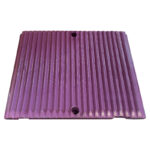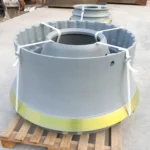
A screen-media panel and a feeder component may appear on the same quarry purchase order, but they solve different problems. The screen question starts with aperture and feed behaviour; the feeder question starts with material flow and the assembly that must carry it. Combining both under ‘wear parts’ without more detail leaves the supplier guessing.
Describe the screening duty
Screen media and feeder components serve different functions and require separate technical evaluations. Screen media selection depends on aperture size, shape, and the material’s tendency to peg or blind during operation. You must also account for feed rate, moisture content, and grading. Conversely, feeder selection focuses on normal and peak feed rates, maximum lump size, and bulk density. Installation conditions also dictate the necessary specifications for feeder parts. Never treat the screening deck and the feeder assembly as one interchangeable product, as their operational demands and physical dimensions differ significantly for every machine configuration.
Describe the feeder duty
A reference code is an identifier requiring confirmation, never proof of interchangeability. When you provide a part number to a supplier, it serves only as a starting point for the identification process. Because manufacturers update designs over time, a single code might correspond to multiple iterations of a component. You should request technical drawings or dimensional specifications to verify that the part matches your current equipment setup. Relying solely on a reference code without confirming physical dimensions often leads to procurement of incompatible parts that fail to integrate with your existing screening or feeding assembly.
Keep reference and geometry together
When requesting a quotation, ask for specific technical documentation that validates the component specifications. Request detailed material composition data and dimensional drawings that show tolerances for the parts in question. For screen media, ask for confirmation regarding the aperture type and wire diameter relative to your specific feed rate and moisture conditions. For feeder parts, request documentation that confirms the assembly matches your machine’s maximum lump size and bulk density requirements. If a supplier cannot provide these technical details, ask for the specific engineering standards they use to manufacture the components for your equipment model.
Check panel or assembly evidence
Upon receiving a shipment, perform a physical inspection against your original purchase order and the provided technical drawings. Verify that the aperture size on screen media matches the specified grading requirements and that the feeder parts align with your installation conditions. Check for any deviations in material thickness or structural dimensions that might affect the assembly. If the parts do not match the confirmed specifications, document the discrepancies immediately. Maintain a checklist of these physical attributes to compare against the supplier’s initial quotation, ensuring that the delivered components meet the technical criteria established during the procurement process.
Split the RFQ into two groups
For the screen, give the deck and panel position, aperture size and shape, feed grading, moisture and current pegging or blinding problem. For the feeder, give the machine and assembly version, normal and peak feed, maximum lump size, bulk density and part position. State material and quantity for each item separately, then ask for the dimensional or material evidence relevant to that item. A proposed screen medium does not automatically fit a feeder requirement.