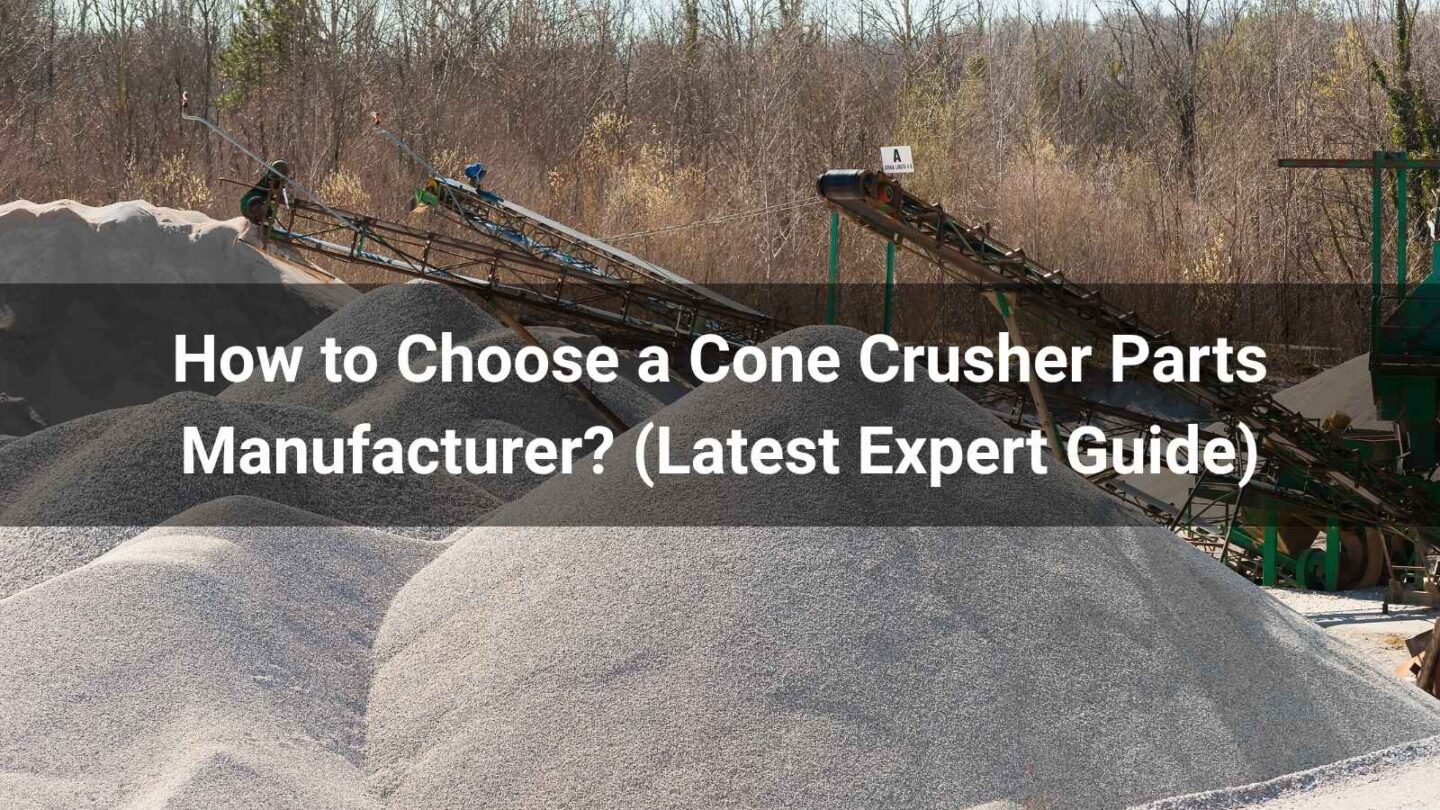
Honestly, I’ve seen too many buyers pick the wrong supplier upfront — and end up paying double in maintenance costs within a year. Choosing a cone crusher parts manufacturer isn’t just about finding the lowest quote. It’s about finding a partner who understands your equipment, your application, and your real cost of downtime.
The price difference between suppliers can look attractive on a spreadsheet. The quality difference shows up six weeks later, underground, when you’re unplanned and bleeding money per hour.
In this guide, we’ll walk through everything that actually matters: materials, manufacturing process, OEM vs aftermarket, customization capability, and how to verify who you’re really dealing with. When we help clients compare supply chains, there are usually five or six key indicators that separate reliable manufacturers from the noise. Let’s get into it.
Understand What You’re Actually Buying (Not Just “Cone Crusher Parts”)
Before you start comparing suppliers, get clear on what part you actually need — because “cone crusher parts” is a broad category and different components have very different performance implications.
The main wear parts in a cone crusher are:
- Mantle — the inner crushing surface that rotates against the concave
- Concave (bowl liner) — the outer fixed crushing surface
- Bowl liner — often used interchangeably with concave, though configurations vary by model
Each of these wears differently, depending on feed material, feed size, closed-side setting, and operational hours. A mantle optimized for limestone is not the same as one built for granite. And honestly, if a supplier can’t explain the difference between a coarse and fine concave profile, or which alloy suits your specific rock type — walk away. A lot of vendors can’t actually tell you that.
The part you buy determines your throughput, your product shape, and your liner change frequency. Getting this wrong doesn’t just cost you money on the part — it costs you productivity.
Material Matters More Than Price (High Manganese vs Alternatives)
This is where most buyers get burned.
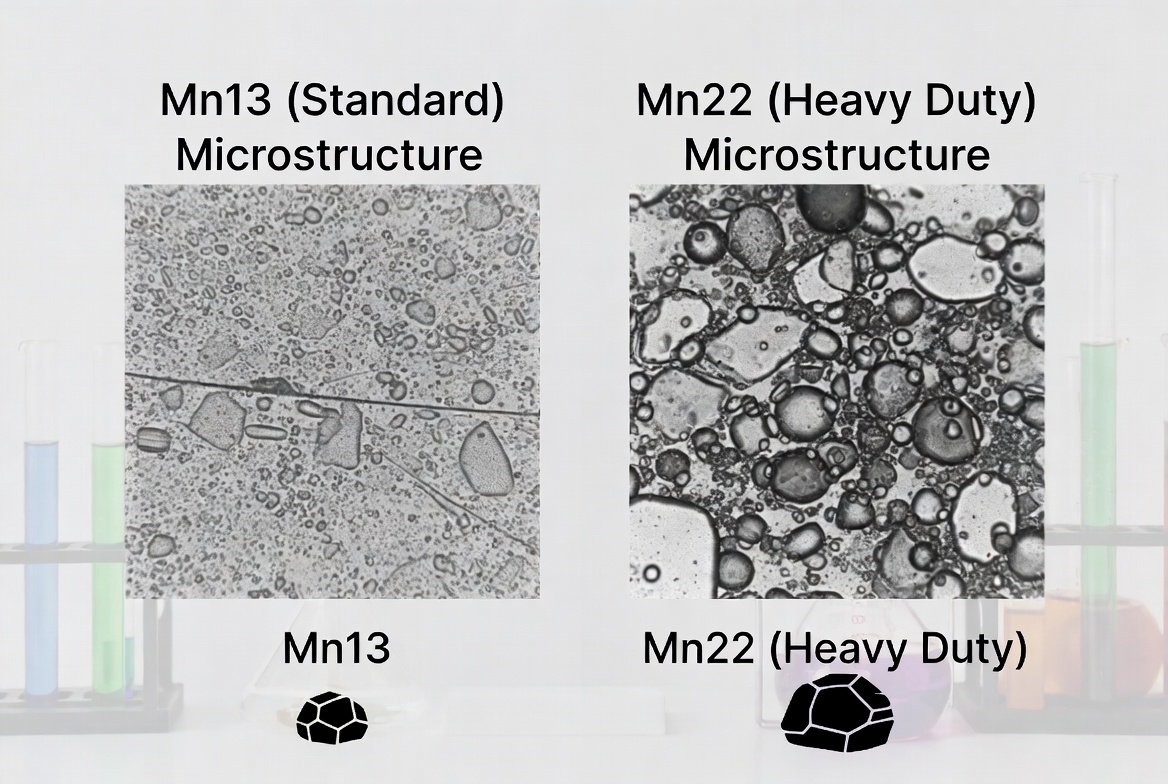
High manganese steel is the standard material for cone crusher liners, and for good reason. It work-hardens under impact — meaning it gets harder during operation, which is exactly what you want in a crushing environment. The main grades are Mn13, Mn18, and Mn22, with higher manganese content generally improving wear resistance in high-impact applications.
But here’s the nuance: it’s not just manganese content. The carbon-to-manganese ratio, chromium additions, and heat treatment all affect the final performance. A liner with higher Mn content but poor heat treatment can actually underperform a well-processed Mn13 part.
I’ve seen the cheapest liners on the market last two weeks in a granite quarry. Two weeks. The savings on the purchase price evaporated in about six hours of downtime.
When evaluating any supplier, ask for:
- Material certification or mill test reports
- Hardness test results (Brinell or Rockwell)
- Spectrographic analysis if you want to verify alloy composition
If they can’t produce these, treat that as a red flag, not a negotiation point.
One more thing — higher manganese is not always better. In low-impact applications like soft limestone, an excessively high Mn alloy won’t work-harden properly and can actually wear faster. A competent manufacturer will recommend the right grade for your specific conditions, not just sell you their highest-spec product.
| Manganese Grade | Mn Content | Stone Hardness | Impact Level | Key Advantage |
|---|---|---|---|---|
| Mn13 (Standard) | 11% – 14% | Soft / Medium (Limestone) | Low to Medium | Cost-effective; work-hardens quickly under low impact. |
| Mn18 (Premium) | 17% – 19% | Hard Rock (Basalt, Granite) | High | Industry Standard; balances toughness with excellent wear life. |
| Mn22 (Heavy Duty) | 21% – 24% | Extreme / Abrasive (Iron Ore) | Very High | Maximum replacement intervals for the most aggressive conditions. |
Manufacturing Process & Quality Control (This Is Where Most Fail)
Even the right material can produce a terrible part if the manufacturing process is poor. The key stages to ask about are:
Casting — cone crusher liners are typically sand cast or lost-foam cast. The casting method affects density, porosity, and dimensional accuracy. A sloppy casting means inconsistent wear and poor fit.
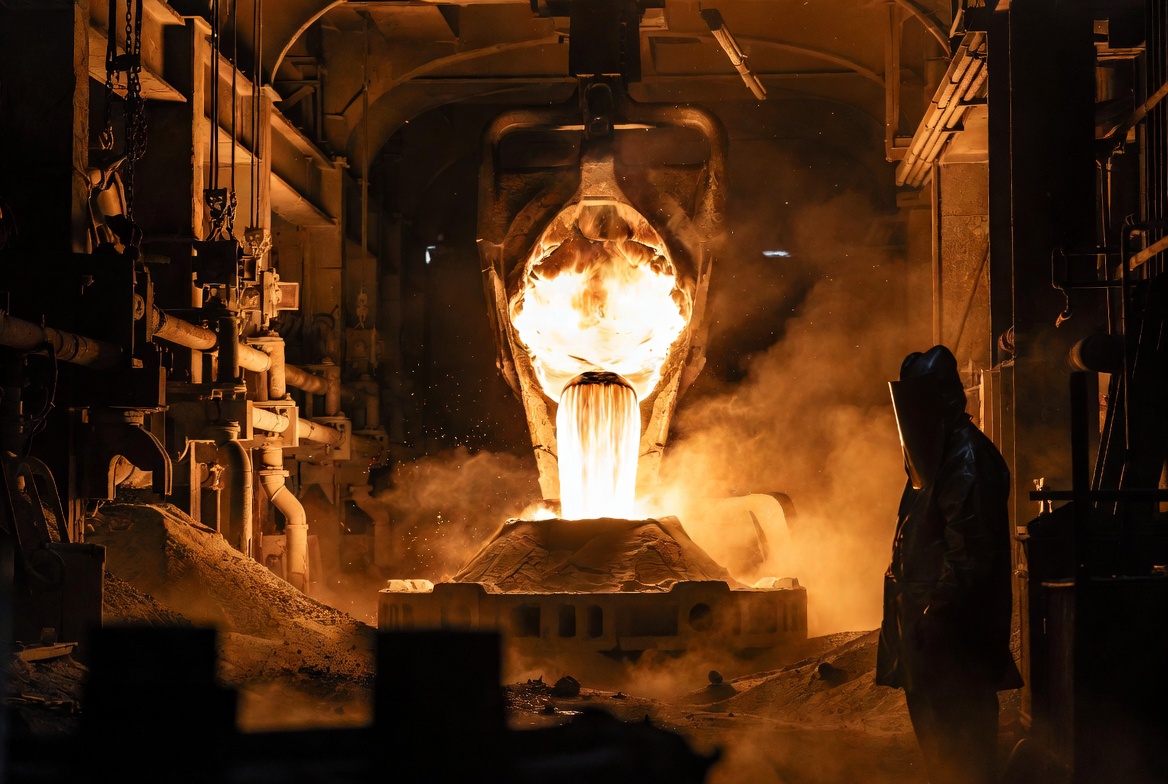
Heat treatment — this is critical. Proper solution annealing followed by water quenching transforms the microstructure of manganese steel and unlocks its work-hardening properties. Skip or rush this step and you get a brittle part that cracks instead of work-hardening.
Machining & dimensional control — mating surfaces need to be machined to tight tolerances. A liner that doesn’t seat properly will move under load, accelerate wear on the backing material, and potentially damage the head or bowl.
The uncomfortable reality is that a significant number of “manufacturers” in this space are actually trading companies with no production capability of their own. They source from whoever is cheapest that month, with no consistency in quality.
Before committing to a supplier, ask directly: Do you have your own foundry? Can I visit the facility or see a video walkthrough? Do you have ISO 9001 certification or equivalent quality system documentation?
A real manufacturer will be comfortable answering all of this. A trader will deflect.
Manufacturer vs Supplier vs Trading Company (Huge Difference)
Let’s be direct about what these terms mean in practice:
Manufacturer / Factory — has its own foundry, machining, and heat treatment equipment. Controls the full production process. Can troubleshoot quality issues because they know exactly how the part was made.
Supplier — may or may not manufacture. Often sources from multiple factories and adds value through logistics, stock, or technical support. Can be reliable, but quality consistency depends on who they’re actually buying from.
Trading company — buys and resells. No production control whatsoever. Prices look competitive because margins are thin, but so is accountability when something goes wrong.
The real-world situation is that many companies presenting themselves as “factories” on Alibaba or their own websites are pure trading operations. The photos are borrowed, the capacity claims are fabricated, and when you have a quality problem — there’s nobody with actual production knowledge to fix it.
For spot purchases of standard parts, a reliable supplier can work fine. For long-term supply relationships, especially in demanding applications, you want a direct manufacturer. The slightly higher unit price is offset by consistency, traceability, and someone who actually knows how the part was made.
When we’re helping clients qualify a supply chain, eliminating pure trading companies is usually step one.
| Feature | Real Manufacturer | Trading Company | Verification Tip |
|---|---|---|---|
| Production Facilities | Owns foundry, heat treatment furnaces, and machining shops. | Office space or small assembly shop only. | Request a live video walkthrough of the production floor. |
| Technical Support | Engineers provide drawing mods and alloy advice. | Standard parts only; vague on technical specifics. | Ask: “Can you adjust the alloy ratio for my rock hardness?” |
| Quality Traceability | Provides per-batch Lab & Heat Treatment reports. | Generic PDF certificates from third parties. | Check if report dates match your specific order date. |
| Pricing Logic | Stable, based on raw material and process costs. | Volatile; depends on their supplier’s monthly quote. | Extreme low prices usually mean skipped heat treatment. |
OEM vs Aftermarket Cone Crusher Parts
OEM (Original Equipment Manufacturer) parts are produced by or for the original crusher manufacturer — Sandvik, Metso, Terex, Nordberg, and so on. They’re engineered to exact specifications and come with the OEM’s quality assurance.
Aftermarket parts are manufactured by independent suppliers to fit the same equipment. They’re typically priced 20–50% lower than OEM equivalents.
Here’s the honest take: some aftermarket parts perform as well as or better than OEM. The key variable is which aftermarket manufacturer you’re using and how rigorously they’ve reverse-engineered the dimensions and metallurgy. A high-quality aftermarket supplier will have accurate drawings, tight dimensional tolerances, and a documented alloy specification.
The risk is compatibility. Even a small deviation in the seat angle, profile curve, or thickness can cause uneven wear, premature failure, or fitment problems. Before committing to aftermarket parts, confirm:
- Dimensional drawings match your specific crusher model and configuration
- The supplier has supplied that exact part number before and has reference customers you can speak to
- You have a clear return or replacement policy if there’s a fitment issue
Starting with a small trial order before switching your full supply is always the right approach.
Customization Capability (Critical for Real Projects)
Standard catalog parts work well for standard conditions. But a significant share of real mining and quarrying operations have conditions that don’t fit neatly into a catalog.
High-silica granite with abrasive fines. Laterite with sticky clay content. Secondary crushing of irregular rebar-contaminated material. Mixed feed from different blast zones. In these situations, a standard Mn18 liner in a standard profile may not be the right answer.
I’ve seen standard-spec liners fail in under 200 hours in certain high-abrasion applications where a customized alloy or profile would have run 600+. The difference in part cost was maybe 15%. The difference in productivity was enormous.
When evaluating a manufacturer for serious projects, ask:
- Can you modify the alloy specification for my specific application?
- Can you produce non-standard profiles if I provide drawings or samples?
- Do you have an engineering team who can review our application data and make recommendations?
A manufacturer with genuine technical depth will welcome these questions. One without it will give you vague answers and try to redirect you to their standard range.
Application Experience (Mining vs Quarry vs Construction)
This is underrated as a selection criterion.
A manufacturer who primarily serves cement plants has a fundamentally different reference base than one who works with hard-rock mining operations. The wear conditions, the equipment types, the operational intensity, and the acceptable trade-offs are all different.
A supplier experienced in quarrying limestone at 400 tph doesn’t automatically have the knowledge to specify liners for a primary gyratory in a copper mine processing 2,500 tph of 50 MPa ore.
To be blunt: a supplier who doesn’t know your industry often doesn’t know what they don’t know, which is the most dangerous kind of ignorance in this context.
When evaluating suppliers, ask for case studies or customer references that specifically match your application type — not just your crusher brand. Ask about the hardness of material they’ve supplied for, the liner life they’ve achieved, and whether they’ve worked in similar operational environments.
Real application experience shows up in how confidently and specifically a supplier can answer these questions. Generic answers indicate generic knowledge.
Price vs Lifetime Cost (The Real Calculation)
The number on the invoice is not your cost. Your real cost is:
(Part price) + (Replacement frequency × Labor + shutdown cost) + (Performance loss from suboptimal wear profile)
A liner priced at 30% less than the alternative but lasting 40% fewer hours costs you significantly more over time — and that’s before accounting for the downtime and labor involved in more frequent changes.
The calculation most experienced procurement teams use is something like:
- Estimated liner life (hours) under your conditions
- Cost of planned liner change (labor, materials, time)
- Cost of unplanned failure (production loss per hour × downtime hours)
- Annualized total based on expected operating hours
When you run this analysis honestly, the difference between the cheapest and best-value option often flips. The industry saying is true: cheap once, expensive many times.
Stability also has value that doesn’t show up directly in unit pricing. A supplier who delivers consistent quality means predictable liner life, which means better maintenance planning, which means fewer surprises. That’s worth paying a modest premium for.
| Cost Dimension | Cheap/Low-Quality Part | GUBT High-Quality Part | Impact on Profit |
|---|---|---|---|
| Unit Purchase Price | $1,000 (Example) | $1,300 (30% Higher) | Slightly higher initial investment. |
| Service Life | 300 Hours | 500 Hours | 66% Increase in lifespan. |
| Downtime Frequency | Frequent (Higher labor costs) | Stable (Planned maintenance) | Reduced unplanned production loss. |
| Cost Per Hour | $3.33 / Hour | $2.60 / Hour | 22% Actual savings in operational cost. |
How to Verify a Reliable Cone Crusher Parts Manufacturer
Before placing a significant order, run through this checklist:
Documentation
- Can they provide material certification / mill test reports?
- Do they have ISO 9001 or equivalent quality certification?
- Can they provide dimensional inspection reports?
Manufacturing verification
- Do they have their own foundry and heat treatment equipment?
- Can they provide a factory video walkthrough or accept an audit visit?
- How long have they been manufacturing (not just trading) crusher parts?
Commercial track record
- Can they provide customer references in your industry or application type?
- Are they able to discuss specific case studies with measurable outcomes?
- Do they have experience supplying your specific crusher model?
Practical evaluation
- Request a small trial order before committing to volume
- Compare the physical part against your worn reference piece or OEM drawing
- Track actual liner life vs what was represented before reordering
One blunt note: don’t rely on website photos to judge manufacturing capability. It’s trivial to populate a website with someone else’s factory images. Verified documentation and reference calls are what actually matter.
Where to Find Trusted Manufacturers (2026 Tips)
The main channels worth your time:
Google search with specific terms — search for your crusher model + “liner manufacturer” or “mantle supplier.” Filter for suppliers who can speak technically about your specific crusher, not just list brand names in their keywords.
Industry trade shows — bauma, MINExpo, Hillhead, and regional equivalents. In-person conversations reveal technical depth quickly. A knowledgeable manufacturer’s rep can discuss alloy grades and application trade-offs without hesitation.
Industry referrals — other mine or quarry operators in your network. Word-of-mouth from people running the same equipment in similar conditions is the highest-quality signal available.
Specialized industrial platforms — some B2B platforms pre-screen suppliers more rigorously than general marketplaces. When helping clients identify reliable sourcing options, we’ve found that platforms focused on industrial supply chains — like gubtcasting.com — tend to surface manufacturers with actual production capability rather than just commercial listings.
Regardless of channel: always go deeper than the first contact. Ask technical questions early. If the answers are vague or scripted, move on quickly.
Final Thoughts (Don’t Rush This Decision)
The right cone crusher parts manufacturer comes down to four things: the right material for your application, a sound manufacturing process, genuine experience in your industry, and consistent service after the sale.
Honestly, in this industry there’s no universally cheapest or best option — only the most appropriate one for your specific conditions. A supplier that’s perfect for a limestone quarry in one region may be entirely wrong for a hard-rock copper operation somewhere else.
The clients who get this right tend to do a few things consistently: they ask technical questions before commercial ones, they run small trials before committing to full supply relationships, and they look at actual case studies rather than just comparing quote sheets.
If you’re currently evaluating options, the time you spend verifying the right supplier upfront will pay back many times over in reduced downtime, predictable maintenance costs, and fewer unpleasant surprises underground.
FAQ
| Standard ID | Standard Name / Description | Official Reference Link |
|---|---|---|
| 1. Material & Casting Standards (High Manganese Steel) | ||
| ASTM A128 / A128M | Standard Specification for Steel Castings, Austenitic Manganese | ASTM International |
| ISO 13521 | Austenitic manganese steel castings | ISO Official |
| 2. Equipment Design & Safety Standards | ||
| ISO 21873-1 | Mobile crushers — Part 1: Terminology and commercial specifications | ISO Official |
| ASME B15.1 | Safety Standard for Mechanical Power Transmission Apparatus | ASME Official |
Note: ASTM and ISO links typically lead to abstract/purchase pages, while the SAC (GB) links provide access to the Chinese national database.
Latest Insights
Jaw Crusher Parts Price 2026: Jaw Plates, Cheek Plates & Liners
Cone Crusher Parts Price 2026: Mantle, Concave & Bowl Liner Cost Guide for Buyers
How to Choose the Right HSI Crusher Parts Manufacturer (Blow Bars, Impact Plates & Rotor Parts Guide)