
1. Cone Crusher Liners: Chamber Geometry & Maintenance
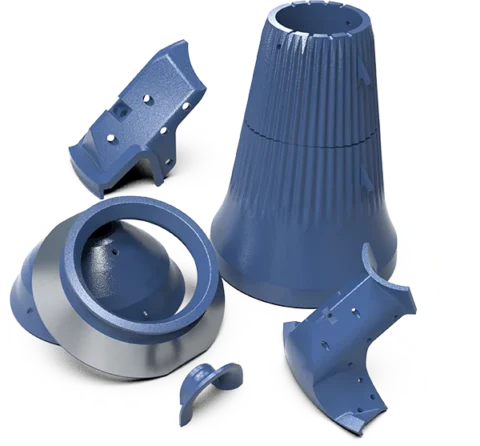
The Cone Crusher relies on compressive force between a moving Mantle and a stationary Bowl Liner (Concave). These are precision-engineered parts where material grade and dimension tolerances are critical.
Material Selection: The Manganese Grades
At the heart of every cone crusher liner is Austenitic Manganese Steel. Understanding the grade differences is vital for procurement:
- Mn13Cr2 (Standard): Suitable for soft rock and secondary crushing where impact is low. It requires less impact to work-harden but wears faster in abrasive conditions.
- Mn18Cr2 (Premium): The global industry standard for HP, GP, and CH series crushers. It offers excellent toughness and work-hardening capabilities for granite and basalt.
- Mn22Cr2 (Extreme): High manganese content for extreme impact environments and hard rock (iron ore, copper). It achieves a higher surface hardness but costs more.
Guide: How to Replace Cone Crusher Liners
Replacing liners on a cone crusher (e.g., GP or HP series) requires precision to ensure the locking mechanisms hold tight.
Step 1: Preparation and Removal
Ensure the hydraulic pressure is relieved and the system is locked out. Remove the feed hopper. Use a cutting torch to carefully cut the Torch Ring (Cutting Ring) and the Locking Nut. Note: Always replace the torch ring; never reuse it. Lift the old mantle off the head using proper lifting lugs.
Step 2: Cleaning the Surfaces
This is the most skipped step. You must chisel and grind away 100% of the old epoxy backing compound from the head and the bowl. If old backing remains, the new liner will not sit flush, leading to stress concentration and potential cracking of the mantle.
Step 3: Installation and Pouring Backing
Install the new GUBT Mantle. Verify the seating. Install the new locking nut. Then, prepare the epoxy backing compound. Pour the mixture immediately after mixing to fill the gap between the liner and the head.
Tip: Fill it to the correct level—overfilling can damage dust seals, while underfilling leads to liner loosening.
GUBT Engineering Insight: We engineer our mantles with precise internal dimensions to minimize the amount of backing compound required, saving you money on consumables during every change-out.
2. Jaw Crusher Liners: Profiles & Advanced Materials

Jaw Crusher Plates (Dies) face the initial impact of blasted rock. The key here is resisting both high-impact shock and gouging abrasion.
TIC Inserts: The Game Changer
For applications crushing extremely abrasive materials (like river stone or quartzite) where standard Mn18 plates wear out too fast, TIC (Titanium Carbide) Insert Jaw Plates are the superior solution. These plates feature vertical columns of ultra-hard ceramic cermet embedded in the manganese steel.
While the initial cost is higher, TIC plates typically offer 2x to 4x the wear life. This drastically reduces downtime and labor costs associated with frequent liner changes.
Guide: How to Replace and Rotate Jaw Plates
Jaw plates tend to wear unevenly, usually more at the bottom (the discharge zone). “Rotating” involves flipping the plate 180 degrees.
Step 1: Access and Loosening
Clear the crushing chamber. Remove the Cheek Plates (Side Liners) if they obstruct the jaw die. Loosen the Jaw Wedge bolts. Do not fully remove them yet—just release the tension.
Step 2: Lifting Out
Use the specialized lifting holes provided on GUBT jaw plates. Insert the lifting shackle and verify it is secure. Carefully hoist the heavy plate out of the crushing chamber. Clean the seat on the Pitman and the Frame to remove rock fines.
Step 3: Installation & Wedging
Lower the new (or rotated) plate into position. Ensure it sits flat against the frame/pitman. Tighten the wedges.
Critical Check: After running the crusher for 4 hours, re-tighten the wedge bolts. New plates often “settle,” causing bolts to loosen.
3. HSI Crusher Parts: Blow Bar Metallurgy
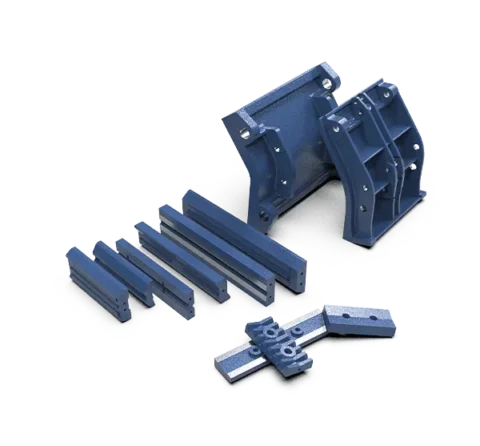
Horizontal Shaft Impactors (HSI) use high-speed rotors to shatter rock. The Blow Bars (Hammers) are critical. Unlike Cone/Jaw liners, material selection for HSI is a tradeoff between hardness and toughness.
Material Selection Matrix
| Material | Hardness | Toughness | Application |
|---|---|---|---|
| Manganese (Mn18) | Low | Very High | Primary crushing with risk of uncrushable material (steel/rebar). |
| High Chrome Iron | Extreme | Low (Brittle) | Secondary crushing of abrasive, clean stone (Asphalt/Limestone). |
| Ceramic Composite | High | Medium | Premium option for abrasive recycling; combines Chrome hardness with steel matrix toughness. |
Guide: How to Replace HSI Blow Bars
Step 1: Rotor Locking (Safety Critical)
Never attempt to change blow bars without engaging the rotor lock safety mechanism. The rotor is heavy and can rotate unexpectedly due to weight imbalance.
Step 2: Removal
Clean the rotor slots. High impact jams fines deep into the gaps. Remove the axial locking devices. Slide the blow bars out sideways using a specialized extraction tool or crane.
Step 3: Flipping or Replacement
Inspect the leading edge. If it is rounded but the bar still has life, flip it to present the sharp trailing edge. When installing new bars, verify the weight.
GUBT Balancing Standard: Always install blow bars in matched weight pairs (180 degrees opposite) to prevent rotor vibration.
4. VSI Crusher Parts: Rotor Tips & Balancing
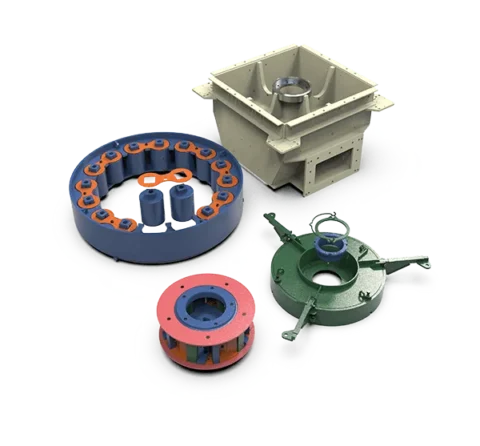
Vertical Shaft Impactors (VSI) are the final stage for making sand. The Rotor Tips and Back-up Tips operate at incredibly high tip speeds, making balance essential.
Guide: How to Replace VSI Rotor Tips
VSI tips are usually Tungsten Carbide inserted into a steel body.
Step 1: Access
Open the VSI lid (using the hydraulic lifter). Inspect the rotor. Look for uneven wear, which indicates poor feed distribution.
Step 2: Replacing Tips
Remove the retainer pin. Slide the old tip out. Clean the slot.
Rule of Thumb: Never change just one tip. You must change the entire set, or at minimum, change opposing pairs to maintain dynamic balance.
Step 3: Wear Plates and Trial Run
Check the upper and lower wear plates in the rotor. If they are worn through, the rotor body itself will erode quickly. After closing the lid, run the VSI dry for 10 minutes and monitor the vibration sensor. If vibration is high, the tips are unmatched in weight.
5. Replacing Mechanical Spares: Bronze Bushings
Beyond wear liners, the “heart” of a cone crusher consists of precision machined Bronze Bushings (Eccentric, Frame, Countershaft). Replacing these is a delicate operation involving thermal dynamics.
The Dry Ice / Cryogenic Method
Most modern bushings are interference fit. To install them, you cannot use a hammer. You must shrink the bushing.
How to Replace a Cone Crusher Frame Bushing:
- Removal: Often requires cutting the old bushing out carefully or using a hydraulic puller if accessible.
- Preparation: Clean the main frame bore perfectly. Remove any burrs.
- Cooling: Place the new GUBT Bronze Bushing in a cooler box filled with Dry Ice (solid CO2) and alcohol for 2-3 hours. This shrinks the diameter by a few thousandths of an inch.
- Installation: Lift the frozen bushing and drop it immediately into the bore. It should slide in effortlessly.
- Normalization: Allow the bushing to return to ambient temperature. It will expand and lock itself tightly into the frame.
Why Choose High-Lead Bronze?
GUBT supplies high-precision bushings using high-lead tin bronze alloys. The lead content acts as a failsafe lubricant during momentary oil loss events, protecting your main shaft from catastrophic seizures.
6. The Sourcing Strategy: OEM vs. GUBT Aftermarket
For decades, mining operators felt compelled to buy parts only from the machine OEM, paying premium prices for the brand name. Today, the landscape has changed.
The GUBT Manufacturing Standard
As a specialized aftermarket manufacturer, GUBT provides fully compatible replacement parts that match or exceed OEM specifications. We are not just a foundry; we are an engineering partner.
- Mn Steel Laboratory: We don’t guess the metallurgy. Every heat is tested for exact carbon, manganese, and chrome content to ensure consistent wear life.
- Reverse Engineering: Using 3D laser scanning, we guarantee fitment for legacy machines (Symons, old Telsmith) and modern high-performance crushers (HP, GP, C Series).
- Comprehensive Stock: From the massive main frame to the smallest O-ring seal, we offer a “One-Stop” supply chain solution.
Conclusion: Whether you are swapping a set of Mn18 jaw plates or rebuilding a complex cone crusher head assembly, quality parts are non-negotiable. By choosing GUBT, you gain access to factory-direct pricing, premium metallurgy like TIC inserts, and a global logistics network designed for the aftermarket industry.
Frequently Asked Questions (FAQ)
How do I know if I need Standard or Short Head liners?
Check your feed size and desired product. Standard liners have a wider intake for coarse secondary crushing. Short Head liners have a smaller intake and longer parallel zone for fine tertiary crushing. Feeding large rock into a Short Head liner will cause bowl bounce.
Can I use High Chrome bars in a recycling application?
It is risky. If the recycled concrete contains steel rebar or tram iron, High Chrome bars will likely shatter upon impact due to their brittleness. For recycling, use Martensitic steel or Chrome-Ceramic composite bars.
Why do my jaw plates wear out in the middle?
This “cupping” is normal but can be minimized. Ensure your feed is distributed evenly across the width of the chamber. Use “Heavy Duty” or “Thick Belly” jaw plates which provide extra metal in the central high-wear zone.
What is the difference between Mn13 and Mn18 steel?
Mn18 (18% Manganese) is tougher and has better work-hardening capabilities than Mn13. For hard rock applications like granite, Mn18 is the standard. Mn13 is generally used for softer rock or lower-impact primary crushing.
Latest Insights

Cone Crusher Liners vs Jaw Plate Parts: Wear Mechanism, Structure Differences & Replacement Cycles

Long Life Crusher Liners:Material Selection, Wear Optimization & Cost Reduction Guide

Mining Crusher Parts for Hard Rock: High-Performance Wear Solutions & Cost Optimization Guide