
Introduction: Understanding Cone Crusher Parts
In mining, quarrying, and aggregate operations, the cone crusher handles the tough job of secondary and tertiary crushing. It takes rough, abrasive feed and turns it into consistent, high-quality product shapes needed for roads, buildings, and infrastructure.
But constant rock-on-metal contact means wear is inevitable. The difference between a reliable plant and frequent breakdowns often comes down to how well you understand and manage the crusher’s parts.
Why the Right Parts Actually Matter
A cone crusher is only as good as its weakest link. Good components help in three main ways:
- Extend overall machine life by avoiding uneven stress and early fatigue.
- Keep production steady — better throughput, more uniform cubical product, less recirculation.
- Cut real costs — fewer surprise shutdowns, lower labor for repairs, less lost tonnage.
This guide focuses on practical knowledge: picking suitable materials and profiles, installing them correctly, spotting trouble early, and following routines that keep everything running longer.
Main Types of Cone Crusher Parts
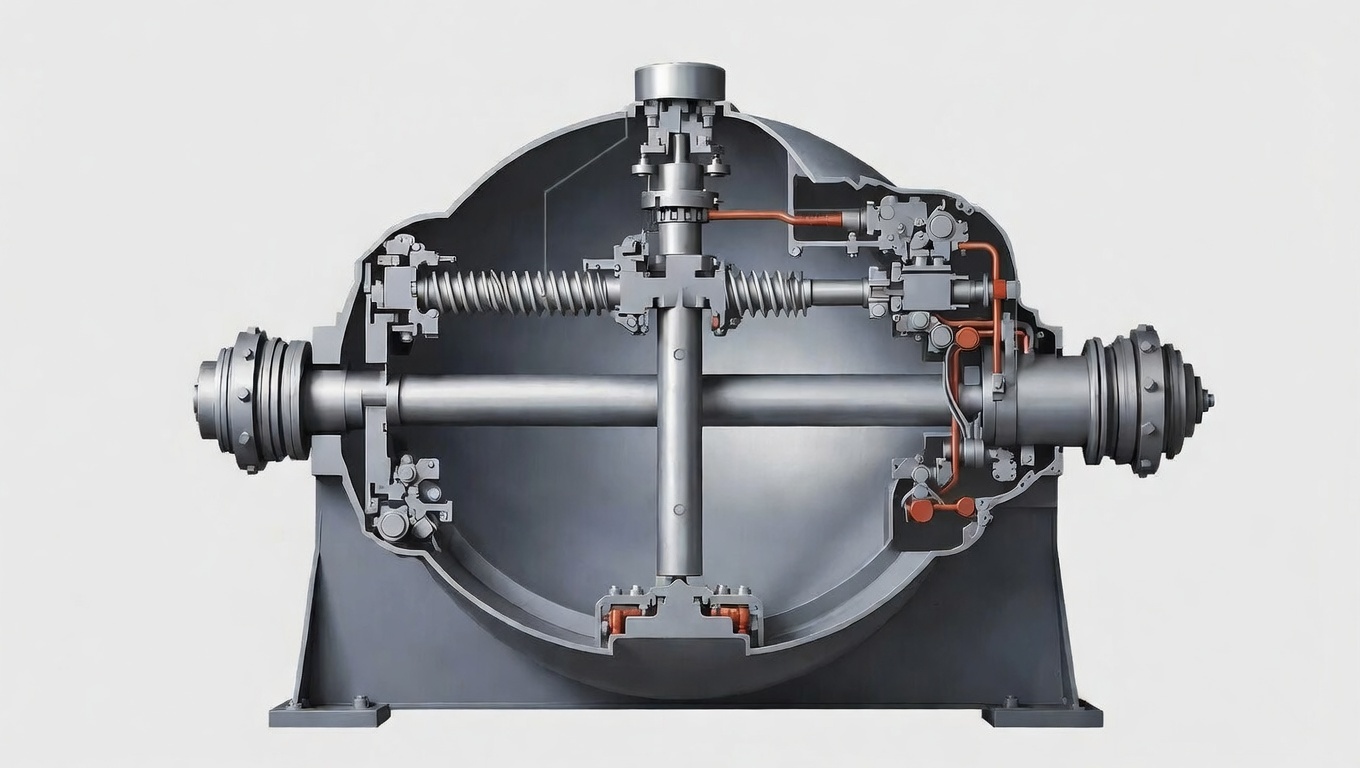
Parts fall into two broad groups:
- Mechanical / Structural Parts — the frame, drive, and motion system (long-life, expensive to replace).
- Wear / Consumable Parts — liners and mantles that take the direct beating (replaced regularly).
Here’s a labeled cross-section view of a typical cone crusher showing the key internal components:
Core Components and Their Roles
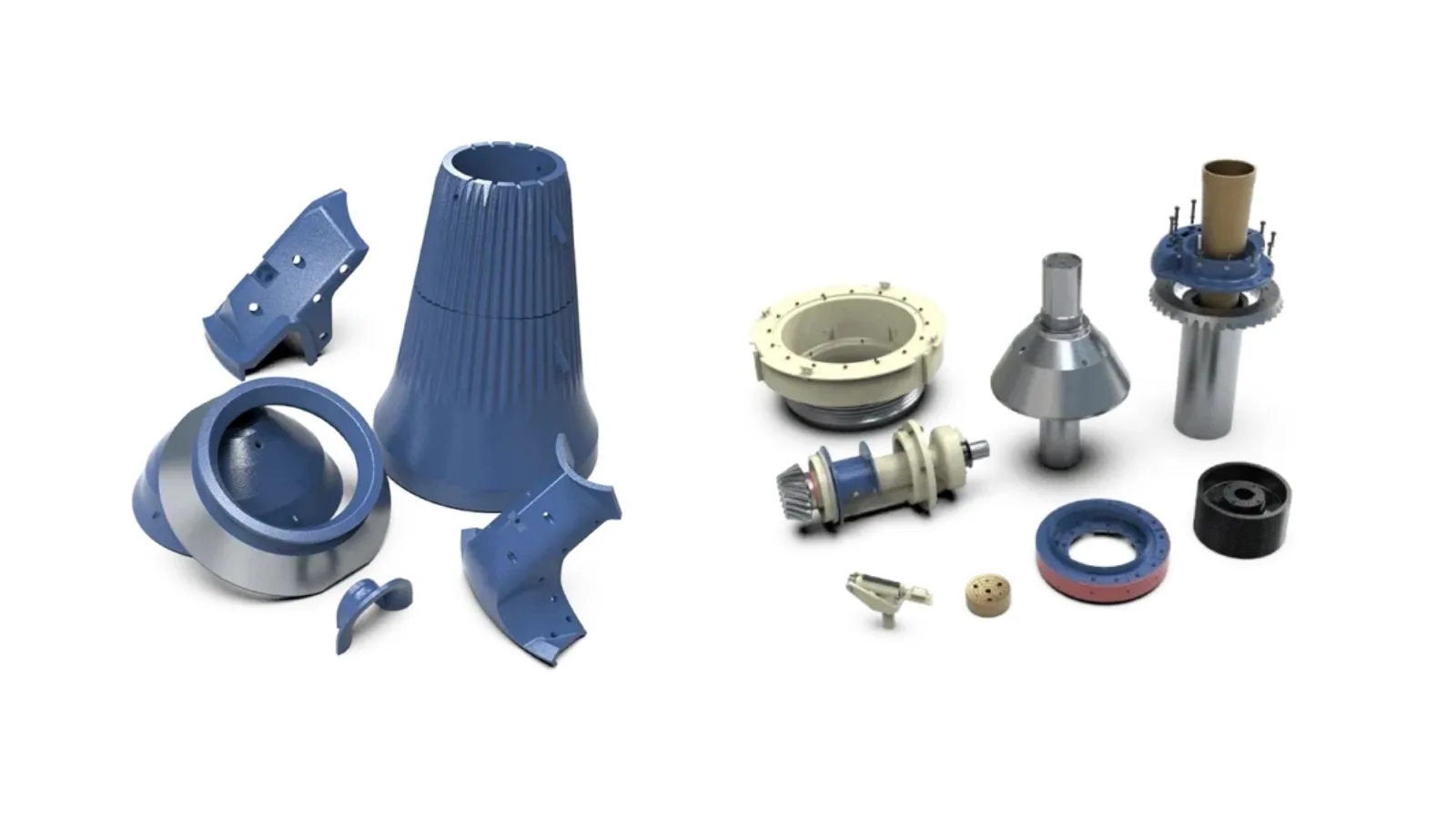
- Main Shaft — carries the head/mantle assembly; handles huge bending loads.
- Eccentric (with bushings) — creates the gyratory swing that crushes material.
- Countershaft & Pinion — transfers motor power to the eccentric.
- Mantle — moving inner crushing surface.
- Bowl Liner / Concave — stationary outer crushing surface.
- Bushings & Bearings — allow smooth rotation with minimal friction.
Wear Parts: The Real Workhorses
The mantle and bowl liner form the actual crushing chamber. They wear out fastest and directly affect product size, shape, and power draw.
Different liner profiles suit different tasks — steeper for finer product, shallower for higher throughput.
Here are examples of standard vs. short-head liner profiles:
Material Choices: Matching the Rock You Crush
No single alloy works everywhere. The rock type (hardness, silica/quartz content, shape) dictates what lasts.
Manganese steel dominates because of its unique work-hardening property: impact makes the surface much harder while the core stays tough enough to absorb shocks without cracking.
Here’s a close look at work-hardened manganese liner surfaces:
Quick Material Guide
| Rock Type | Typical Abrasiveness | Recommended Material | Why It Works Better |
|---|---|---|---|
| Granite, Quartzite | Very High (high silica) | Mn22 or Mn18 + ceramic inserts | Deeper hardened layer, resists sanding |
| Basalt, Diabase | High (dense, tough) | Mn22 or modified Mn18 | Handles high pressure without pancaking |
| River Gravel | High sliding abrasion | Mn18 + ceramic inserts | Ceramic fights smooth quartz wear |
| Limestone, Dolomite | Low-Medium | Mn18 or even Mn14 | Cost-effective; abrasion is minimal |
| Iron Ore, Copper Ore | High impact | Mn18 / Mn22 | Excellent toughness under heavy blows |
OEM vs. Aftermarket Reality
OEM parts are safe and guaranteed to fit, but often carry high prices and long waits.
Quality aftermarket options (from experienced foundries) frequently match or beat OEM life in abrasive conditions thanks to:
- Better heat treatment
- Cleaner castings (fewer gas pores)
- Real-field feedback leading to small but meaningful profile tweaks
The key is choosing a supplier with good metallurgy control and proper machining/fit.
When to Change Liners (Practical Signs)
Don’t wait for failure. Watch these:
- Product shape changes (more flats/elongated pieces)
- Throughput drops noticeably
- Power draw rises while output stays the same
- Physical measurement: remaining thickness near minimum (usually ~20–25 mm depending on model)
- Visible pancaking (metal flows over edges) or radial cracking
Always change mantle + bowl liner together. Mismatched wear creates uneven chambers and accelerates damage.
Mechanical Side: Keep the Heart Beating
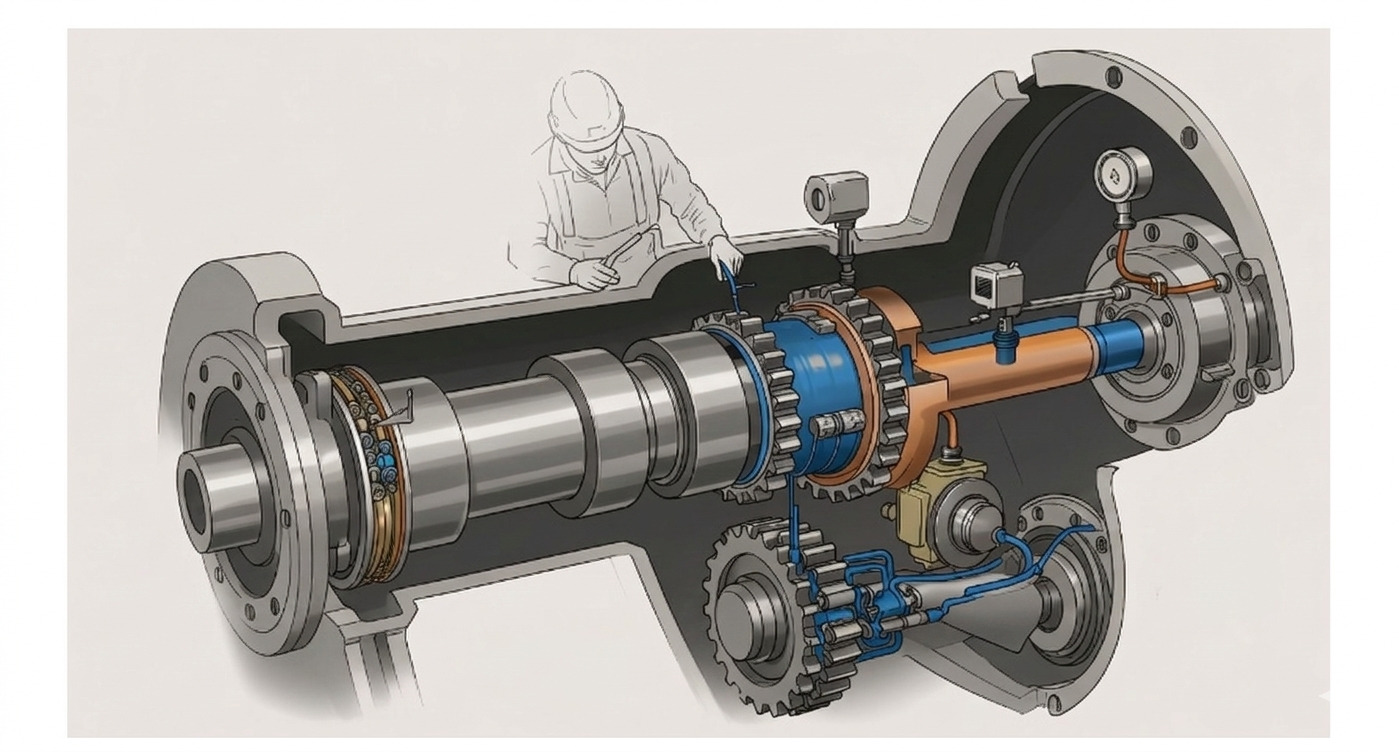
- Check lube oil daily: look for metal flakes (bronze = bushings, steel = gears/bearings).
- Monitor return oil temperature — sudden spikes mean trouble.
- Listen for new noises or vibration changes.
- During shutdowns, use dye penetrant or mag particle testing on main shaft for hidden cracks.
Quick Maintenance Checklist
| Task | Frequency | What to Look For / Do |
|---|---|---|
| Oil level & appearance | Daily | Clean, right level; no unusual smell |
| Liner thickness | Weekly | Measure at several points; log trends |
| Backlash & gear condition | Monthly | Adjust if out of spec |
| Bearing temperatures | Continuous | Trend; alarm on sudden rise |
| Full teardown inspection | 1–2× per year | NDT on shaft, check clearances, clean internals |
FAQ
Final Thought
Running a cone crusher profitably comes down to three things: feed consistency, correct part selection for the rock, and disciplined monitoring/replacement timing.
Get the metallurgy and profile right for your material, install carefully with good backing, and stay ahead of wear — and you’ll see lower cost per ton and far fewer headaches.
If your current rock has changed (new pit section, different quarry face), or you’re getting unusual wear patterns, it’s usually worth reviewing the liner choice and chamber setup. Small adjustments often deliver outsized gains in uptime and output.
At GUBT, we don’t just supply components; we provide the metallurgical expertise and precision engineering needed to keep your crushers running at peak efficiency in the toughest environments on earth.