
Introduction to Cone Crusher Parts
In the heavy-duty world of mineral processing, cone crusher parts are the essential building blocks that enable large-scale material reduction. These specialized crusher components—ranging from structural mainframes to internal rotating assemblies—work together to crush hard rocks and ores into manageable sizes. Whether you are operating in deep-pit metal extraction or surface stone production, having a reliable supply of mining crusher parts, quarry crusher parts, and aggregate crusher parts is the backbone of any successful site.
The core of a crusher’s performance lies in its “sacrificial” elements: the cone crusher wear parts. Because these components, such as mantles and concaves, are in constant, high-pressure contact with abrasive materials like granite or iron ore, they naturally erode over time.
How a Cone Crusher Works
Understanding how a cone crusher operates requires looking at the machine not just as a single unit, but as a complex assembly of high-precision crusher components. At its core, the crushing process is a continuous cycle of compression and release, driven by the synchronized movement of several key cone crusher parts.
The Mechanics of Compression
The process begins when raw material is fed into the top of the unit. Inside, the primary crusher mechanical parts—the mantle (the moving part) and the concave (the stationary part)—create a V-shaped opening known as the crushing chamber. The mantle is mounted on the cone crusher main shaft, which is seated in an eccentric bushing. As the drive motor rotates the eccentric assembly via the countershaft, the main shaft “gyrates.”
This gyration means the mantle does not simply rotate; it wobbles. This movement causes the gap between the mantle and the concave to constantly open and close. When the gap opens, material falls deeper into the chamber; as it closes, the material is squeezed and fractured against the stationary cone crusher parts.
From Raw Ore to Final Product
This internal dance is what makes these machines the workhorses of the industry. In mining crusher parts applications, the pressure must be immense to break down hard ores. As the rocks move lower into the narrower section of the chamber, they are crushed into smaller and smaller pieces until they are fine enough to pass through the “closed-side setting” at the bottom.
The stability of this entire process relies on the cone crusher mechanical parts maintaining tight tolerances. If the bearings or the eccentric assembly wear out, the gyration becomes uneven, leading to poor product shape and potential mechanical failure. By understanding how these crusher components collaborate, operators can better predict wear patterns and maintain high-efficiency production in demanding environments.
Main Cone Crusher Parts and Components
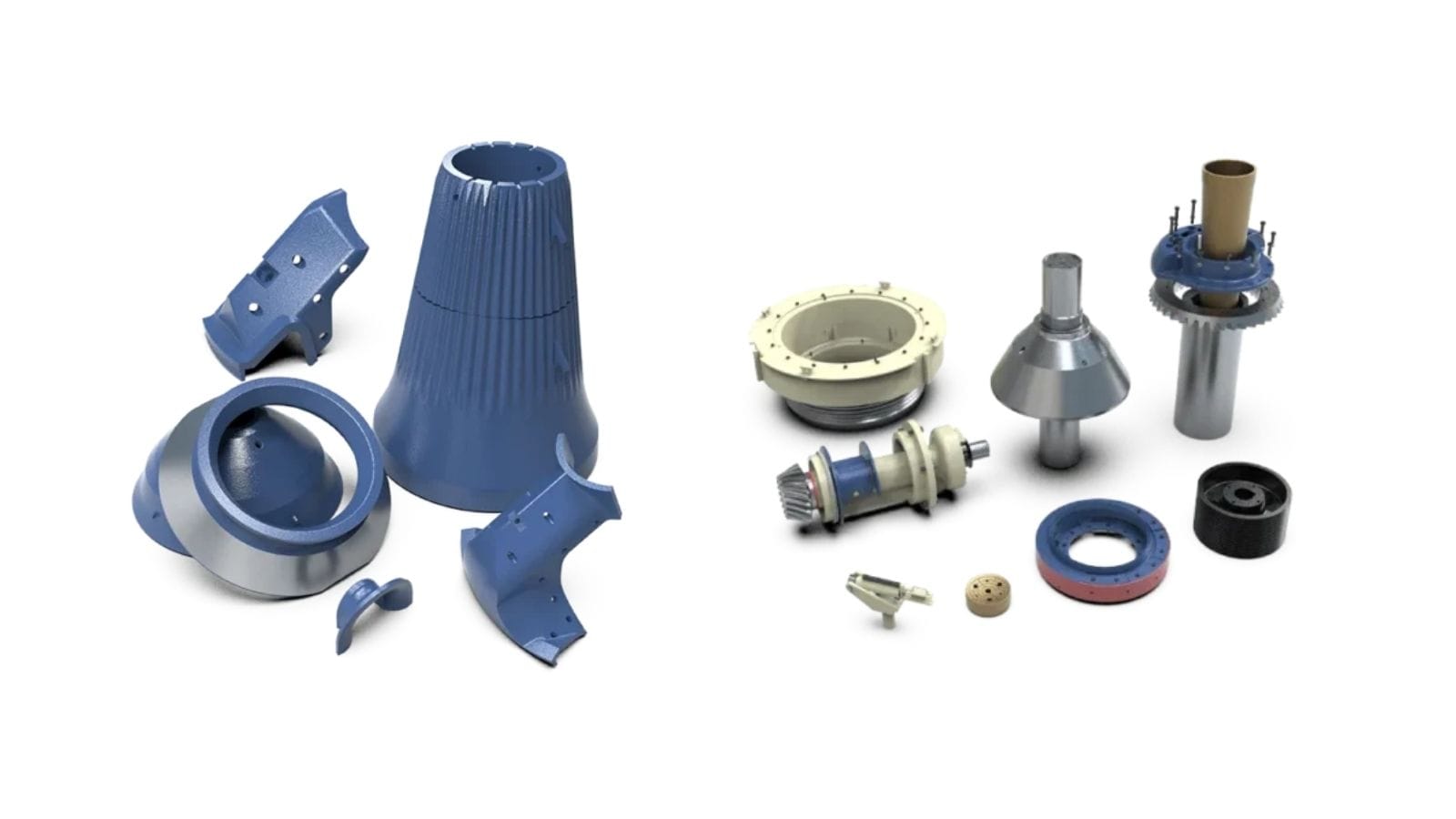
To achieve maximum uptime and high-quality aggregate production, it is essential to understand the individual functions of the primary cone crusher components. Each part is precision-engineered to handle immense pressure, and they are generally categorized into two groups: cone crusher wear parts (which contact the rock) and cone crusher mechanical parts (which drive the motion).
1. Cone Crusher Mantle
The cone crusher mantle is the moving heart of the machine. Attached to the head assembly, it gyrates inside the crusher to compress material against the stationary liner. Because it is the primary surface that strikes the incoming rock, the mantle is a critical member of the cone crusher liners family. It is typically cast from high-manganese steel, allowing it to work-harden under the constant impact of heavy mining and quarrying operations.
2. Cone Crusher Concave
Working in tandem with the mantle is the cone crusher concave. Also known as the stationary liner, it is fixed to the upper frame (the bowl) of the crusher. The space between the cone crusher mantle and the concave forms the crushing chamber. As one of the most vital cone crusher parts, the concave must be replaced regularly to maintain the correct crushing profile and ensure the machine produces the desired grain size.
3. Bowl Liner Parts
The bowl liner parts function as the protective “skin” of the upper crushing assembly. In many designs, the concave is actually seated within the bowl liner. These bowl liner parts are essential for protecting the adjustment ring and the threaded components of the crusher from the abrasive dust and high-velocity rock fragments generated during the reduction process. High-quality cone crusher liners in this area prevent expensive structural damage to the bowl itself.
4. Cone Crusher Shaft
The cone crusher shaft (or main shaft) provides the vertical axis for the entire crushing head. This heavy-duty cone crusher component must support the weight of the head and mantle while resisting the massive lateral forces generated during the crushing cycle. Because the cone crusher shaft is the central pillar of the machine’s geometry, any deviation or wear can lead to catastrophic mechanical failure and uneven product distribution.
5. Cone Crusher Countershaft
Power is delivered to the internal assembly through the cone crusher countershaft. This horizontal shaft connects the external drive motor to the internal pinion gear, which in turn rotates the eccentric bushing. As a primary crusher mechanical part, the cone crusher countershaft must be perfectly aligned and lubricated. It acts as the bridge between the high-speed motor and the high-torque crushing action, making it a critical failure point if not properly maintained.
6. Cone Crusher Bearing Sets
Supporting these heavy rotating masses are the cone crusher bearing assemblies. These include the thrust bearings, radial bearings, and socket liners that allow the main shaft and eccentric to move with minimal friction. A high-performance cone crusher bearing is designed to withstand extreme temperatures and fine stone dust. These are precision mechanical parts that require clean, cooled lubrication to prevent the metal-on-metal contact that leads to downtime.
Summary of Component Roles
In summary, the mantle, concave, and bowl liners are the sacrificial cone crusher wear parts that do the “dirty work” of breaking rocks. Conversely, the shaft, countershaft, and bearings are the cone crusher mechanical parts that provide the power and stability required to keep the operation running. Choosing high-quality versions of these cone crusher parts ensures your equipment remains a reliable asset in the field.
Cone Crusher Wear Parts and Materials
In the challenging environment of a crushing plant, the longevity of your equipment depends entirely on the metallurgy of your cone crusher wear parts. These components are the “front-line soldiers” of the machine, subjected to relentless impact and abrasion. To withstand these forces, manufacturers rely on specialized crusher castings engineered from advanced alloys designed to harden under pressure.
The Power of High Manganese Steel
The most widely used material for manganese crusher parts is Hadfield steel. This unique alloy possesses a “work-hardening” property: while the surface becomes extremely hard when struck by rocks, the inner core remains tough and ductile, preventing the part from cracking.
-
Mn18 Crusher Parts: Containing 17% to 19% manganese, Mn18 is the industry standard for most medium-hard rock applications. It offers an excellent balance of wear resistance and cost-effectiveness for limestone and soft aggregates.
-
Mn22 Crusher Parts: For extreme environments, such as processing hard granite, basalt, or iron ore, Mn22 crusher parts (21% to 24% manganese) are the preferred choice. The higher manganese content allows the part to work-harden faster and deeper, significantly extending the service life in highly abrasive conditions.
Beyond Manganese: Alloy Steel and High Chrome
While manganese is the king of impact, other cone crusher wear parts require different properties:
-
Alloy Steel: Often used for structural crusher castings that require high tensile strength and precision, such as the adjustment ring or bowl, where “work-hardening” is not the primary goal.
-
High Chrome: In specific applications involving highly abrasive but low-impact material, high chrome alloys are utilized. These provide superior sliding abrasion resistance compared to standard steel.
-
Martensitic Steel with Ceramic Inserts: This modern composite material combines the toughness of steel with the extreme hardness of ceramics, offering a “best of both worlds” solution for the most demanding aggregate production sites.
Selecting the correct material for your cone crusher wear parts is not a “one-size-fits-all” decision. It requires analyzing the Feed Size, Moisture, and Bond Work Index (BWI) of your material. Using the right grade—whether it’s standard Mn18 crusher parts or premium Mn22 crusher parts—directly translates to fewer change-outs and a lower total cost of ownership.
OEM vs. Aftermarket Cone Crusher Parts
When sourcing cone crusher replacement parts, mine and quarry operators face a critical decision: should they stick with the original manufacturer or explore the specialized world of aftermarket components? Understanding the nuances between OEM cone spare parts and high-quality aftermarket cone parts is essential for optimizing both your budget and your production output.
Strategic Comparison: Choosing the Right Source
| Feature | OEM Cone Spare Parts | GUBT Aftermarket Cone Parts |
|---|---|---|
| Fitment Guarantee | 100% Guaranteed factory fit. | 100% Guaranteed via 3D scanning & CMM. |
| Price Point | Premium pricing (includes brand markup). | Competitive factory-direct pricing. |
| Lead Time | Often long due to global supply chains. | Agile manufacturing & rapid global shipping. |
| Metallurgy | Standard global specifications. | Custom Cone Crusher Liners tailored to your ore. |
| Innovation | Slow to change original designs. | Continuous improvement based on site feedback. |
The Evolution: Aftermarket Cone Parts
In recent years, the market for aftermarket cone parts has matured significantly. Reputable aftermarket foundries do more than just replicate designs; they often improve upon them. Because these foundries specialize exclusively in wear resistance and casting metallurgy, they can offer cone crusher replacement parts that match or even exceed the service life of original components at a more competitive price point.
The Competitive Edge: Custom Cone Crusher Liners
One of the most compelling reasons many mining operations are shifting away from standard options is the availability of custom cone crusher liners. While OEM parts are designed as a “one-size-fits-all” solution for global markets, GUBT’s custom liners are engineered for your specific site conditions.
By analyzing your specific feed material—such as the moisture content of your iron ore or the abrasiveness of your granite—our engineers can adjust the manganese content (Mn18 to Mn22) or the physical profile of the liners. These custom adjustments can:
-
Increase the crushing ratio.
-
Improve the cubicity of the final aggregate.
-
Extend the interval between maintenance shutdowns.
Optimize Your Crushing Performance
Ultimately, the goal remains the same: maximizing the efficiency of your crusher. Many modern operations now use a hybrid approach, relying on OEMs for complex mechanical assemblies while utilizing custom-engineered aftermarket solutions for their high-turnover wear items.
Ready to lower your cost-per-ton? Explore GUBT’s premium range of Cone Crusher Replacement Parts for Metso, Sandvik, Symons, and more.
Applications of Cone Crusher Parts
The versatility of a cone crusher makes it the preferred choice for secondary and tertiary reduction across diverse industries. However, the specific cone crusher parts required vary significantly depending on the physical properties of the material being processed. From high-abrasion mining to high-precision aggregate production, the right components are the key to a profitable operation.
Hard Rock and Mining Operations
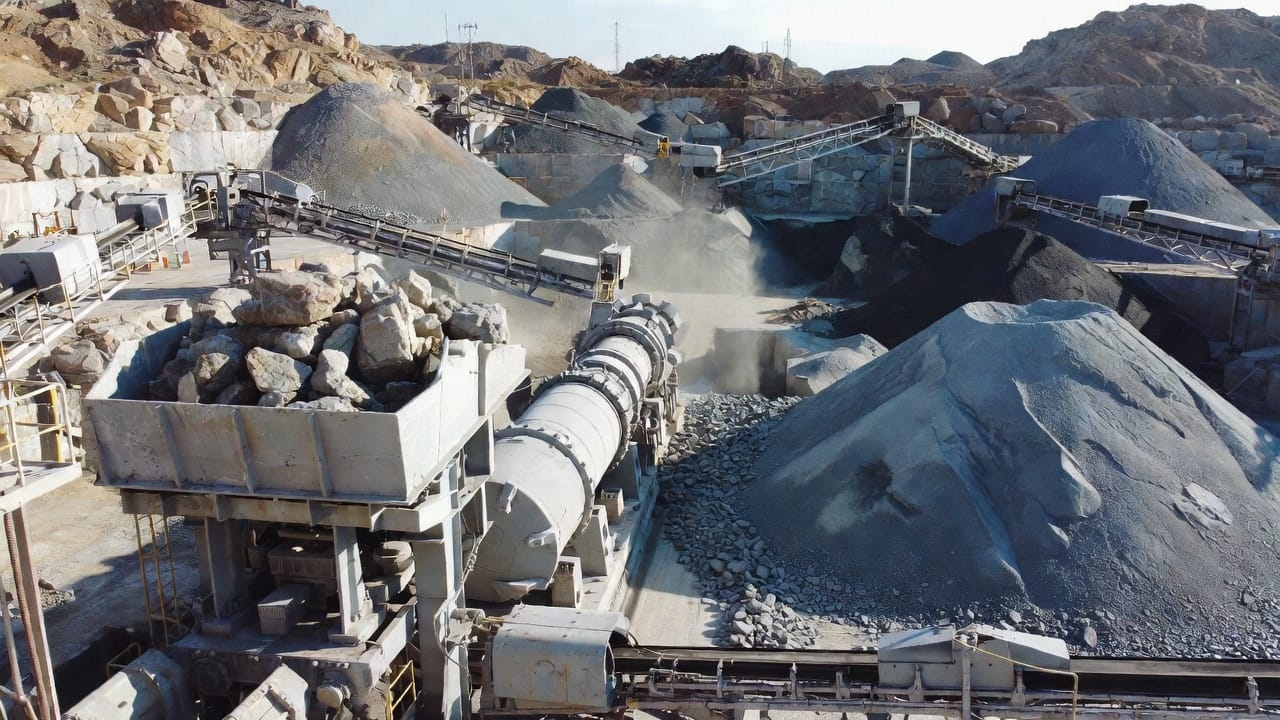 In large-scale mining crusher parts applications, the primary challenge is durability. When processing metal ores such as iron, copper, or gold, the liners must withstand immense pressure and continuous 24/7 operation.
-
Granite Crushing: Granite is notoriously abrasive and hard. Using specialized granite crusher parts with a higher manganese content ( or ) is essential to prevent rapid thinning of the mantle and concave.
-
Basalt Crushing: Basalt is tough and often creates high impact loads. Heavy-duty basalt crusher parts are designed with reinforced profiles to handle the “toughness” of the rock without cracking the internal crusher components.
Quarrying and Aggregate Production
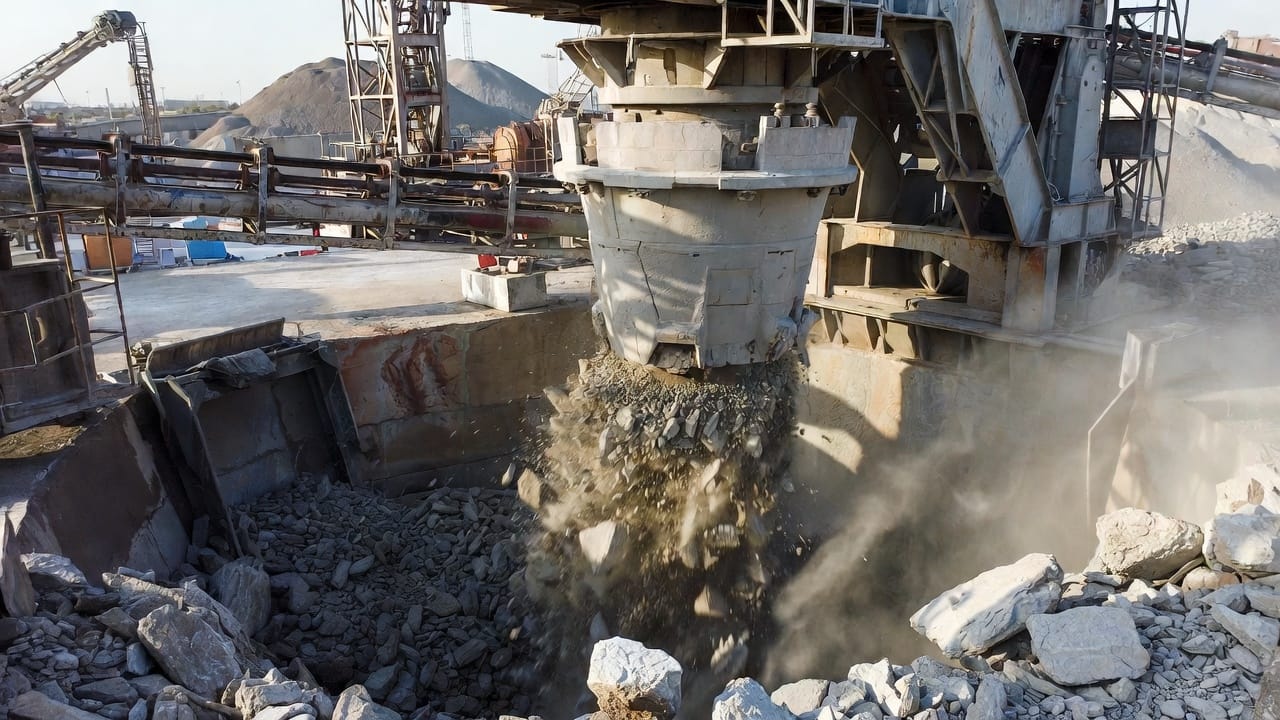
For the construction industry, the goal is not just reduction, but the quality of the final shape. Aggregate crusher parts are often custom-contoured to improve the “cubicity” of the stone, which is vital for high-strength concrete and asphalt.
-
Quarry Operations: In limestone or sandstone quarries, the focus shifts toward maximizing throughput. Choosing the right aggregate crusher parts allows for a consistent “Closed Side Setting” (), ensuring the final product meets strict size specifications for road base and infrastructure projects.
Sustainable Solutions: Concrete Recycling
A rapidly growing application for cone crushers is the processing of construction and demolition () waste. Concrete recycling parts must be engineered to handle unique challenges, such as occasional “tramp metal” (rebar) that may enter the chamber. Modern concrete recycling parts often feature hydraulic release systems and specialized liner alloys that can handle the mix of old concrete and occasional debris without stalling the machine.
Whether you are extracting precious metals or recycling urban waste, the performance of your machine is only as good as the cone crusher parts installed. Matching the metallurgy and design of your liners to your specific application—be it granite crusher parts for hardness or concrete recycling parts for versatility—is the most effective way to ensure long-term equipment stability.
Maintenance and Replacement of Cone Crusher Parts
Maintaining the peak performance of a cone crusher requires a rigorous schedule and a proactive approach to managing crusher consumables. Because these machines operate under extreme stress, a well-defined strategy for replacing crusher maintenance parts is the only way to avoid catastrophic failure and minimize expensive downtime.
Monitoring Common Wear Components
The most frequent intervention involves the “sacrificial” elements—the mantle and bowl liners. These crusher consumables are designed to wear down while protecting the machine’s frame. Regular inspections should focus on the thickness of these liners and the condition of the crusher service parts, such as filters, seals, and specialized hardware. If a liner is allowed to wear too thin, it can crack or cause the head assembly to sustain permanent damage, turning a routine replacement into a need for major crusher repair parts.
Strategic Replacement and Maintenance
The replacement cycle depends heavily on material abrasiveness and tonnage. However, a general maintenance strategy includes:
-
Daily Inspections: Check lubrication oil for contaminants and monitor operating temperatures.
-
Scheduled Service: Replace crusher service parts like O-rings and dust seals during planned intervals to prevent dust from entering the internal mechanical assemblies.
-
Inventory Management: Always keep critical crusher repair parts, such as eccentric bushings and countershaft bearings, in stock.
By treating crusher maintenance parts as a scheduled investment rather than an emergency expense, operators can ensure a consistent production rate. A disciplined maintenance program not only extends the life of the machine but also ensures that the final product meets quality standards throughout the entire life cycle of the liners.
FAQ
Conclusion
In summary, the longevity and efficiency of your crushing operation hinge on the quality of your cone crusher parts. As we have explored, these machines are complex systems where every component—from the heavy-duty structural shafts to the sacrificial cone crusher liners—must perform under extreme conditions. Neglecting the quality of your cone crusher spare parts inevitably leads to higher energy costs, inconsistent product sizing, and frequent, costly downtime.
Choosing high-performance wear parts is an investment in stability. By selecting components engineered with the correct metallurgy, such as Mn18 or Mn22, you ensure that your equipment can handle the toughest materials while maintaining a lower cost-per-ton. To stay ahead of the competition, always partner with a reliable supplier that understands the balance between durability and performance.
For more technical guides, material comparisons, and expert advice on optimizing your crushing plant, explore our latest industry perspectives at GUBT Insights.