Screening & Feeder Parts Price 2026 – Quick Overview
Honestly, prices vary more than most buyers expect — and the range is not random. I’ve seen the same screen panel priced at $85 from one supplier and $340 from another, with both described as ‘woven wire steel mesh’ in the catalog. The difference lies in wire gauge, aperture tolerance, surface treatment, and whether the manufacturer actually controls their production or is reselling someone else’s output.
Screening and feeder equipment operates under continuous vibration, heavy impact, and abrasive contact. The wear parts — screen panels, grizzly bars, feeder liners, springs, and bearing assemblies — are the components that determine whether your plant runs to schedule or stops unexpectedly. Getting the price-to-performance balance right on these parts is genuinely important, because the replacement cycle is frequent and the downtime cost of an unplanned failure is real.
This guide covers realistic 2026 price ranges across all major screening and feeder wear parts, the factors that create price variation, and how to evaluate what you’re actually paying per ton of material processed — which is the only metric that should drive procurement decisions in production environments.
| Part Category | Typical Price Range (2026) | Primary Price Driver |
| Screen mesh panels — wire | $40 – $280 per panel | Wire gauge, aperture size, steel grade |
| Screen panels — polyurethane | $60 – $350 per panel | Shore hardness, aperture, panel size |
| Screen panels — rubber | $50 – $320 per panel | Compound grade, thickness, aperture profile |
| Grizzly bars (per bar) | $80 – $420 per bar | Length, cross-section, alloy grade |
| Grizzly bar sets (full deck) | $800 – $4,500+ per set | Bar count, spacing, alloy specification |
| Feeder pan / apron liners | $90 – $500 per liner | Alloy, thickness, liner geometry |
| Vibrating screen side liners | $60 – $280 per liner | Rubber or polyurethane grade, dimensions |
| Screen springs (per set) | $120 – $600 per set | Spring type, load rating, material |
| Screen bearing assemblies | $180 – $1,200+ per unit | Bearing class, load capacity, brand |
| Vibrator / exciter units | $400 – $3,500+ per unit | OEM vs aftermarket, vibration class |
| Complete screen media kit | $600 – $5,000+ | Screen size, material combination |
Main Screening & Feeder Parts and Their Prices
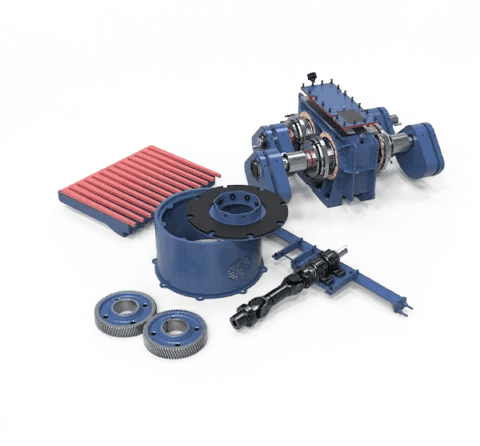
I’ve seen screen panels fail quickly when the material was wrong for the application — not dramatically, but insidiously: panels that blinded early, wires that broke before their time, apertures that deformed and changed the gradation. Each part type has a specific failure mode that is almost always preventable by correct specification.
Screen Mesh and Panels
Screen mesh is the highest-frequency replacement item in most screening operations. Woven wire panels are standard for most applications — the price varies primarily with wire gauge and the steel grade used. Higher carbon content gives better wear resistance but reduces flexibility. For sticky or wet materials, square apertures in heavier gauge wire outperform lighter mesh but cost more. Polyurethane panels carry a price premium over steel mesh but typically last 5–8 times longer in abrasive applications, which often makes them cheaper per ton screened despite the higher unit cost. Rubber panels offer similar longevity advantages in high-impact zones where polyurethane can crack.
Grizzly Bars
Grizzly bars are the primary wear component in primary feeding and pre-screening applications — they take the initial impact of ROM (run-of-mine) material and are exposed to extremely aggressive wear. Bar material selection matters more here than in almost any other screening component. Standard mild steel bars wear quickly in hard rock applications. High manganese or chrome-moly alloy bars cost more per bar but deliver substantially longer life under heavy impact loading. The spacing between bars also affects wear rate — wider spacing allows larger rock to pass through, reducing impact loading per bar but changing the screening classification.
Feeder Liners
Apron feeder liners, pan feeder liners, and chute wear liners protect the feeder structure from the direct abrasive and impact forces of raw material. They’re replaced on a scheduled basis in well-managed operations, and the replacement interval is largely determined by liner alloy and thickness. Manganese steel liners work-harden under impact and perform well in primary feeding applications. Chrome-moly alloy liners offer better pure abrasion resistance for dry, silica-rich feeds where impact loading is lower. The right choice depends on your specific feed material and feeder type.
Springs and Bearing Assemblies
Springs and bearings are not wear parts in the same sense — they are mechanical components with a longer service life that fail through fatigue rather than abrasion. But they are high-consequence items when they fail. A broken spring causes immediate screening efficiency loss and potential structural damage to the screen body. A failed bearing typically means an unplanned shutdown and a significant repair event. Both should be sourced from suppliers with documented load ratings and fatigue life data — not based on lowest price.
| Part | Primary Failure Mode | Wear Rate Driver | Price Range | Typical Service Life |
| Wire mesh — standard steel | Wire breakage, blinding | Wire gauge vs feed impact | $40 – $140/panel | 2–8 weeks (application dependent) |
| Wire mesh — high carbon | Abrasive wear of wire | Feed abrasivity and throughput rate | $80 – $220/panel | 4–16 weeks |
| Polyurethane panels | Aperture deformation, cracking | Shore hardness vs material temperature | $80 – $280/panel | 3–12 months |
| Rubber panels | Tearing, aperture deformation | Compound grade vs impact energy | $70 – $260/panel | 2–10 months |
| Grizzly bars — mild steel | Abrasive wear, impact gouging | Rock hardness and drop height | $80 – $180/bar | 4–16 weeks (heavy duty) |
| Grizzly bars — Mn/Cr-Mo alloy | Abrasive wear (slower) | Rock hardness and alloy match | $160 – $420/bar | 3–8 months |
| Feeder liners — Mn steel | Abrasive wear, work-hardens | Material hardness and impact velocity | $120 – $380/liner | 2–6 months |
| Feeder liners — chrome alloy | Abrasive wear (no work-hardening) | SiO2 content of feed material | $160 – $500/liner | 3–8 months |
| Coil springs | Fatigue fracture | Dynamic load amplitude and frequency | $120 – $400/set | 6–24 months |
| Rubber mounts | Compression set, cracking | Temperature and oil exposure | $80 – $280/set | 4–18 months |
| Screen bearings | Fatigue, contamination | Sealing quality and load factor | $180 – $900/unit | 6–36 months |
Screening & Feeder Parts Price Comparison Table (2026)
The table below provides a structured comparison across the three main screen media materials — steel, polyurethane, and rubber — for common panel sizes and applications. Prices are for aftermarket parts from established suppliers; OEM pricing typically runs 25–60% higher across all categories.
| Part & Material | Price Range (per panel/unit) | Typical Lifespan | Best Application | Key Weakness |
| Wire mesh — mild steel | $40 – $120 | 2–6 weeks | Dry, lower-abrasion feeds | Short life in hard rock, noisy |
| Wire mesh — high carbon steel | $90 – $220 | 4–14 weeks | Hard rock, moderate abrasion | Less flexible, can crack in high impact |
| Wire mesh — stainless steel | $140 – $380 | 6–20 weeks | Corrosive or wet applications | Higher cost, not needed for dry feeds |
| Polyurethane — standard | $80 – $200 | 3–8 months | Moderate abrasion, dry feed | Degrades above 60°C; cracks under impact |
| Polyurethane — heavy duty | $150 – $350 | 6–14 months | High abrasion, dry aggregate | Premium cost; verify Shore hardness spec |
| Rubber — standard compound | $70 – $200 | 2–8 months | High impact zones, wet feed | Less abrasion-resistant than polyurethane |
| Rubber — reinforced compound | $130 – $320 | 4–12 months | Impact + abrasion combined | Higher cost; verify compound grade |
| Grizzly bars — mild steel | $80 – $180/bar | 4–10 weeks (hard rock) | Light to medium primary screening | Fast wear in ROM hard rock |
| Grizzly bars — Mn18Cr2 | $200 – $420/bar | 3–7 months | Primary heavy-duty screening | Higher cost; requires correct spacing |
| Feeder liners — Mn steel | $120 – $380/liner | 2–5 months | High-impact primary feeding | Needs impact to work-harden |
| Feeder liners — Cr-Mo alloy | $160 – $500/liner | 3–8 months | Abrasive dry feeds | Brittle under direct heavy impact |
What Affects Screening & Feeder Parts Price?
1. Material Type: Steel vs Polyurethane vs Rubber
Don’t just choose the cheapest material. The three primary screen media materials serve different wear environments, and selecting the wrong one for your application will cost more in total — even if it costs less per panel.
Steel wire mesh is the most familiar and lowest unit cost option. It handles high-temperature applications and is straightforward to source globally. The weakness is wear life in abrasive feeds — wire mesh can require weekly replacement in heavy hard rock screening, which quickly makes it the most expensive option per ton screened. High carbon steel wire improves this significantly at a modest price premium.
Polyurethane panels carry a higher initial cost but last 5–10 times longer than standard wire mesh in many abrasion applications. They’re also significantly quieter — a relevant operational factor in processing plants with noise exposure requirements. The limitation is temperature sensitivity: polyurethane degrades above approximately 60°C, making it unsuitable for certain aggregate drying or high-friction applications.
Rubber panels are the preferred choice in high-impact zones — primary screen decks where large material first contacts the screen surface, or in wet screening where polyurethane would absorb water and lose performance. Reinforced rubber compounds extend service life further but at a cost premium. The trade-off versus polyurethane is slightly lower abrasion resistance in purely abrasive (non-impact) applications.
| Material | Unit Cost | Wear Life (typical) | Best Condition | Worst Condition | Noise Level |
| Standard wire mesh | Lowest | Shortest — weeks | Dry, lower-abrasion feed | Hard rock, silica-rich feed | High |
| High carbon wire mesh | Low-moderate | Short-moderate — weeks to months | Hard rock, moderate abrasion | High-impact ROM feed | High |
| Polyurethane (standard) | Moderate | Long — months to a year | Dry abrasive feed, fine screening | High-temp or high-impact zones | Low |
| Polyurethane (heavy duty) | Moderate-high | Long — 6–14 months | High-abrasion dry aggregate | Wet feed or above 60°C | Low |
| Rubber (standard) | Moderate | Moderate-long — months | High-impact, wet feed | Highly abrasive without impact | Very low |
| Rubber (reinforced) | Moderate-high | Long — 4–12 months | Impact + abrasion combined | Purely abrasive dry feed | Very low |
2. Manufacturing Process and Quality Control
I’ve seen identical specifications perform differently due to process control — and this is particularly true for polyurethane and rubber screen panels, where the compounding and curing process is as important as the raw material selection. A polyurethane panel with the correct Shore hardness on paper but inconsistent cure across the panel surface will deform unevenly and fail prematurely along the inconsistently cured zones.
For steel wire mesh, the wire drawing process, carbon content consistency, and weaving tension all affect how the panel behaves under load. A manufacturer who controls these variables — and can demonstrate it through batch test records — will deliver more consistent performance than one who sources pre-made mesh and re-sells it with a private label.
3. OEM vs Aftermarket Pricing
Aftermarket parts often offer better value, but only if quality is right. OEM screen parts carry a significant price premium — typically 30–60% above established aftermarket manufacturers. In many cases, this premium is not justified by performance differences, particularly for standard screen panels and grizzly bars where the specification is well-understood and the manufacturing process is not proprietary.
| Criterion | OEM Parts | Quality Aftermarket | Low-Cost Aftermarket |
| Unit price | Highest — 30–60% premium | Competitive | Lowest — often 40–60% below OEM |
| Dimensional accuracy | Guaranteed — OEM tooling | High — verified against OEM drawings | Variable |
| Material consistency | Controlled — OEM spec | High from foundry-owning manufacturers | Low — sourced variably |
| Technical support | Full application support | Good from established suppliers | Minimal |
| Availability (current models) | Good | Good | Variable |
| Availability (legacy equipment) | Often discontinued | Often still available | Sometimes available |
| Customization | None | Possible | Rarely |
| Best use case | Critical mechanical parts, new equipment warranty | Screen media and wear liners | Trial only with verification |
4. Customization and Application
Real-world conditions rarely match standard specifications exactly. Screen aperture sizes are often not available in the exact dimension needed from a catalog supplier — particularly for non-standard feed gradations or unusual product specifications. Feeder pans in older equipment frequently have non-standard dimensions that require custom liner fabrication. And some applications — screening wet, sticky material with high clay content, for example — require specific aperture profiles and surface treatments that go beyond off-the-shelf options.
Custom parts carry a price premium of typically 15–40% over standard catalog items, but in many cases they outperform standard parts by enough to justify the premium. The key question is whether the custom specification is genuinely needed for your conditions, or whether a standard alternative would perform adequately.
Screening & Feeder Parts Price by Application
Application matters more than most buyers realize — the same screen panel that lasts six months in a limestone aggregate plant may need replacement every three weeks in a primary iron ore screening circuit. Price expectations need to be anchored to your specific operating conditions, not to general catalog claims.
| Application | Typical Feed Conditions | Screen Media Recommendation | Grizzly Bar Grade | Relative Wear Rate | Estimated Annual Parts Budget (mid-size screen) |
| Hard rock mining — primary | ROM ore, >150mm, high SiO2 | Rubber — reinforced compound | Mn18 or Cr-Mo alloy | Very high | $8,000 – $25,000+ |
| Hard rock mining — secondary | Crushed ore, 30–150mm | Polyurethane HD or wire mesh HC | Cr-Mo alloy bars | High | $5,000 – $15,000 |
| Limestone quarry — primary | Blasted limestone, variable size | Rubber or polyurethane | Mn steel bars | Moderate-high | $3,500 – $10,000 |
| Limestone quarry — secondary | Crushed limestone, <80mm | Polyurethane standard | Not typically applicable | Moderate | $2,000 – $6,000 |
| River gravel / sand | Wet rounded gravel, silica-rich | Polyurethane or rubber (wet grade) | Cr-Mo alloy bars | High (SiO2 abrasion) | $4,000 – $12,000 |
| Aggregate — dry screening | Dry crushed aggregate, <50mm | Polyurethane HD | Not typically applicable | Moderate | $1,500 – $5,000 |
| Recycled concrete / C&D | Variable, includes rebar fragments | Rubber — impact-resistant | Mn steel (impact tolerance) | High (unpredictable) | $4,000 – $14,000 |
| Coal preparation | Soft coal, wet or dry | Polyurethane or wire mesh | Not typically applicable | Low-moderate | $1,000 – $4,000 |
Cheap vs Premium Parts: Real Cost Comparison
Cheap parts are often the most expensive choice — but this only becomes visible when you track total cost rather than invoice cost. The math is straightforward once you account for replacement frequency and the production value of each unplanned shutdown.
| Screen Panel Tier | Unit Price | Typical Lifespan | Replacements/Year | Annual Parts Cost | Shutdowns/Year | Est. Total Annual Cost |
| Budget wire mesh | $50 – $80 | 2–3 weeks | 18–26 panels | $900 – $2,080 | 18–26 events | $5,400 – $10,480+ |
| Standard wire mesh HC | $100 – $160 | 4–8 weeks | 6–13 panels | $600 – $2,080 | 6–13 events | $2,400 – $6,680+ |
| Standard polyurethane | $120 – $200 | 3–6 months | 2–4 panels | $240 – $800 | 2–4 events | $840 – $2,800+ |
| Heavy duty polyurethane | $200 – $350 | 6–14 months | 1–2 panels | $200 – $700 | 1–2 events | $500 – $1,700+ |
Note: Shutdown cost estimated at $300/event (labor + lost production for a planned panel change). Unplanned failure events typically cost 3–5x more due to emergency labor and extended downtime. These ranges assume a single-deck mid-size vibrating screen; scale proportionally for larger equipment or multi-deck configurations.
| Cost Factor | Budget Parts | Premium / Long-Life Parts |
| Parts cost per year | High — frequent replacements | Lower — less frequent replacements |
| Replacement labor per year | High — many change-out events | Low — fewer change-out events |
| Unplanned failure risk | Higher — shorter wear life is less predictable | Lower — wear behavior more consistent |
| Inventory requirement | Large safety stock needed | Lean stock — predictable reorder cycle |
| Panel blinding risk | Higher in abrasive, wet feeds | Lower with correct material specification |
| Cost per ton screened | Usually highest overall | Usually lowest over full production cycle |
How to Get the Best Price from Screening & Feeder Parts Suppliers
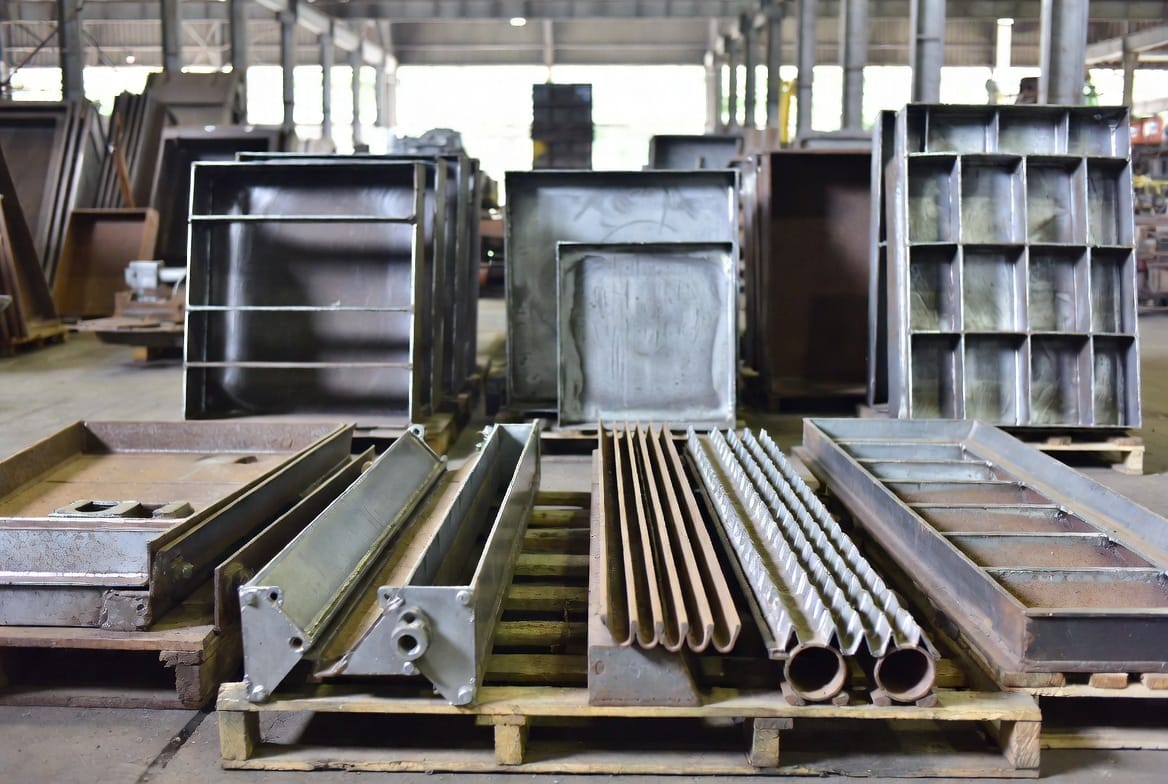
Don’t order large quantities blindly — especially from a new supplier. The approach that consistently delivers the best price-to-performance outcome is: verify first, commit second. Here’s what that looks like in practice:
- Request material test reports before placing any order — for polyurethane, request Shore hardness certification and compound specification. For steel, request tensile strength and carbon content. For rubber, request compound grade and temperature rating. Any serious manufacturer provides this routinely.
- Compare cost per ton, not cost per panel — calculate your current replacement frequency, multiply by unit price, add estimated labor per change-out, and divide by annual tonnage. This gives you a benchmark to evaluate alternatives against.
- Place a trial order before committing to volume — one or two panels installed under your actual conditions for a full wear cycle will tell you more than any supplier’s spec sheet. Track hours and tonnage to replacement threshold carefully.
- Specify your application precisely when requesting quotes — feed material type, feed size range, moisture content, and screen deck position (primary, secondary, tertiary) all affect the correct specification. A supplier who doesn’t ask these questions is probably quoting you a catalog part that may not fit your conditions.
- Negotiate volume pricing only after a successful trial — once you’ve verified performance, use your annual volume commitment as leverage for price. Established manufacturers will offer meaningful discounts for committed volume with reliable payment terms.
- Ask about anti-blinding options for sticky or wet feeds — self-cleaning aperture designs and specific surface treatments add cost but can dramatically extend panel life in problematic feed conditions. Sometimes the more expensive panel is the cheaper option per ton.
- Some specialized manufacturers focus on wear life optimization rather than unit price competition — these suppliers are worth identifying because their total cost of ownership often beats lower-priced alternatives significantly when calculated over a full year of production.
Common Pricing Mistakes Buyers Make
I’ve seen entire batches fail within weeks — and in every case, the root cause was a procurement decision that could have been avoided. These are the mistakes that appear most consistently:
- Choosing on unit price without calculating cost per ton. A panel that costs $60 and lasts two weeks is more expensive per ton screened than a panel costing $220 that lasts four months. This calculation takes five minutes and changes most procurement decisions.
- Accepting ‘polyurethane’ or ‘high manganese’ as a sufficient specification. Polyurethane covers Shore 40A to Shore 90A — a range that behaves completely differently under load. Always specify Shore hardness, compound type, and temperature rating.
- Ordering large volumes from a new supplier without a trial. Production batches are not always consistent with the quoted specification. A supplier who sends excellent samples can still deliver inconsistent production runs if their process control is poor.
- Not specifying the application when requesting a quote. A screen panel quoted without knowledge of your feed material, moisture content, and deck position may be technically correct for a different application and completely wrong for yours.
- Ignoring lead time until it becomes an emergency. Screen panels wear out on a schedule — if you know your panels last six weeks, you should reorder at four weeks remaining stock. Operations that wait until they’re near-empty regularly face unplanned shutdowns while waiting on a 3–5 week manufacturing lead time.
- Underestimating the cost of unplanned panel failure. A planned panel change during a scheduled maintenance window costs an hour of labor. An unplanned failure mid-shift can mean 4–8 hours of downtime, emergency labor, and potential downstream damage from over-size material passing through a failed screen.
Final Thoughts: Price vs Performance
The lowest quote rarely wins in real operations. It wins at the point of purchase — and loses consistently in the months that follow, through replacement frequency, labor cost, and production interruptions that add up to multiples of the initial saving.
The shift that changes procurement outcomes is treating cost per ton processed as the primary metric, not cost per unit. That single change in measurement framework makes every supplier comparison more accurate and every specification decision more defensible.
Screen media and feeder wear parts are not commodity items, even when they look like them in a catalog. The material specification, the manufacturing process control, and the match between part specification and operating conditions all determine whether a part is genuinely cheap or merely low-priced.
| Key Principle | Wrong Approach | Right Approach |
| Primary evaluation metric | Lowest unit price | Lowest cost per ton processed |
| Material specification | Accept generic description (e.g. ‘polyurethane’) | Specify Shore hardness, compound grade, temperature rating |
| Supplier qualification | Order volume based on quote and catalog | Trial order, full wear cycle, then volume commitment |
| Application matching | Order same part for all screens | Specify per deck position and feed material type |
| Inventory management | Reactive — reorder when near-empty | Planned — reorder at 30–40% of wear cycle remaining |
| Downtime accounting | Count parts cost only | Include replacement labor and production value per shutdown |
| Supplier relationship | Transactional — switch on price | Long-term — stability and quality consistency over time |
Conclusion: Performance is the Ultimate Cost-Saver
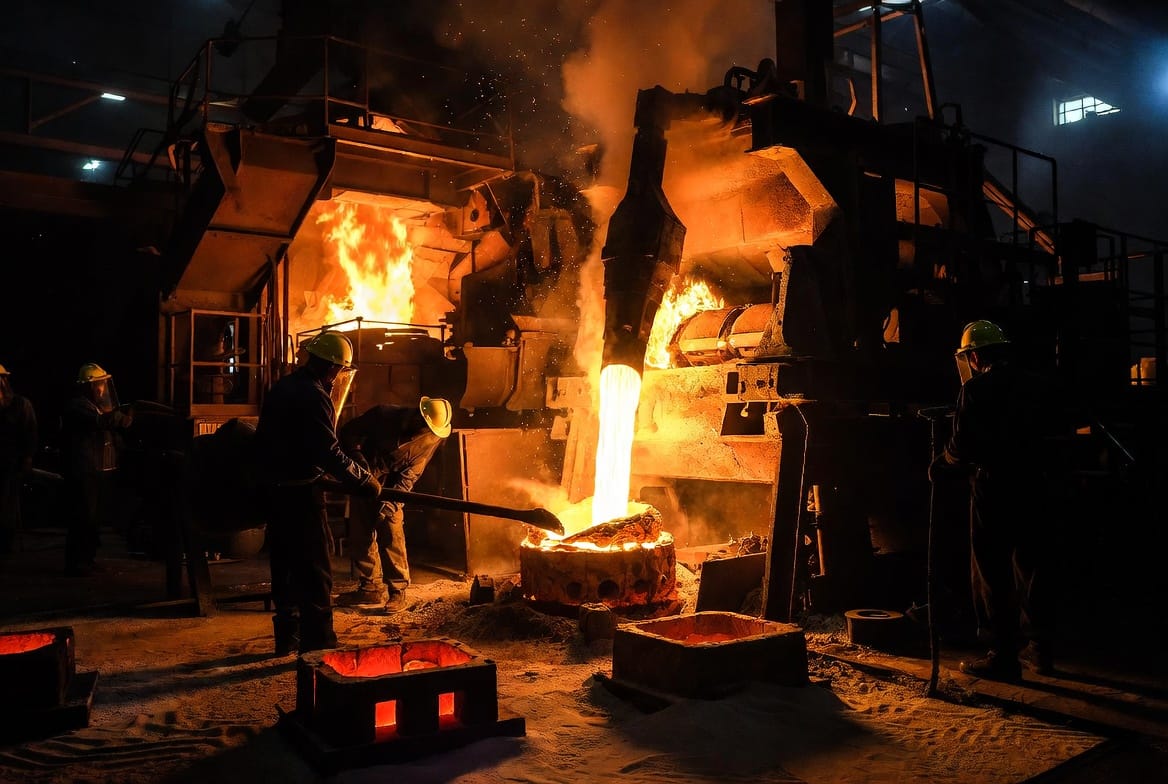
In 2026, the only metric that truly impacts your bottom line is Cost per Ton, not the initial price tag. Choosing “budget” components often leads to a cycle of frequent replacements and expensive unplanned downtime that far outweighs any initial savings.
GUBT bridges the gap between OEM-level quality and aftermarket value. Our high-performance Screening & Feeder Parts are engineered for the toughest conditions, helping you reduce your annual maintenance budget while keeping your plant running at peak efficiency.
Ready to lower your operating costs? Contact us today for a professional analysis of your wear-part needs and a competitive quote.Frequently Asked Questions
How often should vibrating screen panels be replaced?
Replacement frequency depends almost entirely on the feed material and screen media type. In a dry limestone aggregate application with polyurethane panels, 4–8 months per panel is typical. In a primary hard rock circuit with wire mesh, 2–4 weeks is more realistic. The only way to know your actual replacement cycle is to track it systematically — record installation date and tonnage processed, and note the condition at removal. Over 3–4 cycles, you’ll have enough data to plan accurately.
Is polyurethane always better than wire mesh for abrasive feeds?
For pure abrasion in dry feeds, yes — polyurethane almost always delivers longer service life and lower total cost per ton. The exceptions are high-temperature applications (above ~60°C), high-impact zones where polyurethane cracks, and applications where panel blinding with fines is a problem (rubber or wire mesh may handle this better). Always factor in the specific conditions, not just the material hardness.
What is the typical price difference between OEM and aftermarket screen panels?
OEM screen panels typically cost 30–60% more than equivalent aftermarket panels from established manufacturers. For standard panel sizes and well-understood specifications, this premium is rarely justified by performance differences. The exception is proprietary aperture profiles or anti-blinding designs that are genuinely OEM-exclusive. For standard woven wire or flat-deck polyurethane panels, a qualified aftermarket manufacturer with documented specifications and references is almost always the better value.
How do I know if a grizzly bar is the right alloy for my application?
Ask the supplier for the alloy specification — manganese percentage and chromium addition for Mn grades, or the specific chrome-moly composition for Cr-Mo bars. Then match it to your feed material: Mn18Cr2 for high-impact primary applications with hard rock, Cr-Mo alloy for high-abrasion applications with lower impact loading. If your supplier cannot specify the alloy grade precisely, that is a signal that their material control is insufficient for a commercial procurement decision.
What safety stock level should I maintain for screen panels?
A practical rule: maintain enough stock to cover 1.5x your supplier lead time at your current consumption rate. If your panels last six weeks and your supplier lead time is four weeks, you should never have less than six weeks of stock on hand — and you should reorder when you reach that level. For high-throughput operations, negotiate a consignment or buffer stock arrangement with your supplier so you’re not managing replacement inventory against a production schedule.
Authoritative Resources & Further Reading
The following sources provide technical depth on screening equipment, wear material standards, and procurement practice for industrial screening and feeding applications:
Standards & Material References
- ASTM A128 — Austenitic Manganese Steel Castings — Standard specification for manganese steel used in grizzly bars and feeder liners. Use to verify supplier alloy claims for Mn-grade components.
- ASTM A532 — Abrasion-Resistant Cast Iron Specification — Covers high-chrome alloy grades used in feeder liners and wear-resistant components. Reference for verifying chrome-moly and high-chrome alloy supplier claims.
- ISO 4649 — Rubber Abrasion Resistance Testing — Standard test method for rubber wear resistance — relevant when specifying rubber screen panels and feeder chute liners. Ask suppliers for test results.
Industry & Technical Bodies
- Society for Mining, Metallurgy & Exploration (SME) — Professional body for mining engineers. Publishes technical guidance on screening circuit design, wear part selection, and feed preparation equipment management.
- AggNet — Aggregates & Quarrying Industry Resource — Industry resource covering vibrating screen performance, screen media selection, and feeder equipment maintenance in quarry and aggregate contexts.
- Rock Products Magazine — Processing Equipment — Trade publication for aggregates and mining processing, covering screen media developments, feeder equipment, and wear part management.