
Jaw Crusher Spare Parts
Overview
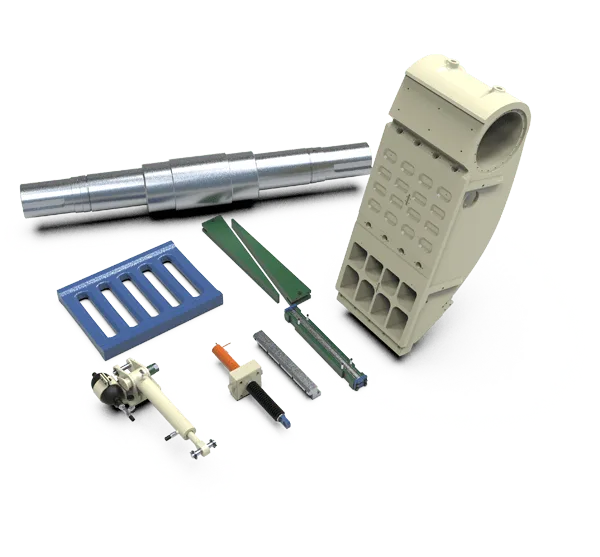
In mining, aggregate production, and recycling, jaw crushers serve as primary equipment. By choosing high-performance jaw crusher spare parts, you ensure stable operation under heavy loads, greatly reducing the risk of unexpected failures. Premium materials and precision manufacturing not only boost crushing efficiency but also lower cost per ton.
Materials
We select high-performance materials tailored to each component’s function and stress requirements to ensure durability and reliability.
| Material Category | Grades | Key Properties |
|---|---|---|
| Carbon Steel | 20#, Q235, 25#, 35#, 45# | Balanced strength and ductility for structural parts |
| Low Alloy Steel | Q345D, Q355ND, Q420, Q460, Q690 | Enhanced toughness and strength through heat treatment |
| Quenched Alloy Steel | 30CrNiMo, 42CrMo, 40CrNiMoA, etc. | Excellent fatigue resistance and high load capacity |
| Cast Iron | HT250, QT500-7, etc. | Excellent castability, ideal for housings and bases |
| Ductile Iron | G28Mn6, 20Mn, 16MN, etc. | Superior toughness and impact resistance |
| Bronze | ZCuSn10Zn2, ZCuPb15Sn8, etc. | Low-friction self-lubrication for bushings and slides |
| Stainless Steel | SUS304, etc. | Corrosion-resistant for seals, washers, fasteners |
| Elastomers & Plastics | Rubber, Nylon, PU, etc. | Shock-absorbing, chemical-resistant, flexible sealing |
Jaw Crusher Spare Parts Categories
- Structural Components: Frame, Pitman
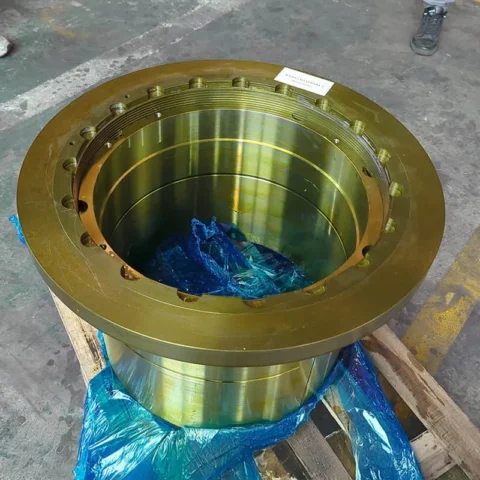
- Transmission Components: Eccentric shaft, bearings, bushings, couplings, pulleys, V-belts
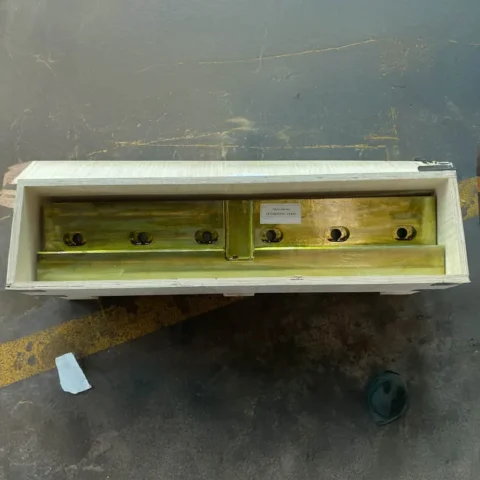
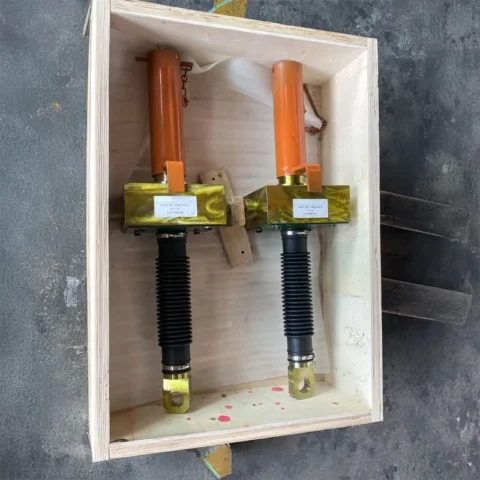
- Adjustment Components: Wedges, toggle plates, tension rods, springs, hydraulic cylinders, accumulators
- Fasteners: Bolts, nuts, washers, pins, gib keys
- Protection & Sealing: Deflector plates, belt guards, flywheel guards, feed hopper liners, seals
- Other Essential Parts: Lubrication systems, electric motors, control components, side plates
Routine Inspection & Replacement Strategy
Implement a comprehensive spare-parts inventory and replacement schedule. Monitor wear levels based on operating hours and load conditions. Adopt a “pre-order and routine replacement” approach to minimize unplanned downtime.
Supported Crusher Models
GUBT jaw liners are compatible with many leading crusher models and brands, ensuring accurate fit and performance.
If your model is not listed, please contact us. We offer extensive compatibility and custom solutions upon request.
| Brand | Representative Models |
|---|---|
| Metso | C80, C96, C106, C125, C140, C100, C110, C116, C120, C145, C160, C200, C3054, C3055 |
| Sandvik | CJ211, CJ412, CJ613, CJ815, CJ409, CJ411, CJ612, CJ615 |
| Terex | JW42, JW55, J-1170, J-1175, J-1480 |
| Allis‑Chalmers | RT6090, 6684, RT50105, RT5090, RT60105, RT80120, RT75120, RT75105, RT50120, RT60120, AC60, RT105120, AC3412, AC4860, 1080, AC84, AC7311, AC6048, AC2460, AC1260 |
| Austin Western | AW 2540, AW 4248, AW 3240, AW 2450, AW 1036, AW 1024 |
| Bergeaud | VB67, VB0907, VB92, VB83, VB1311, VB1109, VB108, VB105, VB1008D, VB1008, VB0806 |
| BIRDSBORO | 6084 |
| Blake | 1838 |
| Dragon | MP140, MR140, MR107 |
| Eagle | 3042 |
| Faco | 8050 |
| Fuller‑Traylor | 2836 |
| Goodwin Barsby | 4224(1065X610) |
| Hartl | 1380J |
| Hewitt Robins | 3054, 3048, 3640, 4860, 3042, 4248 |
| Jaques | 3042, 2030 |
| Kawasaki | 4860, 3042 |
| Keestrack | Unknown |
| Kleemann | MC125, MC120 PRO, MC120, MC110 EVO, MC110, MC100 EVO, MC100 |
| Kobelco | 3042 |
| Komatsu | BR350, BR500, BR380G, BR210JG |
| Komplet | K‑JC 704, 1910, 4825 |
| KPI‑JCI | JCI200, KPI‑2650 |
| Kue‑Ken | 36, 2042/108, 1742/107, 2436/95, 2036/90, 2030/75, 1636/89, 4224/1065X610 |
| Lippmann | 3054, 2248, 3042, 4860, 3048, 5062, 4248, 3650, 3062, 3640 |
| Lokomo | 2436, 2136, 3042, 2540 |
| MasterKrush | 1236 |
| McCloskey | J40V2, J44, C50, J50, J45, J40, J35, I54V3, I54, I44V3, I44, I34, C44, C38, 10570 |
| Minyu | MSH2436/600×900, MS4860/1200×1500, MS4060/1000×1500, MS4048/1000×1200, MS3254/800×1350, MS3248/800×1200, MS3042/750×1050, MS2642/650×1050, MS2436/600×900, MS2030/500×750, MS1624/400×600, 95S/2936, 3648/150, 2436 |
| Missouri Roger | 3548, 1020, 1524, 2136 |
| Nerytec | CRR103G |
| NMS | JC1150, JC1600 |
| Osborn | 4248 |
| Parker | 1100×650 |
| Pegson | 3042 |
| Pioneer | 4450, 3242, 3642, 2036, 3055, 2650, 3546, 4248, 2436, 3042, 2546, 1830 |
| Powerscreen | R300 |
| Ark | 1910 |
| Rexnord | 3042 |
| SBM | STE108‑75 |
| Svedala | 9025, 6240, 9026, P100100‑200 |
| Telsmith | H2550, 2650, 2536, 2250, 3048, 5060, 4552, 3244, 2036, 3042, 4448, 4248, 3648, 2540, 1832, 1524, 1424, 1324 |
| Tesab | TSA‑800, TSA‑700 |
| Trio | CT3042, CT1040, CT4763, CT4254, CT4673, CT3048, CT3648, CT3254, CT3054, CT2436, CT2036 |
| Universal | 6158, 74104, 1248, 2036 |
| VICKERS RUWOLT | 3042 |
| WILLIAM WONG | 4254 |
Technical Glossary
- Eccentric Assembly: A key mechanism that drives the mainshaft in an eccentric path, influencing crushing stroke and output efficiency.
- Mainshaft: The central rotating shaft that transmits torque and bears vertical loads, critical to the crusher’s drive system.
- Bushing: A wear-resistant sleeve, usually made of bronze, used between moving and fixed parts to reduce friction and ensure alignment.
- Hydraulic Cylinder: A hydraulic actuator used for CSS adjustment, overload protection, or lifting assemblies during maintenance.
- Adjustment Ring: A structural ring for controlling the Closed Side Setting (CSS); many models use hydraulic mechanisms for precise, on-the-fly adjustment.
- Torque Arm: A structural support that stabilizes and aligns torque transmission, especially in eccentric drive configurations.
- Locking Nut: A securing component that holds the crushing head assembly in position, preventing loosening due to vibration or cyclic loads.
- Backstop Device: A safety mechanism designed to prevent reverse rotation of the mainshaft during shutdown or abnormal operation.
- Flow Divider: A hydraulic control element that evenly splits fluid flow between multiple cylinders or actuators.
- Hydraulic Filter: Maintains fluid cleanliness within the hydraulic system, protecting components and ensuring stable system pressure.
Frequently Asked Questions
- What Are Jaw Crusher Spare Parts?
Jaw crushers rely on more than just jaw plates and cheek plates. A wide range of non-wear spare parts support the structure, motion, and adjustment of the machine. These parts include:
- Structural assemblies (e.g., frame, pitman)
- Drive and transmission components (V-belts, pulleys, flywheels)
- Adjustment systems (hydraulic cylinders, wedges)
- Bearings (eccentric, thrust, support)
- Toggle plates and toggle seats
- Fasteners (bolts, nuts, washers)
- Seals, gaskets, and guards
These components are essential for maintaining safe and efficient operation.
- Why Are High-Quality Spare Parts Important for Jaw Crushers?
Quality spare parts ensure:
- Proper fit and mechanical performance
- Reduced vibration, fatigue, and premature wear
- Reliable machine operation with minimal downtime
- Safety for operators and surrounding equipment
Substandard parts can lead to breakdowns, alignment issues, and long-term damage to other critical components.
- How to Identify the Correct Spare Parts for Your Jaw Crusher?
Accurate identification is critical. To determine the right part:
- Locate the crusher’s model and serial number
- Consult the OEM parts manual or assembly diagrams
- Record the part name and part number/code
- Compare specifications with trusted aftermarket catalogs or contact technical teams with experience in jaw crusher assemblies
This process helps avoid mismatched or incompatible components.
- What Non-Wear Spare Parts Need Regular Inspection or Replacement?
Even though these components don’t directly crush material, they wear over time due to vibration, force, or environmental conditions.
Common examples include:
- Toggle Plates and Seats – Transmit crushing force; protect against overload
- V-Belts – Stretch and crack with usage; require tension checks and replacement
- Bearings – Need regular lubrication and wear monitoring
- Hydraulic Cylinders and Accumulators – May develop seal wear or leakage
- Fasteners – Can loosen due to mechanical stress
- Seals and Gaskets – Degrade under heat, pressure, and dust
- Safety Guards – Should remain intact to protect against debris and moving parts
- How Does Proper Maintenance of Spare Parts Improve Crusher Performance?
Regular maintenance allows:
- Consistent output and throughput
- Smooth, low-vibration operation
- Lower energy consumption
- Prevention of cascading component failure
- Cost-effective long-term operation
- Where to Source Reliable Jaw Crusher Spare Parts?
The best source for jaw crusher spare parts depends on machine compatibility, delivery times, and technical support. Look for suppliers that offer:
- Compatibility with your crusher brand and model
- Clear technical documentation and product identification tools
- Engineering support and proven service experience
- Quality certifications and material traceability