Mn18Cr2 describes a requested manganese-steel grade. It does not tell a buyer which mantle profile fits a cone crusher, nor how long that mantle will run at a particular site. When an existing liner is being replaced, the cavity identification and the wear record are more useful starting points than an alloy name alone.
Locate the mantle in the chamber
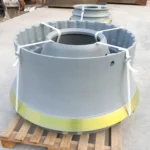
The mantle is the primary moving wear part in a cone crusher, distinct from the stationary bowl liner. When identifying the correct part, the chamber profile is the most significant variable. This profile determines the crushing action and must match the feed size and the specific closed-side setting of the machine. Relying solely on a reference number is insufficient for confirming fit. Buyers should verify the current chamber configuration against the original equipment manufacturer manual to ensure the mantle geometry aligns with the existing bowl liner and the intended feed characteristics of the application.
Keep grade and geometry separate
Mn18Cr2 is a specific manganese steel designation, not a universal indicator of wear life or suitability for every application. While this alloy is common, its performance depends entirely on the interaction between the feed properties and the crushing forces within the chamber. A material designation does not account for the specific abrasive nature of the rock or the impact forces present during operation. Buyers should request technical data sheets that detail the chemical composition of the alloy to confirm it meets the metallurgical specifications required for their specific crushing environment and material hardness.
Use the worn liner as evidence
To move beyond basic part numbers, request specific documentation from the supplier. Ask for detailed dimensional drawings that include the exact profile measurements and tolerances for the mantle. Request information regarding the heat treatment process used for the Mn18Cr2 alloy, as this significantly influences the final hardness and toughness of the casting. Additionally, provide the supplier with the machine serial number, the current closed-side setting, and a summary of the feed material properties. This evidence allows for a more informed assessment of whether the proposed part aligns with the mechanical requirements of the crusher.
Compare the offer with the order
Upon receiving the mantle, perform a physical inspection before installation. Compare the casting dimensions against the provided technical drawings to verify that the profile matches the required chamber configuration. Check for any visible casting defects or surface irregularities that could compromise structural integrity during operation. Confirm that all ancillary wear pieces, such as feed plates, are included and match the specific model requirements, as these components often vary significantly between different crusher versions. If the dimensions deviate from the approved drawings, contact the supplier immediately to resolve the discrepancy before attempting to seat the mantle.
Specify the mantle before asking for price
Provide the machine and chamber version, the mantle’s complete public reference if known, measured geometry or an authorized drawing if needed, requested Mn18Cr2 grade, quantity and destination. State whether the stationary bowl liner is also required. Ask which material and dimensional records can be supplied for this casting. Treat any proposed alternate grade or profile as a change to be checked against the equipment and site duty before ordering.